
Tree Removal Costs: A Homeowner's Guide to Understanding the Price
Wondering how much tree removal should cost? Our guide breaks down the key factors, from tree size and location to hidden costs like insurance and stump grinding.
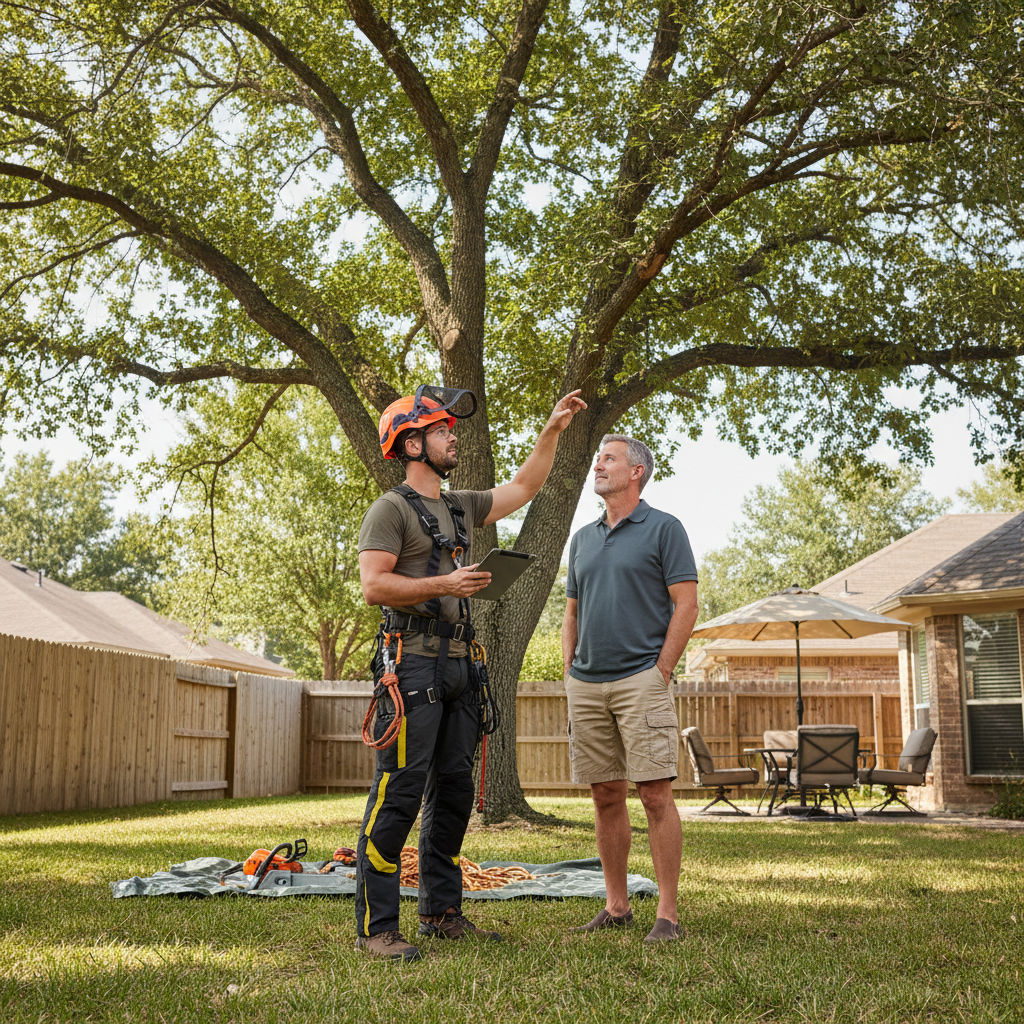
When you get a quote for a tree removal, the price can feel like it came out of thin air. One company quotes $900, another quotes $2,500, and a third quotes $5,000 for the exact same tree. What gives? Is someone trying to rip you off?
Probably not. The truth is, tree removal is a complex and dangerous job, and its pricing reflects a wide range of variables. A quote isn't just about cutting down a tree; it’s about doing it safely, efficiently, and without destroying your property. Understanding what goes into that price is the first step toward hiring a qualified professional with confidence.
This guide will break down the factors that determine tree removal costs, so you can understand your quotes, ask the right questions, and make a smart hiring decision that protects you and your home.
The Core Factors That Drive Tree Removal Costs
No two tree removal jobs are identical. An arborist's estimate is a custom calculation based on the specifics of your tree and property. Here are the primary factors that influence the final price tag.
Tree Size (Height and Diameter)
This is the single biggest driver of cost. A larger tree means more work, more risk, and more debris to handle. Arborists typically categorize trees by height:
- Small Trees (Under 30 feet): Think ornamental trees like a Japanese Maple or a Dogwood. These are relatively easy to access and dismantle. Typical Cost: $250 - $750
- Medium Trees (30 to 60 feet): This category includes many mature maple, birch, or smaller oak trees. The job often requires a climber or a bucket truck. Typical Cost: $750 - $1,800
- Large Trees (60 to 80 feet): Mature oaks, maples, and Tulip Poplars fall into this range. These jobs are more complex, requiring skilled climbers and a larger crew to safely lower large limbs. Typical Cost: $1,500 - $3,000
- Extra-Large Trees (Over 80 feet): Towering pines, oaks, or other ancient trees. These almost always require specialized equipment like a crane, adding significant cost and complexity. Typical Cost: $3,000 and up, with some complex removals reaching $10,000 or more.
The diameter of the trunk (often measured as 'diameter at breast height' or DBH) also plays a huge role. A thick, multi-trunk tree is far more work to cut and process than a slender one of the same height.
Tree Type and Condition
Some trees are simply harder to work with than others. A dense hardwood like an oak takes longer to cut and is heavier to move than a soft pine. Some trees, like certain palms, have tough exteriors that wear down chainsaws more quickly.
The tree's health is also critical. A dead or decaying tree can be extremely unpredictable. While it may seem like a dead tree should be easier to cut, its structural instability makes it far more dangerous for the crew. An arborist must take extra precautions, which can increase the time and cost required.
Location and Accessibility
Where the tree is located is just as important as how big it is. A tree in an open field is straightforward. A tree leaning over your house, entangled in power lines, and crammed between a garage and a fence is a completely different story.
An arborist will assess:
- Proximity to Structures: Houses, sheds, garages, fences, and decks all present obstacles. The crew must use advanced rigging techniques to carefully lower every piece without causing damage.
- Proximity to Hazards: Power lines are a major hazard. A specially qualified crew is needed to work near them, and sometimes the power company must be involved. Other hazards include septic systems, underground sprinkler lines, or swimming pools that must be protected.
- Yard Access: Can the company get its equipment to the tree easily? A bucket truck and a large chipper need a clear, wide path. If the tree is in a fenced-in backyard with no gate, the crew must carry every single piece of debris out by hand, dramatically increasing labor costs.
The Health and Risk of the Tree
Is this a routine removal of a healthy tree, or an emergency removal of a storm-damaged tree that's about to fall? Emergency services cost more due to the immediate danger and need for a rapid response, which often means pulling a crew off another job. A tree that is structurally compromised, has a major split, or is leaning precariously requires a higher level of skill and care, which will be reflected in the price.
What's Included in a Standard Quote? (And What’s Not)
A basic tree removal quote almost always includes felling the tree and cutting the trunk and limbs into manageable sections. This is often called "cutting and dropping." However, what happens next is often broken out into separate line items. Always get a written quote that clearly specifies the full scope of work.
Stump Grinding
Felling a tree leaves a stump. Removing that stump is a completely separate job called stump grinding. It uses a powerful machine with a cutting wheel to grind the stump and its major roots down to several inches below ground level. This is almost never included in a base-level quote.
- Why it's separate: It requires different equipment and is an optional service. Some homeowners don't mind the stump or want to save money.
- Typical Cost: $100 - $400 per stump, depending on its size and accessibility.
Hauling and Debris Removal
An average tree creates a massive amount of debris—brush, limbs, and heavy logs. Hauling all of it away is a significant part of the job's labor and disposal cost. Most full-service quotes will include chipping the brush and hauling all wood, but you must confirm this. Some budget-oriented quotes may leave the homeowner with a giant pile of logs and branches to deal with themselves. If you have a use for firewood, you can often negotiate a lower price to keep the wood, saving the crew the labor of hauling it.
Wood Chipping
Chipping the smaller limbs and branches into mulch is standard practice for most professional crews. It's the most efficient way to handle and transport the debris. The quote should specify if all brush will be chipped and if the chips will be hauled away or can be left for you to use as mulch in your garden beds.
Log Splitting
This is a premium add-on service. If you want to keep the wood for your fireplace but don't want to split it yourself, some companies will use a hydraulic splitter to process the logs into firewood for an additional fee. This is not a standard service.
The "Invisible" Costs: Why a Cheap Quote Can Be Expensive
When you see a quote that's drastically lower than the others, it's often because the company is cutting corners on critical business costs—costs that exist to protect you.
Insurance (Liability and Worker's Comp)
This is the most important non-negotiable. A reputable tree service carries two key types of insurance:
- General Liability Insurance: Protects your property. If a limb falls on your roof or crushes your fence, this insurance covers the repairs. Without it, you’d be suing the contractor and hoping they have the assets to pay.
- Worker's Compensation Insurance: Protects the workers. Tree work is one of the most dangerous jobs in the country. If a climber falls on your property and the company doesn't have worker's comp, you could be held liable for their medical bills and lost wages. This can lead to lawsuits and financial ruin.
Insurance is expensive, and it's what separates professionals from uninsured operators. Always ask for a Certificate of Insurance (COI) sent directly from their insurance agent. A photocopy can be faked.
Licensing and Certifications
While not all states or cities require a specific license for tree removal, a company's certifications tell you about their level of professionalism. The most respected credential is an ISA Certified Arborist. An arborist is a professional who has a deep understanding of tree biology, health, and safety. Hiring a company with a certified arborist on staff ensures you're getting expert advice, not just a person with a chainsaw.
Equipment and Crew Size
A professional company invests heavily in its equipment: well-maintained chainsaws, bucket trucks, chippers, cranes, and extensive safety gear (helmets, ropes, harnesses). This equipment is expensive to buy, maintain, and insure. A lowball quote might come from a company using old, unsafe equipment or lacking the right tools for the job, putting your property and their crew at risk.
Getting Accurate Quotes: A Step-by-Step Guide
To get a fair price and hire the right pro, you need to run a consistent process.
- Get Multiple Bids: For any significant job, seek out 3-4 quotes from well-regarded, insured companies.
- Insist on an In-Person Estimate: Do not trust a quote given over the phone or based on a picture. A true professional needs to see the tree, the access, and any potential hazards in person to give you an accurate price.
- Ask the Right Questions: When the arborist is on your property, have a list of questions ready.
- Can you provide proof of general liability and worker's compensation insurance?
- Are you or is someone on your crew an ISA Certified Arborist?
- Is this quote for the complete removal, including hauling all debris?
- Is stump grinding included? If not, what is the additional cost?
- How will you protect my lawn and property from damage?
- What equipment will you be using for this job?
- What is the estimated timeline for the project?
- Compare Apples to Apples: Once you have your written quotes, lay them out side-by-side. Make sure each one details the exact same scope of work. A quote for $1,500 that includes stump grinding and full cleanup is a better deal than a $1,200 quote that leaves you with a stump and a yard full of logs.
Regional and Seasonal Price Variations
Costs are not uniform across the country. Prices are generally higher in major metropolitan areas with a higher cost of living and doing business. Regulations can also play a role. Some cities or counties have strict rules about tree removal, especially for 'heritage' or 'significant' trees. A permit may be required, and the arborist will typically handle the application process, but the fee may be passed on to you.
Seasonality also affects pricing. The busiest times for tree companies are spring (when people are getting their yards ready) and after major storms. You may find slightly better pricing during the slow season in late fall or winter for non-emergency work, as companies are looking to keep their crews busy.
When to Call a Pro: DIY vs. Hiring an Arborist
It can be tempting to save money by taking down a tree yourself. For a very small sapling or tall shrub in an open area, this might be feasible with the right hand tools. However, for anything larger, Do-It-Yourself tree removal is incredibly dangerous.
Gravity is unforgiving, and trees rarely fall exactly where you expect. Without proper training in making directional cuts and using rigging, you risk severe property damage, power outages, and life-threatening injury. Professional arborists spend years training to dismantle trees safely. They have the right safety gear, the right equipment, and—most importantly—the insurance to cover any mishaps.
The money you might save by attempting a DIY job is nothing compared to the potential cost of a new roof, a lawsuit, or a trip to the emergency room. For any tree that requires more than a handsaw or loppers, call a professional. It's an investment in safety and peace of mind.
Frequently asked questions
Is it cheaper to remove a tree in the winter?+
Often, yes. Winter is the dormant season for trees and typically a slower season for arborists, especially in colder climates. You may find better availability and slightly lower prices for non-emergency projects scheduled during this time.
Do I need a permit to remove a tree on my property?+
It depends entirely on your local municipality. Many cities and counties require permits for removing trees over a certain diameter or of a specific protected species. A reputable local arborist will be familiar with the regulations and can help you with the process.
Why is stump grinding always a separate charge?+
Stump grinding is an optional service that requires specialized equipment different from what's used for the tree removal itself. Companies list it as a separate line item so homeowners can choose whether they want the service or prefer to leave the stump to save money.
What's the biggest mistake homeowners make when hiring for tree removal?+
The biggest mistake is hiring a company based on the lowest price alone, without verifying their insurance. An uninsured crew transfers all liability for property damage or—even worse—worker injuries to you, the homeowner, which can be financially devastating.
Can I keep the wood for firewood to save money?+
Absolutely. Most tree service companies are happy to leave the cut logs for you, which can reduce your bill since it saves them the labor and cost of hauling it away. Just be sure to communicate this clearly when you are getting your initial quote.