
What a Bathroom Remodel Really Costs in 2026: A Homeowner's Guide
Planning a bathroom remodel? Our 2026 cost guide breaks down the price of a basic, mid-range, and luxury renovation, plus hidden costs and tips for hiring the right pro.
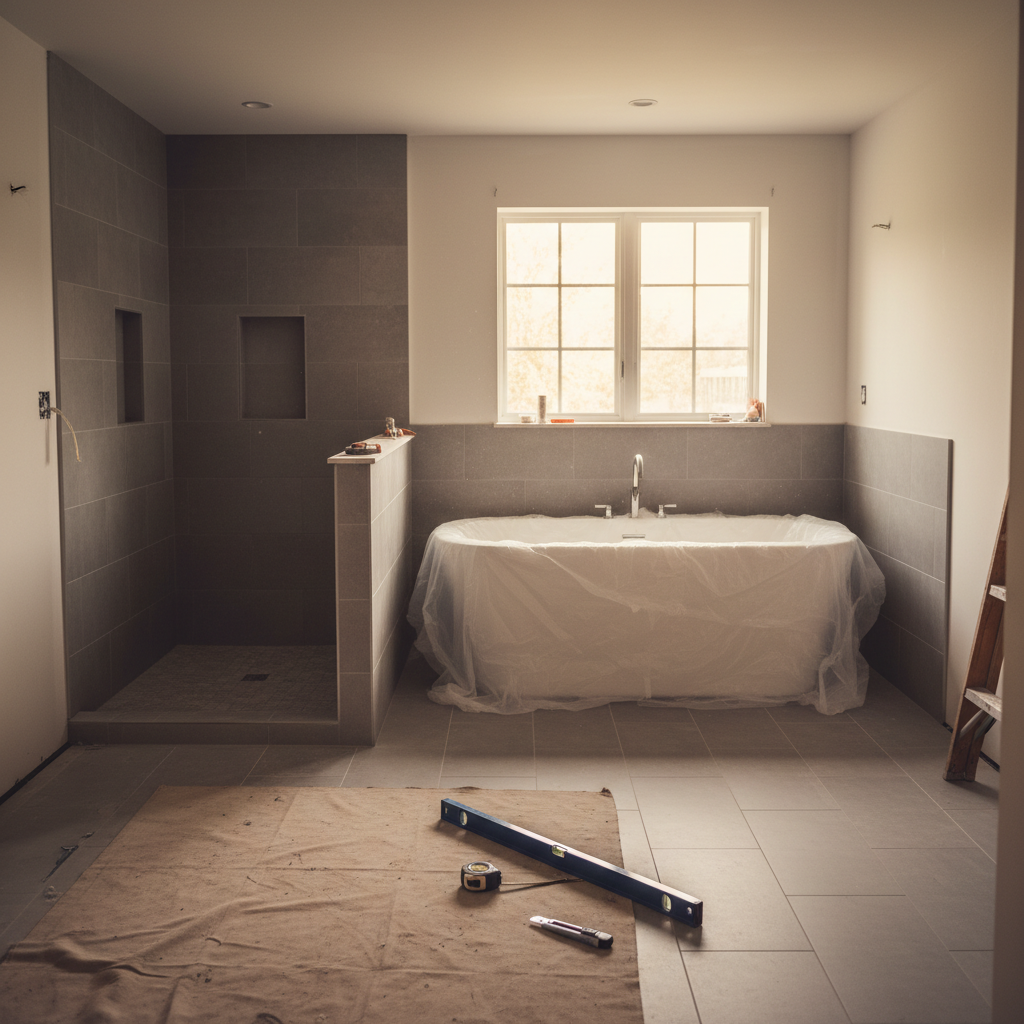
A bathroom remodel is consistently one of the most popular and rewarding home improvement projects you can undertake. It adds daily comfort, boosts your home's value, and allows you to fix those long-standing annoyances, whether it's a leaky faucet, dated tile, or a layout that just doesn't work. But before you can enjoy that new spa-like retreat, you have to face the big question: What will it actually cost?
As we look ahead to 2026, the factors influencing remodeling costs—labor availability, material supply chains, and design trends—continue to evolve. This guide is designed for homeowners like you. We'll cut through the jargon and provide realistic price ranges, break down where your money goes, and give you the essential knowledge to hire a professional with confidence.
Breaking Down Bathroom Remodel Costs: Where Does the Money Go?
It's easy to focus on the shiny new fixtures, but a gut remodel is a complex construction project. Understanding the major cost categories is the first step to building a realistic budget. Think of your total project cost as a pie, with the largest slice almost always going to labor.
- Labor (40% - 60% of total cost): This is the most significant expense. It's not just one person; a full remodel requires a team of skilled tradespeople: a general contractor to manage the project, a demolition crew, a carpenter, a plumber, an electrician, a drywall installer, a tile setter, and a painter. Their expertise is what ensures your bathroom is not only beautiful but also safe, waterproof, and built to code.
- Materials & Fixtures (30% - 50% of total cost): This is the category you have the most control over. It includes everything you see and touch. We'll detail this later, but it covers your vanity, toilet, tub or shower, faucets, lighting, flooring, tile, and countertops.
- Design, Permits, and Overhead (10% - 25% of total cost): Often called "soft costs," these are crucial for a smooth project. This bucket includes any fees for an interior designer or architect, the cost of municipal permits (which are non-negotiable for plumbing and electrical work), and the general contractor's overhead and profit (typically 15-25% of the project cost). This fee covers their business insurance, project management, and the expertise to prevent costly mistakes.
- Contingency Fund (10% - 20% of budget): This isn't a "cost" but a vital part of your budget. No matter how well you plan, surprises can and do happen when you open up walls. This fund is your safety net for dealing with unexpected issues like mold, rotted wood, or outdated wiring without derailing the project.
Bathroom Remodel Price Tiers: From Basic Update to Luxury Overhaul
To give you a clearer picture, let's break down bathroom remodels into three common project scopes. Prices are national averages for 2026; costs in high-cost-of-living urban areas will be higher, while they may be lower in rural regions.
The Basic Refresh or "Pull-and-Replace" ($8,000 – $18,000)
This is the most straightforward type of remodel. The key here is that you're keeping the existing layout exactly as it is—the toilet, sink, and shower stay in the same spots. This minimizes the need for expensive plumbing and electrical work.
- What it Typically Includes: Replacing the vanity and countertop, installing a new toilet and faucet, laying down new flooring (like luxury vinyl plank or ceramic tile), putting in a new light fixture, and a fresh coat of paint.
- What it Doesn't Include: Moving walls, changing the plumbing layout, custom tile work, or high-end fixtures.
- What This Means for Hiring: For a simple project like this, you might manage it yourself by hiring individual trades (a plumber for the toilet, an electrician for the light). However, a small remodeling company or a handyman service that is licensed to do plumbing and electrical work can often coordinate this more efficiently.
The Mid-Range Remodel ($18,000 – $40,000)
This is the sweet spot for most homeowners and the most common type of full bathroom renovation. In this tier, you're not just updating surfaces; you're improving the function and quality of the space, which may involve some layout changes.
- What it Typically Includes: Everything in the basic refresh, plus potentially converting a tub to a walk-in shower with tiled walls, installing a semi-custom vanity, upgrading to stone countertops, adding better ventilation, and improving lighting with multiple fixtures (e.g., sconces and a recessed light in the shower). You might move the toilet a few feet or shift the vanity's location.
- What it Doesn't Include: Major structural changes or ultra-high-end luxury items like steam systems or custom-milled cabinetry.
- What This Means for Hiring: You absolutely need a General Contractor (GC) for a project of this scope. A GC will manage the complex dance of scheduling the plumber, electrician, tiler, and painter in the correct order, handle permitting, and be your single point of responsibility. Trying to manage this yourself to save the GC's fee often leads to costly delays and mistakes.
The High-End or Luxury Gut Renovation ($40,000+)
This is a complete transformation where the sky (and your budget) is the limit. It involves reconfiguring the entire space, potentially by moving walls or expanding the bathroom's footprint into an adjacent closet or room.
- What it Typically Includes: A complete gut to the studs. A new custom layout, custom cabinetry and built-ins, natural stone slabs for countertops and shower walls, heated flooring, a high-end steam shower or soaking tub, smart toilet, and a sophisticated lighting plan. Every material and fixture is a premium selection.
- What it Doesn't Include: The only limit is your imagination and wallet. These projects can easily exceed $100,000 for a large master suite in a high-cost area.
- What This Means for Hiring: This level of project is best handled by a high-end design-build firm or a team consisting of an interior designer/architect and a vetted, experienced general contractor. The design phase is extensive, and the execution requires meticulous project management.
The Hidden Costs That Can Bust Your Budget
It’s what you can’t see that often causes the most budget stress. A good contractor will anticipate some of these, but it's wise for you, the homeowner, to be prepared. This is precisely why a contingency fund is critical.
Unforeseen Structural & System Issues
When your contractor demolishes the old bathroom, they might find:
- Water Damage: Rotted subflooring, wall studs, or joists from a slow, long-term leak.
- Mold and Mildew: This must be professionally remediated before any new work can begin, which adds time and cost.
- Outdated Plumbing: Old cast iron or galvanized steel pipes that need to be replaced with modern PVC and PEX.
- Illegal or Outdated Electrical: Unsafe wiring, junction boxes buried in walls, or circuits that aren't protected by a Ground Fault Circuit Interrupter (GFCI), which is now required by code in wet locations.
- Improper Venting: A bathroom fan that vents into the attic instead of outside, which can cause moisture and mold problems.
Permit Fees and Code Compliance
If you're moving plumbing, changing electrical wiring, or altering the structure, you need a permit from your local building department. This is not optional. A permit ensures the work is done to current safety standards and will be properly inspected. The contractor typically handles the application process, but the fee (ranging from $200 to $1,500+) is passed on to you. Be extremely wary of any contractor who suggests skipping permits to save money; it's a huge red flag that puts you and your home at risk.
The Cost of Your Own Time & Decisions
Project delays cost money. If your contractor has a crew ready to install the shower tile but you haven't finalized your choice, that crew has to be sent home or to another job. This disrupts the schedule and can lead to rescheduling fees or strained relationships. Make as many material and fixture decisions as you can before demolition begins.
How Location, Materials, and Finishes Drive Your Final Price
The wide price ranges above are heavily influenced by three factors: where you live, what you choose, and who you hire.
Geographical Cost Differences
Labor is the biggest variable. A licensed plumber's hourly rate might be $90 in a rural area but over $200 in a major city like New York or San Francisco. This difference scales across every trade, meaning the exact same mid-range remodel could cost $25,000 in one state and $40,000 in another.
The Material & Fixture Spectrum
This is where you can be strategic with your budget. The price difference between "builder grade" and "luxury" is immense.
- Tile: Basic ceramic tile can cost $2-$5 per square foot. A high-quality porcelain tile might be $8-$20, while natural stone like marble or a custom mosaic can easily be $30-$50+ per square foot. Remember to factor in the increased labor cost for installing more complex patterns or materials.
- Vanity: A stock vanity from a big-box store might cost $500-$1,500. A semi-custom vanity with better construction and more finish options can range from $2,000-$5,000. A fully custom, handcrafted piece can be $5,000+.
- Shower/Tub: A standard acrylic tub/shower combo costs around $600-$1,200 plus installation. A cast-iron freestanding tub can be $2,000-$5,000. A custom-tiled, walk-in shower with a frameless glass door will start around $4,000 and go up significantly from there.
The Contractor Factor: How Your Hiring Choice Impacts the Cost
Who you hire is the single most important decision you'll make. It affects not just the cost, but the quality, timeline, and your overall stress level.
Working with a General Contractor (GC)
A GC is the quarterback of your project. They hire and schedule all the individual subcontractors, pull permits, order materials, and oversee the quality of the work from start to finish. Their fee (again, typically 15-25% of the total project cost) pays for this management, their insurance, and their expertise. For any project beyond a simple surface-level update, a good GC is worth every penny.
Hiring Subcontractors Directly ("Being Your Own GC")
Some homeowners try to save the GC fee by hiring the plumber, electrician, and tiler themselves. Unless you have a background in construction management, this is a risky path. You become responsible for vetting licenses and insurance, creating a logical schedule (if the drywall goes up before the plumber is done, you're in big trouble), and resolving conflicts when one trade's work impacts another. The potential savings often evaporate due to costly mistakes and delays.
Design-Build Firms
A design-build firm is a one-stop-shop that employs designers, project managers, and construction crews under one roof. This creates a seamless process from the initial idea to the final walkthrough. This integrated approach can be very efficient, but it may also be more expensive than hiring an independent designer and a separate GC.
How to Get an Accurate Estimate and Plan Your 2026 Remodel
Ready to get started? Arm yourself with information to ensure you're getting fair prices and hiring the right team.
- Define Your Scope: Before you call anyone, have a clear idea of your must-haves, nice-to-haves, and your absolute maximum budget (including your 15-20% contingency).
- Get 3-5 Detailed Bids: Don't accept a one-page estimate with a single number. A professional bid will be several pages long and itemize the scope of work, listing allowances for fixtures (e.g., "$1,000 allowance for vanity"), and breaking down labor and material costs.
- Ask the Right Questions: When meeting with potential contractors, ask:
- Are you licensed and insured for my state and city? (Ask to see their certificates!)
- Will you handle all necessary permits?
- Who will be the on-site project manager and my main point of contact?
- How do you handle changes to the plan? (Look for a formal "change order" process.)
- What is your estimated timeline, and what's the payment schedule?
- Can you provide references from 3-5 recent bathroom projects?
- Check Those References: Actually call the references and ask about their experience. Was the project on time and on budget? How was communication? Would you hire them again?
By planning carefully, setting a realistic budget, and thoroughly vetting your contractor, you can navigate the complexities of a bathroom remodel and create a space you'll love for years to come. It’s an investment in your home and your daily life, and doing it right is what matters most.
Frequently asked questions
How long does a typical bathroom remodel take?+
A basic cosmetic update might take 1-2 weeks. A full gut remodel, especially if you're moving plumbing or walls, can take anywhere from 4 to 8 weeks, not including the initial design and planning phase. Delays in material delivery or unforeseen issues can extend this timeline.
Can I save money by buying my own materials?+
Sometimes, but it's not always a clear win. While you can shop sales, contractors often get trade discounts. More importantly, if you supply the materials, you are responsible for ensuring they are correct, on-site when needed, and not damaged. Discuss this with your contractor upfront to see what makes the most sense.
Is a bathroom remodel a good financial investment?+
Yes, generally. While you may not recoup 100% of the cost at resale, a mid-range bathroom remodel is expected to return around 60-70% of its value. More importantly, a modern and functional bathroom is a major selling point and provides years of enjoyment for you.
Do I really need a permit for a small bathroom update?+
If you are only painting or replacing a faucet in the same spot, you likely do not need a permit. However, if you are moving any plumbing, altering electrical wiring, or changing the room's footprint, you will almost certainly need one. A reputable contractor will know the local requirements and handle the permitting process for you.
What is a 'change order' and why should I care?+
A change order is a written amendment to the original contract used when you decide to change something mid-project. It details the new work, the additional cost, and any impact on the schedule. Insisting on written change orders protects both you and the contractor by preventing misunderstandings about cost and scope.