
Tankless vs. Tank Water Heaters: Which Is Right for Your Home?
Deciding between a traditional tank and a modern tankless water heater? This guide breaks down the costs, energy savings, and lifestyle factors to help you choose wisely.
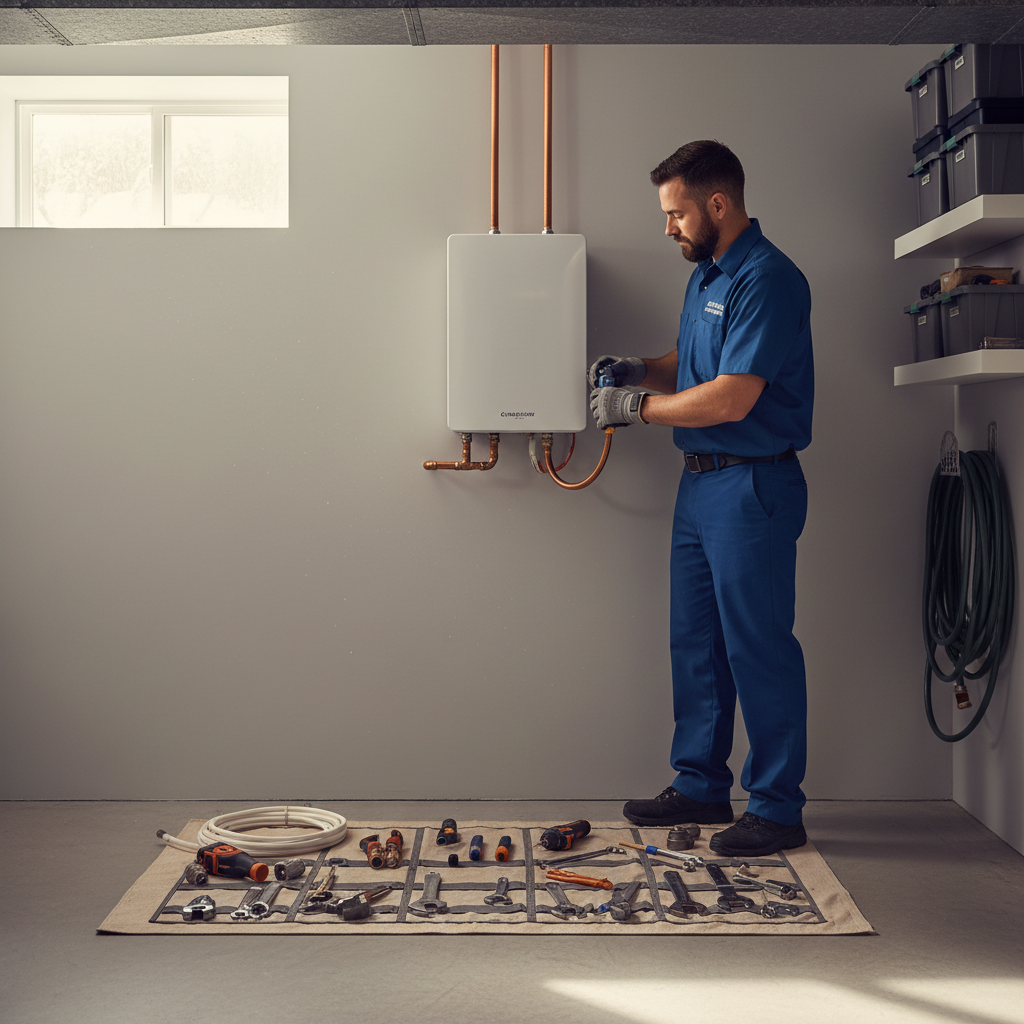
It's a sound every homeowner dreads: the drip, drip, drip of a failing water heater, or worse, the sudden cold shower that signals its final demise. When your water heater gives up, you have to make a decision, and you often have to make it fast. For decades, the choice was simple—you just replaced your big, cylindrical tank heater with a similar model.
Today, you have a major decision to make: do you stick with a traditional storage tank water heater, or do you upgrade to a tankless, on-demand system?
This isn't just a technical choice; it's a decision that impacts your daily comfort, your monthly utility bills, and your home's long-term value. In this guide, we'll break down the pros and cons of each system, decode the costs, and help you figure out which option is the smarter pick for your family and your budget before you call a plumber.
The Tried-and-True: How Tank Water Heaters Work
This is the system most of us are familiar with. A storage tank water heater is essentially a large, insulated drum that holds and heats a reservoir of water—typically 40, 50, or 80 gallons. A gas burner at the bottom or electric heating elements inside the tank kick on periodically to keep the water at your desired temperature (usually 120-140°F), ensuring a supply of hot water is ready whenever you turn on a tap.
When the tank is empty, you have to wait for it to refill and heat a new batch of water, a process called the "recovery rate." This is why you can run out of hot water during periods of high demand, like when multiple family members take back-to-back showers.
The Pros for Homeowners
- Lower Upfront Cost: This is the single biggest reason tank heaters remain popular. The unit itself is less expensive, and the installation is typically simpler and faster for a plumber, especially if you're replacing a similar unit. The lower initial price tag makes it the go-to choice for homeowners on a tight budget or those who need an emergency replacement without financial surprises.
- Simple, Proven Technology: These heaters have been around for generations. They are reliable, and virtually any licensed plumber is an expert at installing, servicing, and repairing them. There's no complex digital circuitry, making troubleshooting straightforward.
- Consistent Water Pressure: Because the tank acts as a reservoir, it can typically deliver hot water to multiple faucets, showers, and appliances simultaneously without a significant drop in pressure, as long as there's hot water left in the tank.
The Cons to Consider
- Standby Heat Loss: The heater is always using energy to keep that big tank of water hot, even when you're not using it. This "standby heat loss" means you're paying to heat water 24/7, which is less energy-efficient.
- Limited Hot Water Supply: It's a race against the tank. A large family, houseguests, or just a teenager who loves long showers can drain a 50-gallon tank surprisingly quickly. Once it's gone, you're in for a cold wait.
- Large Footprint: A traditional water heater takes up a significant amount of floor space, typically in a utility closet, basement, or garage. This can be a major drawback in smaller homes, condos, or if you're looking to reclaim that space for storage.
- Shorter Lifespan: The average lifespan of a tank-style water heater is about 8 to 12 years. The constant contact between water and the steel tank eventually leads to corrosion and failure.
The Modern Challenger: How Tankless Water Heaters Work
Tankless water heaters, also known as on-demand heaters, represent a fundamental shift in technology. Instead of storing hot water, they create it instantly, only when you need it.
When you turn on a hot water tap, cold water flows into the tankless unit. A flow sensor detects this and ignites a powerful gas burner or engages a high-output electric element. The water zips through a series of pipes in a heat exchanger, absorbing heat and reaching your set temperature before traveling to your faucet. When you turn the tap off, the unit shuts down completely, using zero energy.
The Pros for Homeowners
- Endless Hot Water: This is the star feature. Because water is heated on demand, you can't run out. You can run the shower, the dishwasher, and the laundry all at once (if the unit is sized correctly) without worrying about the water turning cold.
- Significant Energy Savings: By eliminating standby heat loss, tankless heaters are far more efficient. According to the U.S. Department of Energy, homes that use 41 gallons or less of hot water daily can see energy savings of 24%–34% with a tankless heater compared to a conventional storage tank. This can translate to over $100 in savings per year, depending on your usage and utility rates.
- Longer Lifespan: With proper maintenance, a tankless water heater can last 20 years or more—nearly double the lifespan of a traditional tank heater. This long-term durability helps offset the higher initial cost.
- Space-Saving Design: These units are compact and mount directly to a wall. A typical tankless heater is about the size of a small suitcase, freeing up valuable floor space in your home.
The Cons to Consider
- High Upfront Cost: There's no getting around it—tankless heaters are expensive to buy and install. The units themselves cost more, and installation is more complex. A plumber may need to run new, larger gas lines, upgrade electrical circuits, and install special venting, all of which adds to the labor and material costs.
- Output Limits: While the hot water is endless, it's not infinite. Each unit has a maximum flow rate, measured in gallons per minute (GPM). If you turn on too many hot water appliances at once, you might exceed the unit's capacity, resulting in lukewarm water or a drop in pressure. Proper sizing is critical.
- Potential for a "Cold Water Sandwich": With some older or poorly configured systems, you might experience a brief burst of cold water when turning on a tap a second time. This happens when hot water is left in the pipes from the first use, followed by a slug of cold water that entered the pipes before the heater fired up again.
Head-to-Head Comparison: Key Factors for Your Decision
Let's put these two technologies side-by-side to help you weigh the decision based on what matters most to you.
Upfront Cost and Installation
- Traditional Tank: A new 40- or 50-gallon tank water heater, including professional installation, typically costs between $1,200 and $2,500. The price is lower if the replacement is straightforward, and higher if pipes, valves, or the location need to be modified.
- Tankless: A professionally installed tankless water heater usually runs from $3,000 to $6,500, and can sometimes exceed this range. The cost depends heavily on the model and the complexity of the installation. If your home needs a larger gas line, a new dedicated electrical circuit, or complex venting through the roof or an exterior wall, the cost will be on the higher end. Always get a detailed quote that breaks these potential upgrades down.
Operating Costs and Energy Efficiency
- Traditional Tank: Suffers from standby heat loss, making it less efficient. Modern tanks are better insulated than older models, but they still use energy 24/7. Look for the Uniform Energy Factor (UEF) on the label; a higher number is better.
- Tankless: No standby loss means they are significantly more efficient, especially gas models. A gas tankless heater can have a UEF of 0.80 to 0.98, while a standard gas tank is often in the 0.60 range. This efficiency gap is what drives long-term savings.
Lifespan and Maintenance
- Traditional Tank: Lifespan of 8-12 years. Annual maintenance involves checking the pressure relief valve and draining a few gallons from the bottom of the tank to flush out sediment. This sediment buildup reduces efficiency and accelerates corrosion.
- Tankless: Lifespan of 20+ years. Annual maintenance is crucial, especially in areas with hard water. A plumber should perform a descaling service to flush the mineral buildup (scale) from the heat exchanger. Neglecting this maintenance can reduce efficiency and lead to premature failure.
Space Requirements
- Traditional Tank: Requires a footprint of roughly 2x2 feet and stands 4-5 feet tall. It needs its own dedicated space, usually a closet or corner.
- Tankless: Wall-mounted and about the size of a carry-on suitcase. Frees up an entire closet's worth of floor space, which can be a game-changer for storage or finishing a basement.
Sizing is Everything: Don't Get This Wrong
This is one area where you absolutely need a professional plumber's expertise. Incorrectly sizing your new water heater is the fastest way to be unhappy with your investment.
For a traditional tank heater, sizing is based on your family's size and water usage habits. It’s measured by its “first-hour rating” (FHR), which tells you how many gallons of hot water it can produce in an hour of high use. A plumber will recommend a tank size (e.g., 50 gallons) that meets your household's peak demand.
For a tankless water heater, sizing is more complex. Your plumber will calculate two key numbers:
- Flow Rate (GPM): They'll add up the gallons per minute (GPM) of all the fixtures you might want to run simultaneously. For example, a shower head (2.0 GPM) + a kitchen faucet (1.5 GPM) = 3.5 GPM. You'd need a unit that can handle at least that flow rate.
- Temperature Rise: This is the difference between the temperature of the groundwater coming into your home and your desired hot water output temperature (e.g., 120°F). In a cold climate like Minnesota, your groundwater might be 40°F, so you need an 80°F temperature rise. In a warm climate like Florida, the groundwater might be 70°F, so you only need a 50°F rise. A greater temperature rise requires a more powerful heater.
A pro will use these factors to recommend a specific tankless model that can meet your home's unique demands.
So, What Do Most People Actually Choose?
Despite the clear benefits of tankless technology, the vast majority of replacement water heaters installed today are still traditional storage tank models.
The primary reason is the upfront cost. When a water heater fails unexpectedly, most homeowners prioritize getting hot water back up and running as quickly and affordably as possible. A tank heater's lower initial price point of $1,200–$2,500 is far more palatable for an emergency purchase than the $4,500+ potential cost of a tankless conversion.
However, tankless heaters are rapidly gaining ground, especially in these situations:
- New Construction and Major Remodels: When the cost can be rolled into a larger project budget, homeowners are more likely to opt for the long-term efficiency and endless hot water of a tankless system.
- Homeowners Focused on Long-Term Savings: If you plan to stay in your home for 10+ years, the higher initial cost of a tankless unit can be offset by a decade or more of energy savings and its longer lifespan.
- Large Families: For households that constantly run out of hot water, the "endless" supply from a tankless heater is a life-changing upgrade that solves a daily frustration.
Ultimately, the trend shows a slow but steady shift. As tankless prices come down and energy costs rise, more homeowners are seeing the value in making the leap.
Hiring a Pro for Your Water Heater Installation
Water heater installation is not a DIY job. It involves working with gas lines or high-voltage electricity, plumbing connections, and proper venting—all of which have serious safety implications. Always hire a licensed and insured plumber.
Here's what to keep in mind when hiring:
- Get Multiple Quotes: Contact at least three local plumbing companies. A good quote will be itemized, showing the cost of the unit, labor, materials for new connections (pipes, valves, venting), and permit fees.
- Check Licensing and Insurance: Your plumber should be licensed by your state and carry both liability insurance and workers' compensation coverage. This protects you in case of an accident or property damage.
- Discuss Permits: Most cities and counties require a permit for a water heater replacement. This ensures the work is done to code, especially regarding venting and pressure relief valves. Your plumber should pull the permit as part of their service.
- Ask the Right Questions: When the plumber visits to prepare your quote, be ready with questions.
Questions to Ask Your Plumber
- Are you recommending a tank or tankless heater, and why for my specific home?
- Does this quote include all necessary upgrades, like new gas lines, electrical work, or venting? Are there any potential hidden costs?
- What is the Uniform Energy Factor (UEF) of the model you're proposing?
- What is the warranty on the unit and on your labor?
- Will you handle the permit process and the disposal of my old water heater?
- What annual maintenance will this new unit require, and is that a service you provide?
Choosing a new water heater is a significant investment in your home's comfort and efficiency. By understanding the trade-offs between a traditional tank and a modern tankless system, you can ask the right questions and work with your plumber to select a unit that will serve your family well for years to come.
Frequently asked questions
Can a tankless water heater really provide endless hot water?+
Yes, because it heats water as you need it instead of storing a limited amount. However, it's limited by its flow rate (gallons per minute). If you turn on too many faucets at once, a unit that isn't properly sized for your home might struggle to keep up.
Is the higher upfront cost of a tankless water heater worth it?+
It depends on your priorities and how long you plan to stay in your home. The long-term energy savings and a lifespan that's nearly double that of a tank heater can pay for the initial investment over time. For many, the convenience of endless hot water alone makes it a worthwhile upgrade.
Do I need to upgrade my gas lines or electrical panel for a tankless heater?+
Possibly, and this is a major factor in the higher installation cost. Gas tankless units need a larger diameter gas line to fuel their powerful burners, and electric models require high-amperage dedicated circuits. A qualified plumber will assess your home's existing infrastructure and include any necessary upgrades in your quote.
How long does it take to install a new water heater?+
A straightforward replacement of a traditional tank heater with a similar model can take a plumber just 2-4 hours. Installing a tankless water heater for the first time is more complex and can take 4-8 hours or longer, especially if it requires significant plumbing, gas, or electrical modifications.
What maintenance does my new water heater need?+
For a traditional tank, you should have a plumber flush sediment from the tank annually to maintain efficiency and lifespan. For a tankless heater, annual descaling is critical, especially in areas with hard water, to prevent mineral buildup from damaging the sensitive internal components.