
Tree Removal Costs: A 2024 Guide for Homeowners
Confused by a tree removal quote? This guide breaks down the real costs, from tree size and location to insurance, helping you get a fair price from a safe, professional service.
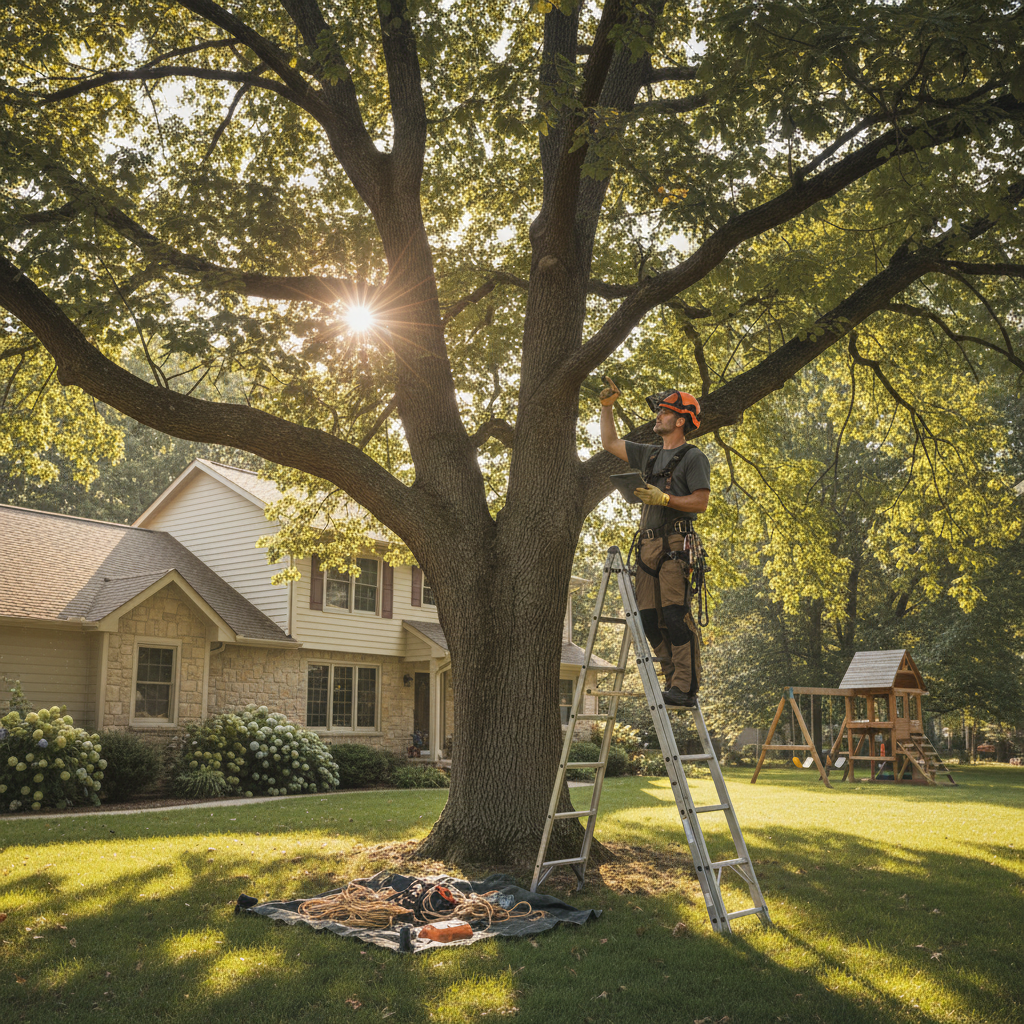
Getting a quote for tree removal can feel like a black box. One company quotes you $900, another quotes $2,500, and a third comes in at a suspiciously low $450. How are you supposed to know what’s a fair price? Is the high quote a rip-off? Is the low one a dangerous mistake waiting to happen?
Unlike buying a product off a shelf, tree removal is a service where the price is entirely dependent on the specific situation. The cost isn't just for cutting down a tree; it's for managing risk, deploying heavy equipment, and protecting your property. This guide will demystify tree service pricing, showing you what factors drive the cost, what a good quote should include, and how to spot red flags so you can hire a professional with confidence.
The Average Cost of Tree Removal: A Starting Point
While every job is unique, it’s helpful to have a general idea of what to expect. Most homeowners can expect to pay somewhere between $750 and $2,000 for a standard tree removal. However, this number can swing dramatically based on the tree's size, location, and condition.
To give you a clearer picture, here’s a rough breakdown of costs by tree size:
- Small Trees (under 30 feet): Typically $250 to $750. These are often smaller ornamental trees or young trees that can be removed relatively easily by a small crew with minimal equipment.
- Medium Trees (30 to 60 feet): Generally $500 to $2,000. This is the most common size range for removals. These trees often require a skilled climber and a ground crew to safely lower large limbs.
- Large Trees (60 to 80 feet): Expect to pay $1,500 to $3,500 or more. These removals are complex and dangerous. They require extensive rigging, specialized equipment, and a highly experienced crew.
- Very Large or Hazardous Trees (over 80 feet): Costs can easily exceed $4,000 and go much higher. Trees of this size, especially if they are near structures or power lines, often require a crane, which adds a significant expense.
Remember, these are just ballpark figures. The real price is in the details. Let's dig into the specific factors that will shape your final quote.
Key Factors That Drive Your Tree Removal Cost
The final price tag on your tree removal project is a blend of several interconnected variables. A professional estimator considers all these factors when they walk your property to prepare a quote. Understanding them will help you see why one tree might cost three times as much as another to remove.
Tree Size and Diameter
This is the most significant cost driver. A taller tree with a wider trunk means more. More work, more risk, more wood to process, and more debris to haul away. A climber has to make more cuts and rig more sections. The ground crew has to handle heavier pieces of wood. The job simply takes more time and energy, directly impacting the labor cost.
Tree Location and Accessibility
Where the tree is located on your property is almost as important as its size. A tree in the middle of an open, flat front yard is the cheapest scenario. The crew has plenty of room to work and can drop large sections of the tree without worrying about obstacles. They can easily bring in a wood chipper and truck right up to the work area.
Contrast that with a tree in a tight backyard, with its trunk just a few feet from your house and its branches overhanging both your roof and your neighbor's fence. Now, the job is exponentially more complex. Every single branch must be carefully roped, cut, and lowered to the ground to avoid property damage. This methodical, painstaking work is called "technical rigging," and it requires immense skill and time. If access is so poor that heavy equipment can't get to the tree, the crew may even need to bring in a crane, which can add $500 to $1,500 or more to the daily cost.
Tree Health and Condition
A dead or dying tree is not necessarily cheaper to remove. In fact, it can be more expensive. Dead wood is brittle and unpredictable. A climber can't put their full trust in the tree's structural integrity, making the work slower and more dangerous. They must take extra precautions, which translates to more time on the job. A healthy, strong tree is predictable, allowing for a more efficient removal process.
The Scope of Work: What's Included?
Not all "tree removal" quotes include the same services. This is where many homeowners get confused when comparing bids. A standard, full-service removal quote should typically cover:
- Felling the Tree: Safely cutting the tree down, either by directing its fall or dismantling it in sections.
- Limbing and Bucking: Cutting all the branches off the trunk (limbing) and then cutting the trunk itself into more manageable logs (bucking).
- Hauling Debris: Chipping all the brush and small branches and hauling the chips and logs away from your property.
- Site Cleanup: Raking the area to remove sawdust, twigs, and other small debris, leaving your yard tidy.
What's often not included unless specified is stump grinding. This is a separate process with a separate cost, which we'll cover later. Always ask your estimator to provide an itemized quote so you can see exactly what you're paying for.
Understanding What You're Paying For (Beyond the Saw)
When you see a quote for $1,800, it's easy to think, "That's a lot for a few hours of work!" But the cost covers much more than just the time the crew is on your property. It reflects the high overhead and risk associated with professional tree work.
Labor and Expertise
You're not just paying for muscle; you're paying for skill and experience. A tree crew is a coordinated team. The climber is a highly trained professional who understands tree physics, rigging techniques, and advanced cutting methods. The ground crew is responsible for managing the drop zone, processing the wood, and ensuring everyone's safety. This level of expertise prevents accidents and property damage, and it comes at a premium.
Equipment Costs
Professional tree services use a range of expensive, specialized equipment. This includes powerful chainsaws, industrial-grade wood chippers (which can cost $30,000-$80,000), stump grinders, and sometimes bucket trucks or cranes. All this machinery requires fuel, regular maintenance, and eventual replacement, costs which are factored into the price of every job.
Insurance: The Non-Negotiable Cost
This is the single most important component of a legitimate tree service's overhead, and it's a critical protection for you as a homeowner. A reputable company carries two key types of insurance:
- General Liability Insurance: This covers damage to your property. If a limb accidentally falls and crushes your garage, their insurance pays for it, not your homeowner's policy.
- Worker's Compensation Insurance: This covers injuries to the crew members while on your property. Tree work is one of the most dangerous professions. Without worker's comp, if a crew member gets hurt on your property, you could be held liable for their medical bills and lost wages.
Insurance for tree work is incredibly expensive due to the high risk. A lowball quote often means the company is cutting corners by forgoing proper insurance. Always ask for a Certificate of Insurance (COI) before work begins and don't be afraid to call the insurance agency listed on the certificate to verify that the policy is active.
Debris Disposal
Getting rid of the wood and chips isn't free. Companies have to pay tipping fees at landfills or green waste processing facilities to dump the debris. These fees are a direct cost that gets passed on to the customer.
Additional Services and Their Costs
Beyond the basic removal, you may need or want a few other services. These are typically priced as separate line items on your quote.
Stump Grinding
Cutting a tree down leaves a stump, usually cut as low to the ground as possible. Stump grinding is the process of using a machine to grind the stump and its immediate roots into a pile of wood chips, typically 6-12 inches below the surface. This allows you to plant grass or a new garden bed in its place.
- Typical Cost: $150 to $400, depending on the stump's diameter, age, and accessibility. It's almost always a separate charge from the tree removal itself.
Wood Hauling vs. Leaving It
If you have a fireplace or wood stove, you can often save a bit of money by asking the crew to leave the larger logs for you to split and season later. Make sure to specify the length you want them cut to. Similarly, you can ask for the wood chips to be left behind for use as mulch in your garden beds. If you don't want the wood or chips, hauling them away will be included in the full removal price.
Emergency Tree Removal
If a tree has fallen on your house or is threatening to fall after a storm, you'll need emergency service. Be prepared to pay a premium. This type of work often happens after hours or on weekends and involves significantly more risk. Expect to pay at least 25-50% more than you would for a scheduled removal.
How to Get a Fair and Accurate Quote
Now that you know what goes into the cost, you can be a smarter shopper. The goal isn't to find the cheapest price, but the best value from a safe, professional company.
- Get at least three quotes. This is the best way to get a sense of the fair market rate for your specific job. If two quotes are $2,000 and $2,300, and one is $800, you know the low one is suspect.
- Insist on an in-person inspection. Never accept a quote over the phone or via email based on a picture. A professional needs to see the tree, the access, and any potential hazards to give you an accurate price.
- Ask for a detailed, written quote. The quote should clearly itemize all the work to be done: removal, debris hauling, stump grinding, cleanup, etc. This allows you to compare quotes on an apples-to-apples basis.
- Verify their credentials. Ask for proof of both general liability and worker's compensation insurance. Check their license if your state or city requires one. A reputable company will provide this information gladly.
- Consider a Certified Arborist. For large, complex, or valuable trees, consider hiring a company with an ISA (International Society of Arboriculture) Certified Arborist on staff. Arborists have proven expertise in tree health, biology, and safety, offering a higher level of knowledge and professionalism.
Red Flags: How to Spot a Bad Tree Service Quote
Protect yourself from scams and unsafe operators by watching out for these warning signs:
- An extremely low price. If a price seems too good to be true, it is. It almost certainly means the company is uninsured, unskilled, or both.
- Asks for cash only or a large upfront payment. A small deposit (10-20%) can be normal for very large jobs, but demanding full payment or a large cash deposit upfront is a huge red flag.
- No written contract or quote. A professional puts everything in writing.
- Hesitation to provide proof of insurance. If they can't or won't show you their insurance certificate, run away.
- High-pressure sales tactics. Phrases like "This price is only good if you sign today" are a sign of a desperate or dishonest operator.
- Unsolicited door-knocking. Beware of people who show up after a storm and say, "We were in the neighborhood and can give you a discount." These are often uninsured storm-chasers.
- Lack of safety gear. If the crew shows up in sneakers and t-shirts with no hard hats or eye protection, they are not professionals. Send them away before they even start.
Ultimately, tree removal is a job where you get what you pay for. The cost reflects the skill, equipment, and insurance necessary to protect you, your property, and the workers themselves. By understanding the factors that go into a quote and vetting your contractor carefully, you can ensure your tree is removed safely and for a fair price.
Frequently asked questions
Is it cheaper to remove a tree in the winter?+
Sometimes, yes. In winter, deciduous trees have no leaves, which makes them lighter and easier to see through for climbers. The frozen ground can also better support heavy equipment, potentially reducing yard damage. This can lead to modest savings, but it primarily applies to scheduled, non-emergency removals.
Do I need a permit to remove a tree on my property?+
It depends entirely on your local municipality and sometimes your HOA. Many towns have ordinances protecting trees over a certain size or of a specific species. Always check with your city or county planning department before scheduling a removal; a professional tree service should also be aware of local regulations.
Why isn't stump grinding included in the base price for tree removal?+
Stump grinding is considered an optional, separate service because it requires different equipment (a stump grinder) and not every homeowner needs or wants it. Separating the cost allows customers who are okay with leaving the stump to save money, while those who want it gone can add the service on.
Can I keep the firewood to save money?+
Yes, in most cases. You can ask the tree service to leave the larger pieces of the trunk and limbs on your property. This can slightly reduce the cost as it saves them the labor and disposal fees for hauling the logs. Be sure to specify that you want this when getting your quote.
What's the difference between a tree service and a certified arborist?+
Any company can call themselves a 'tree service,' but a Certified Arborist is a professional who has passed a comprehensive exam from the International Society of Arboriculture (ISA). While a tree service focuses on removal and trimming, an arborist has deeper knowledge of tree health, disease diagnosis, and proper care. For complex removals or to save a valuable tree, hiring a company with a certified arborist is a wise investment.