
Cracked Concrete? When to Patch, Resurface, or Replace Your Driveway or Patio
Noticed cracks in your driveway or patio? Learn how to tell if you need a simple patch, a cosmetic resurfacing, or a full replacement to make a smart hiring decision.
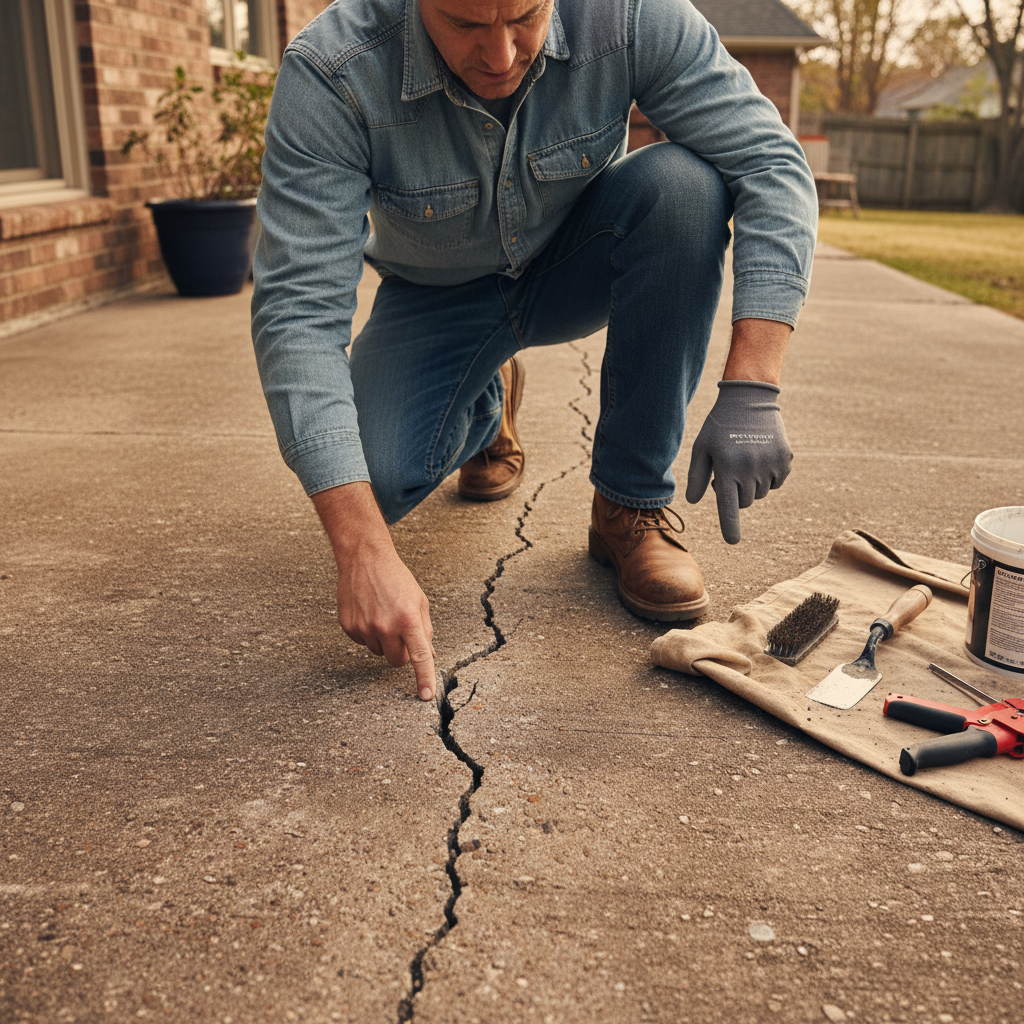
That web of cracks in your concrete driveway or the sinking slab on your patio isn't just an eyesore—it's a problem that will only get worse. Water seeps in, freezes, and expands, turning small cracks into big ones. Uneven surfaces become trip hazards. The good news is, you have options. The bad news is, choosing the wrong one can be a costly mistake.
Should you grab a tube of filler and call it a day? Hire a pro to give it a facelift? Or bite the bullet and tear the whole thing out? The right answer depends entirely on the type and extent of the damage. This guide will help you diagnose your concrete's condition so you can make a smart, confident hiring decision.
First, Diagnose the Damage: What Kind of Cracks Are You Seeing?
Before you can decide on a solution, you need to play detective. The way your concrete is cracking tells a story about what’s happening both on the surface and underneath it. Grab a credit card and a quarter for reference and go take a close look.
Hairline Cracks (Shrinkage Cracks)
These are the most common and least worrisome type of cracks. They are very fine—usually narrower than the width of a credit card—and appear in random, web-like patterns. They happen when the concrete is curing and water evaporates from the surface too quickly, causing it to shrink.
- What they look like: Thin, shallow, and often in a network (sometimes called "crazing").
- What they mean: These are almost always cosmetic. They don't typically indicate a problem with the structural integrity of the slab itself.
- Your likely solution: Patching or Resurfacing. Small hairline cracks can be sealed to prevent water intrusion. If they cover a large area and you don't like the look, resurfacing is an excellent option.
Wider Cracks (Settling or Structural Cracks)
This is where you need to pay more attention. If you can fit a credit card or a quarter into the crack, it's more than just a surface issue. These cracks often run the full depth of the slab and may signal a problem with the ground underneath.
Look for two key things:
- Width: Is the crack wider than 1/4 inch? Wider cracks let in more water and debris, accelerating deterioration.
- Displacement: Is one side of the crack higher than the other? This is called heaving or sinking, and it's a major red flag. It means the soil base beneath your concrete has moved, washed away, or failed. This is a trip hazard and a clear sign of structural failure.
- What they look like: Deep cracks, often running in longer, straighter lines. One side may be higher than the other.
- What they mean: The sub-base—the layer of compacted gravel and soil your concrete was poured on—has failed. This can be due to poor initial compaction, water erosion, or soil movement.
- Your likely solution: Often Replacement. While you can sometimes use specialized techniques like slab-jacking (mudjacking) to lift a sunken slab, a large, heaving crack usually means the foundation is compromised. Patching is just a temporary band-aid; the crack will reappear. Resurfacing is not an option, as it won't fix the underlying movement.
Spalling, Pitting, and Flaking
Sometimes the problem isn't a crack, but the whole surface falling apart. Spalling is when the top layer of the concrete flakes or peels away, exposing the rougher aggregate (the small stones in the concrete mix) underneath. This is often caused by the freeze-thaw cycle, especially if de-icing salts are used. The salt helps water penetrate the concrete's pores; when that water freezes and expands, it pops the surface off.
- What they look like: Pockmarked, pitted, or scaly surfaces. The top 1/8 to 1/4 inch of concrete is gone in patches.
- What they mean: Surface-level damage, not necessarily structural failure. It's a sign of weathering and age.
- Your likely solution: Resurfacing. As long as the slab itself is stable (no major structural cracks or heaving), a concrete resurfacer can be applied to create a brand-new, durable surface right on top of the old one.
The Quick Fix: When to Patch Your Concrete
Patching is the simplest and cheapest repair. It involves cleaning out a crack or chip and filling it with a specialized concrete patching compound. Think of it like filling a cavity in a tooth—it stops the decay from getting worse.
When patching is the right choice:
- For isolated, non-structural cracks: The crack is less than 1/4 inch wide and both sides are level.
- For small chips or gouges: An edge got knocked off or something heavy was dropped on the surface.
- As a temporary holdover: You know you need a bigger fix down the line, but you want to seal the crack now to prevent water damage over the winter.
Working with a pro for patching is usually done by a handyman or a specialized concrete repair service. While you can buy DIY kits, a professional will have the right tools to properly clean and prepare the crack (often with a grinder) for a much more durable bond. The downside? The patch will almost never be a perfect color match. It will look like a scar, but it's a functional repair.
What this means for the homeowner: Patching is a low-cost maintenance task. Expect to pay a handyman $150–$400 for a few hours of work to seal several cracks. It's a smart move to protect your investment, but don't expect it to solve underlying problems or look perfect.
The Makeover: When to Resurface Your Concrete
If your concrete slab is structurally sound but looks like a mess, resurfacing is your best friend. This process gives your old, ugly concrete a brand-new face without the massive expense and disruption of a full tear-out.
A professional will apply a thin (1/8 to 1/4 inch) layer of a polymer-modified cementitious overlay. This isn't just a layer of paint; it's a new, durable concrete surface that bonds chemically to the old one.
When resurfacing is the right choice:
- The concrete slab is stable, with no major, deep cracks or heaving.
- The surface is plagued by widespread hairline cracks, spalling, pitting, or discoloration.
- You want to upgrade the look. Overlays can be colored, stamped, or textured to mimic stone, brick, or other high-end finishes.
The process involves intensely cleaning the surface with a pressure washer, repairing any minor cracks, and then squeegeeing or troweling on the resurfacing material. The result is a surface that looks brand new because, for all practical purposes, it is.
What this means for the homeowner: Resurfacing is a fantastic middle-ground option that balances cost and impact. It costs significantly less than replacement but delivers a huge aesthetic upgrade. It's not a DIY job for a large area like a driveway; you need a pro to ensure proper surface prep and application. A poorly applied overlay can delaminate and peel within a year or two.
The Full Monty: When to Replace Your Concrete
Sometimes, there's no saving it. When the foundation of the concrete is failing, any fix to the surface is just throwing good money after bad. Replacement is the most expensive and disruptive option, but it's also the only permanent solution for major structural problems.
When replacement is the only choice:
- Deep, wide structural cracks: Multiple cracks are wider than 1/2 inch.
- Significant heaving or sinking: One side of a crack is more than 1/2 inch higher than the other, creating a serious trip hazard.
- A failed sub-base: The slab is sinking in multiple places, indicating the ground underneath can no longer support it.
- Frost heave: Common in cold climates, where the ground freezes and pushes entire sections of the slab upwards.
Replacement is a major construction project. It involves a crew using heavy equipment to break up and haul away the old concrete, re-grading and compacting a new sub-base of gravel, setting forms, often laying rebar or wire mesh for reinforcement, and finally, pouring a new 4-inch-thick slab.
What this means for the homeowner: This is not a handyman job. You need to hire a dedicated concrete contractor. The most important question you can ask a potential contractor is, "How do you prepare the sub-base?" A quality contractor will talk at length about compaction, proper drainage, and using the right amount of gravel. A cheap bid often means they are skimping on this step, and your new driveway will be cracking again in just a few years. You may also need a permit from your city, especially for a driveway approach or if the work impacts the sidewalk.
Comparing the Costs: Patch vs. Resurface vs. Replace
Your budget is a huge factor. Here’s a rough breakdown of what you can expect to pay. Keep in mind that prices vary significantly by region, site access, and the current cost of materials.
Patching: This is the most affordable route. DIY kits cost $20–$50. Hiring a handyman for a few hours might run you $150–$400 to address several minor cracks.
Resurfacing: This is priced per square foot. Expect to pay a professional $3–$7 per square foot. For a typical two-car driveway (around 600 sq. ft.), you're looking at a range of $1,800–$4,200. Decorative stamping and coloring will be on the higher end of that range or more.
Replacement: This is the most expensive option, also priced by the square foot. A straightforward tear-out and replacement can cost $8–$18 per square foot, and sometimes more. That same 600 sq. ft. driveway could now cost $4,800–$10,800 or more. Costs escalate if there are issues with site access, poor soil that needs amending, or if extensive grading is required.
Hiring a Pro: What to Look for in a Concrete Contractor
Whether you're resurfacing or replacing, hiring the right professional is key to a long-lasting job. Concrete work is heavy, messy, and surprisingly easy to get wrong.
Here’s what to look for when vetting contractors:
- Proper Licensing and Insurance: This is non-negotiable. Ask for proof of their local business license, general liability insurance, and workers' compensation insurance. If someone gets hurt or your property is damaged, you need to be covered.
- Specialization: A general contractor can pour concrete, but a contractor who specializes in flatwork (driveways, patios, sidewalks) will have the dedicated equipment and experience to do it better and more efficiently.
- A Detailed Bid: A bid that just says "Replace driveway: $7,000" is a red flag. A good bid will detail the scope of work: demolition and removal of old concrete, depth of the new gravel sub-base, whether rebar or wire mesh is included, and the concrete's strength (measured in PSI—4000 PSI is standard for driveways).
- Portfolio and References: Ask to see photos of their past work—specifically jobs similar to yours. Don't just look at brand new pours; ask if they have photos of resurfacing jobs or repairs. A confident pro will happily provide a list of recent customers you can call.
- No High-Pressure Sales: Be wary of "today only" deals or contractors who push for an immediate decision. Take your time to get at least three detailed bids to compare scope and price.
Ultimately, looking at your cracked concrete and deciding what to do is the first step. By understanding the signs of simple wear versus structural failure, you can choose the right path and hire the right pro for a solution that's safe, durable, and fits your budget.
Frequently asked questions
Can I just pour new concrete over my old, cracked driveway?+
Generally, no. Pouring a thin layer of new concrete over a cracked slab is a recipe for failure. The existing cracks will almost always transfer up through the new layer, a process called 'reflective cracking'. For a lasting fix, you must either resurface with a proper polymer-modified overlay or completely replace the old slab.
How long does new concrete need to cure before I can use it?+
A good rule of thumb is to wait at least 24 hours before walking on new concrete. Wait a full 7 days before driving a passenger car on it. While it gains most of its strength in the first week, concrete doesn't reach its full, final cured strength for about 28 days.
Do de-icing salts really damage concrete?+
Yes, they are a major cause of surface damage like spalling and pitting. The salt allows water to penetrate the concrete's surface pores. When this water freezes and expands, it creates pressure that pops off the top layer of the concrete. Use sand for traction or look for 'concrete-safe' de-icers that use calcium magnesium acetate.
What time of year is best for concrete work?+
The ideal time for pouring or resurfacing concrete is during mild, dry weather, typically in the spring or fall. Extreme heat can cause the concrete to cure too quickly and crack, while freezing temperatures can ruin it before it has a chance to gain strength. Most contractors avoid pouring if the temperature is expected to drop below 40°F.
What's the difference between concrete and cement?+
People often use the terms interchangeably, but cement is just one ingredient in concrete. Think of cement as the flour in a cake recipe. Concrete is the final baked cake, made of cement, water, sand, and gravel (aggregate).