
Tankless vs. Traditional Water Heater: Why Most Homeowners Stick With the Tank
Your water heater is failing. Should you upgrade to a tankless model or stick with a traditional tank? We break down the costs, benefits, and why most homeowners still choose a tank.
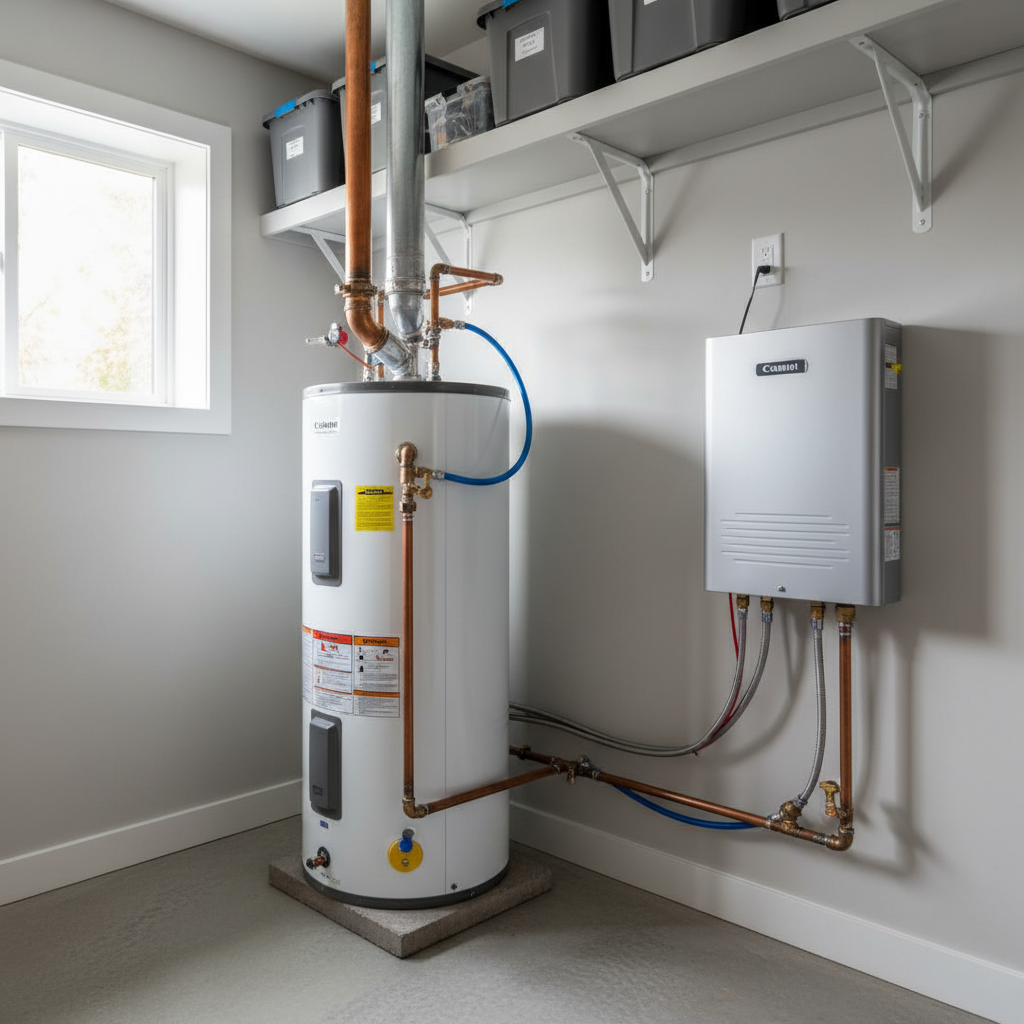
It often starts with a puddle in the basement or a lukewarm morning shower. Your trusty water heater, after a decade of silent service, is finally giving up. When you call a plumber, you’ll be faced with a major decision: replace it with another traditional tank-style heater or upgrade to a modern tankless, on-demand system?
While tankless heaters get a lot of buzz for their energy efficiency and endless hot water, the reality on the ground is that most homeowners—especially when faced with a sudden failure—opt for another traditional tank. This guide will walk you through the pros and cons of each, explain the real-world costs and installation challenges, and reveal why the familiar tank still rules the replacement market. Our goal is to arm you with the right questions to ask a plumber so you can make the best choice for your home, family, and budget.
How Traditional Tank Water Heaters Work (And Why They're King)
This is the water heater most of us grew up with. It’s a simple, effective piece of technology: a large, insulated steel tank (typically 40, 50, or 80 gallons) holds water and keeps it hot 24/7, ready for when you turn on a faucet or appliance. A gas burner at the bottom or electric heating elements inside cycle on and off to maintain the set temperature.
Its continued dominance comes down to a few key advantages, especially when you’re in a rush to get the hot water flowing again.
The Pros of a Traditional Tank Heater
- Lower Upfront Cost: This is the number one reason they remain so popular. A standard-efficiency gas or electric tank heater replacement typically costs between $1,200 and $2,500 installed. High-efficiency models might push that a bit higher, but it’s still significantly less than a tankless system.
- Simple, Proven Technology: There are fewer complex electronics or sensors to fail. The technology is decades old, reliable, and every licensed plumber in the country knows how to install and service them.
- Easy Replacement: If you already have a tank heater, replacing it with a new one is usually a straightforward job for a plumber. The water, gas or electric, and vent connections are already in place. A direct swap can often be completed in just a few hours.
The Cons of a Traditional Tank Heater
- Standby Heat Loss: Because the tank is always keeping dozens of gallons of water hot, it’s constantly using energy, even when you’re sleeping or away on vacation. This is less of an issue with modern, better-insulated tanks, but it’s still inherent to the design.
- Limited Hot Water: The dreaded cold shower. Once you’ve used up the hot water in the tank, you have to wait for it to refill and reheat, a process that can take 30-60 minutes or more.
- Large Footprint: That big tank takes up a significant chunk of floor space in a utility closet, basement, or garage.
- Shorter Lifespan: A typical tank-style water heater lasts about 8 to 12 years. Sediment buildup at the bottom of the tank is the primary enemy, leading to corrosion and eventual failure (leaks).
What this means when hiring: If your water heater just failed and you need a fast, affordable solution, a like-for-like tank replacement is your path of least resistance. A plumber can give you a firm quote quickly, and the job is relatively simple. Just be sure the quote includes the new unit, labor, disposal of the old tank, and any required updates to bring the installation up to current local code.
The Rise of Tankless 'On-Demand' Water Heaters
Tankless water heaters, as the name implies, don’t store any hot water. Instead, they use powerful gas burners or electric elements to heat water instantly as it flows through the unit. When you turn on a hot water tap, a flow sensor activates the heater. When you turn the tap off, the heater shuts down.
This on-demand approach offers some compelling benefits, but they come with significant costs and installation considerations that every homeowner needs to understand.
The Pros of a Tankless Water Heater
- Endless Hot Water: Since water is heated as you need it, you can’t run out. You can run the shower, the dishwasher, and the laundry all at once (if the unit is sized correctly) without the water going cold.
- Energy Savings: By eliminating standby heat loss, tankless heaters are significantly more energy-efficient. According to the Department of Energy, they can be 24%–34% more efficient than a conventional storage tank, saving a typical family over $100 per year.
- Longer Lifespan: With proper maintenance, a tankless water heater can last 20 years or more, nearly double the lifespan of a tank heater.
- Space-Saving Design: These units are compact boxes that mount on a wall, freeing up valuable floor space.
The Cons of a Tankless Water Heater
- High Upfront Cost: This is the biggest hurdle. A professionally installed tankless water heater typically costs between $4,000 and $7,500, and can be even more if significant plumbing, gas, or electrical upgrades are needed.
- Installation Complexity: A tankless unit is almost never a simple swap. Gas models often require a larger-diameter gas line to be run from the meter, as well as specialized, expensive venting. Electric models have a massive power draw and may require a new, dedicated high-amperage circuit and even an electrical panel upgrade.
- Output Limitations: A unit’s capacity is measured in gallons per minute (GPM). An undersized unit may struggle to supply hot water to multiple fixtures at once, especially in colder climates where the incoming water is very cold. A professional plumber is essential for correctly sizing the unit for your home.
What this means when hiring: Upgrading to tankless is a mini-remodeling project, not just a replacement. Your plumber will need to carefully assess your home’s existing infrastructure. Be prepared for a quote that includes not just the plumber's time, but potentially costs for an electrician, new venting materials, and pulling a permit for the modifications.
The Key Decision Factors: A Head-to-Head Comparison
Choosing between tank and tankless isn't just about technology; it's about your finances, your family's needs, and your home's limitations. Let's break down the decision into the three areas that matter most.
Upfront Cost vs. Long-Term Savings
For most people, this is the entire conversation. A tank heater costs $1,200–$2,500 installed. A tankless heater costs $4,000–$7,500+ installed. The roughly $3,000+ difference is a major financial barrier.
While a tankless unit saves you money on your utility bills each month, the payback period can be very long. If you save $150 per year in energy costs, it could take 20 years to recoup the initial $3,000 price difference. If you plan to sell your home in the next 5-10 years, you will almost certainly not break even on the investment. A traditional tank is the clear financial winner for upfront cost, while a tankless unit is a long-term play for homeowners who plan to stay put for decades.
Hot Water Supply: Endless vs. Finite
How often does your family actually run out of hot water? Be honest.
- For smaller households (1-3 people): A standard 40- or 50-gallon tank is almost always sufficient. You likely never experience a cold shower, so the “endless” hot water of a tankless system is a solution to a problem you don’t have.
- For larger households (4+ people): This is where tankless shines. If you have teenagers and are coordinating back-to-back showers, or you like to run the dishwasher and laundry while someone is showering, the continuous flow of a properly sized tankless unit is a life-changing upgrade.
When you talk to a plumber, they will help you size a unit correctly. For a tank, this is about gallon capacity. For tankless, it's about the flow rate (GPM) needed to meet your peak demand, factoring in the temperature of your groundwater.
Lifespan and Maintenance
Both types of water heaters require maintenance to reach their maximum lifespan. Ignoring it is a costly mistake.
- Traditional Tank (8–12 years): Needs to be flushed annually to remove mineral sediment that builds up at the bottom. This sediment insulates the water from the burner, reduces efficiency, and corrodes the tank, leading to leaks.
- Tankless (20+ years): Needs to be descaled (flushed with a vinegar solution) every 1-2 years, especially in areas with hard water. Scale can clog the narrow passages of the heat exchanger, restricting flow and damaging the unit.
Many homeowners have a plumber perform this annual service, which can cost $150–$300. While the tankless unit lasts longer, you can't just install it and forget about it. The long-term reliability of either system depends on this routine care.
So, What Do Most Homeowners Actually Pick?
Despite the clear advantages of tankless technology, the vast majority of homeowners in the U.S. replace their failing water heater with another traditional tank model.
This isn't because they are uninformed. It's because of practical, real-world circumstances:
It's an Emergency Purchase: Most people don't think about their water heater until it fails, often by leaking all over the floor. They need hot water restored immediately. A like-for-like tank replacement can be done the same or next day. A tankless conversion is a multi-day project involving evaluation, potentially hiring an electrician, and more complex plumbing and venting. In a crisis, speed and simplicity win.
The Upfront Cost Hurdle: The sticker shock is real. Many households don't have an extra $3,000 to $5,000 in their budget for an unexpected home repair. The lower upfront cost of the traditional tank makes it the only feasible option.
The "Good Enough" Principle: For millions of homes, a standard 50-gallon tank works just fine. It provides plenty of hot water for daily needs, and the homeowners have never experienced the pain point of running out. The added expense of a tankless system doesn't provide enough value to justify the cost.
Retrofitting Challenges: In older homes, the cost to upgrade for a tankless unit can skyrocket. Running a new, larger gas line or a heavy-duty electrical circuit can be disruptive and expensive. Homeowners often look at the all-in quote and decide the hassle isn't worth it.
When Does a Tankless Water Heater Make the Most Sense?
While it may not be the default choice for emergency replacements, a tankless water heater is absolutely the right choice in specific situations. If you fall into one of these categories, you should strongly consider making the upgrade.
- New Construction or a Major Remodel: If you're building a new home or gutting your kitchen or basement, the walls are already open. This is the perfect time to run the necessary gas, electric, and vent lines for a tankless system. The incremental cost is much smaller and easier to absorb into the overall project budget.
- You're Adding a Bathroom or Luxury Fixture: If you're adding a large soaking tub or a multi-head shower system, your old tank heater likely won't be able to keep up. A tankless unit ensures you can actually enjoy those new fixtures.
- You Have a Large Family and High Demand: If your daily routine is a constant battle over hot water, a tankless heater will be a massive quality-of-life improvement that you'll appreciate every single day. The convenience factor alone can be worth the price.
- You Need to Reclaim Space: If your current water heater is in a closet you’d love to use for storage, or in a garage where you need more room, the compact, wall-mounted form factor of a tankless unit is a huge benefit.
- You're in Your "Forever Home": If you plan to live in your house for the next 15-20 years, the math starts to work. You'll be there long enough to enjoy the energy savings and to benefit from the unit's full 20+ year lifespan, saving you the cost of replacing a tank heater a second time.
Hiring a Plumber: What to Ask and What to Expect
Whether you’re leaning toward tank or tankless, hiring the right pro is critical. A water heater installation involves water, electricity or natural gas, and potentially carbon monoxide venting—this is not a job for a handyman.
When you call for estimates, here's how to ensure you're making a smart decision:
- Get at least three quotes. Prices can vary, and this helps you spot any bids that are unusually high or suspiciously low.
- Ask for quotes for both types. Have the plumber price out a good-quality traditional tank replacement and a full tankless conversion. This will give you the real numbers for your specific home so you can make a true cost-benefit analysis.
- Ask about home modifications. For the tankless option, ask specifically: "What upgrades will my gas line, electrical panel, and venting need? Are those costs included in your quote?"
- Confirm the total, all-in price. A professional quote should clearly state that it includes the water heater unit itself, all installation labor, new water flex lines, a new expansion tank (if required by code), removal and disposal of the old unit, and the cost of any necessary permits.
- Inquire about warranties. There will be a manufacturer's warranty on the unit (for parts) and a workmanship warranty from the installer (for labor). Make sure you understand both.
- Verify license and insurance. Ask for the plumber’s state license number and a certificate of insurance. This protects you in case something goes wrong during the installation.
A good plumber won’t just sell you a product; they’ll act as a consultant, helping you weigh the pros and cons for your situation. By understanding the real costs, benefits, and common pitfalls of each option, you can work with your pro to choose the right water heater that will serve your home reliably for years to come.
Frequently asked questions
Do tankless water heaters work during a power outage?+
No. Both gas and electric tankless water heaters require electricity to operate their electronic controls and sensors. A traditional gas tank heater with a standing pilot light may be able to provide hot water during an outage, but most modern tank heaters (gas and electric) also rely on electronic controls.
How long does it take to install a new water heater?+
A straightforward, like-for-like replacement of a traditional tank water heater typically takes a plumber 2 to 4 hours. Installing a tankless water heater for the first time is a more involved project that can take 4 to 8 hours or even longer if significant gas, electrical, or venting work is required.
Do I need a permit to replace my water heater?+
In most jurisdictions, yes. Replacing a water heater is considered a plumbing job that requires a permit to ensure the installation is done safely and up to current building codes. Your licensed plumber should know the local requirements and will typically handle the permitting process for you.
Can a tankless water heater really provide endless hot water?+
Yes, in the sense that it will never 'run out' of a stored supply like a tank does. However, its output is limited by its flow rate (GPM). If you turn on too many hot water faucets at once, exceeding the unit's GPM capacity, the water pressure at each faucet will drop, but the water will remain hot.
Is it worth repairing my old water heater instead of replacing it?+
It depends on the age of the unit and the nature of the problem. If your tank heater is less than 8 years old and has a failed part like a thermocouple or heating element, a repair is often cost-effective. If the tank itself is leaking or the unit is over 10-12 years old, replacement is almost always the smarter choice.