
Driveway Repair or Replace? A Homeowner's Guide to Costs & Choices
Is your crumbling driveway an eyesore? This guide breaks down the costs, lifespan, and key signs to help you decide between repairing or replacing your asphalt or concrete driveway.
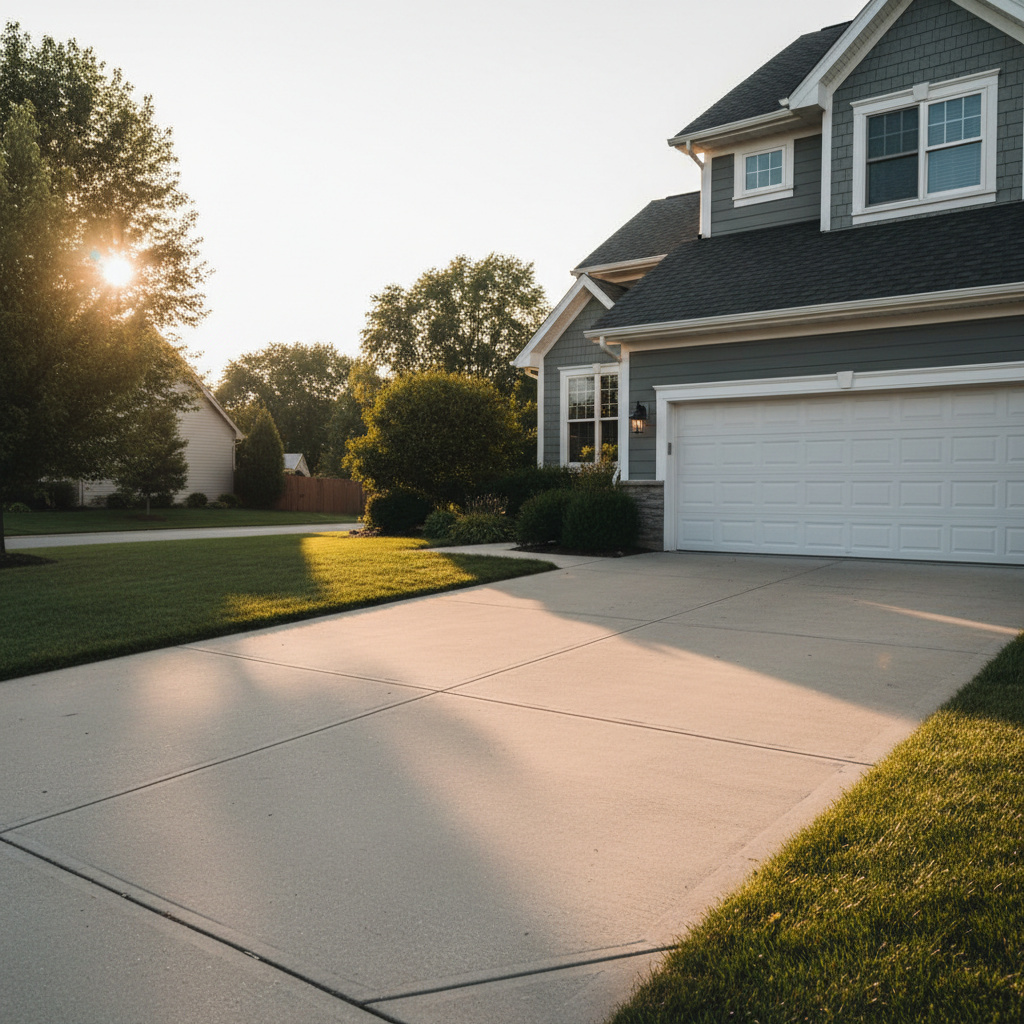
A cracked, crumbling, or stained driveway is more than just a cosmetic problem. It detracts from your home's curb appeal, can be a tripping hazard, and often signals deeper structural issues. As a homeowner, you're eventually faced with a critical decision: should you repair the damage or invest in a full replacement?
This isn't just about the immediate cost. It's a calculation involving the type and severity of the damage, the age of your driveway, the material it's made from (asphalt or concrete), and your long-term plans for your home. Making the wrong choice can mean throwing good money after bad on a temporary fix or spending a fortune on a replacement you didn't need yet. This guide will walk you through the key factors to help you make a smart, informed decision when you call in the pros.
When to Repair Your Driveway
Repairing your driveway is the faster, more affordable option. It's a great choice when the damage is localized and the driveway's foundation, or sub-base, is still solid. Think of it as treating a specific symptom rather than performing major surgery.
Signs Your Concrete Driveway Can Be Repaired
Concrete is tough, but it's not indestructible. Fortunately, it's quite receptive to certain types of repair if you catch problems early.
- Hairline or Small Cracks: Cracks less than 1/4-inch wide are typically surface-level. These are prime candidates for repair. A professional can clean them out and fill them with a flexible, commercial-grade sealant to prevent water from getting in and making them worse.
- Minor Spalling or Flaking: Spalling is when the top layer of concrete flakes away, creating a pockmarked surface. If this is limited to a small area and isn't very deep, a contractor can patch it or apply a concrete resurfacer over the prepared surface to create a fresh, uniform look.
- A Single Sunken Slab: If one section of your driveway has sunk but isn't cracked into a dozen pieces, you may not need to replace it. A process called mudjacking or slabjacking involves drilling small holes and pumping a slurry (or polyurethane foam in a newer method called poly-lifting) underneath to raise the slab back to level. This is far less expensive and disruptive than tearing it out.
- Stains and Discoloration: Oil stains or discoloration from leaves don't compromise the structure. While you can try DIY cleaning, a professional power wash with specialized detergents can often restore the look of the concrete without needing any major work.
Signs Your Asphalt Driveway Can Be Repaired
Asphalt, also known as blacktop, is more flexible than concrete, but it requires more regular maintenance to reach its full lifespan. Repair is often a viable path.
- Small, Interconnected Cracks (Alligator Cracks): If you see a pattern of cracks that looks like an alligator's skin in a small, isolated area, it can often be patched. A pro will cut out the damaged section, repair the base underneath if needed, and fill it with new hot-mix asphalt.
- Minor Potholes: One or two small potholes don't automatically mean your driveway is done for. Similar to patching alligator cracks, these can be cleaned, filled, and compacted for a durable repair.
- Fading and Surface Wear: Asphalt oxidizes over time, turning from a rich black to a dull gray. This is a sign that the binder holding the aggregate together is aging. This is the perfect time for sealcoating, a crucial maintenance task that protects the asphalt from sun, water, and oil, dramatically extending its life.
If your driveway shows these signs, you're likely in the "repair" category. You can confidently call a driveway professional to get quotes on patching, sealing, or resurfacing, knowing you're addressing the problem effectively without overspending.
When Replacement is the Only Smart Choice
Sometimes, a repair is just a band-aid on a problem that requires a real cure. Pouring money into fixing a driveway that has fundamental structural flaws is a losing battle. The problems will return, often within a year or two, and you'll be back where you started. Replacement is a bigger investment, but it's the right one when the damage is deep and widespread.
The number one reason for premature driveway failure is an inadequate sub-base. The sub-base is the layer of compacted gravel and soil beneath your concrete or asphalt. If it wasn't installed correctly—not thick enough, not graded for drainage, or not compacted properly—it will shift and settle, taking the expensive surface layer with it. No amount of surface patching can fix a failed foundation.
Signs You Need to Replace Your Concrete Driveway
- Deep, Wide, or Numerous Cracks: Cracks wider than a quarter-inch, especially those that run the full depth of the slab, are serious. When you have multiple long, deep cracks, it's a clear sign the base is shifting and the concrete is breaking apart under the stress.
- Multiple Sunken or Heaving Slabs: If your driveway looks like a miniature, uneven mountain range, with multiple sections pushed up (heaving) or sunken down, the sub-base has failed. Mudjacking one slab might work, but when the whole system is moving, you need to start over from the ground up.
- Extensive, Deep Spalling: When flaking and pitting cover more than 25-30% of the surface and go deep into the slab, a simple resurfacer won't bond properly. The underlying concrete is too weak to support a new layer.
- Old Age: A well-maintained concrete driveway can last 25 to 40 years. If yours is in that age range and showing multiple signs of wear, it has simply reached the end of its service life.
Signs You Need to Replace Your Asphalt Driveway
- Widespread Alligator Cracking: While a small patch of alligator cracking can be repaired, if it covers a large portion of your driveway (more than 25-30%), it's a tell-tale sign of sub-base failure. Water has saturated the foundation, and the asphalt is flexing and breaking under the weight of vehicles.
- Large, Deep Potholes and Upheaval: Large potholes that keep coming back, or sections of the driveway that are warped and raised, indicate that the ground beneath is unstable. Simply filling the holes won't solve the underlying problem.
- Poor Drainage: If your driveway has developed large, permanent puddles or water channels along the edges, it means it has settled and is no longer graded correctly. This water saturation will rapidly destroy the driveway from the base up.
- The 20-Year Mark: A standard asphalt driveway has a lifespan of about 15-20 years, sometimes up to 30 with diligent sealcoating. If your driveway is approaching this age and has already been patched multiple times, replacement is the more cost-effective long-term solution.
Cost Breakdown: Repair vs. Replacement
Budget is often the deciding factor. Here’s a realistic look at what you can expect to pay for driveway work in the US. Keep in mind that prices vary significantly by region, material costs, and the complexity of the job.
Typical Driveway Repair Costs
Repairs are priced based on the specific task. Most contractors will have a minimum charge of $300-$600 to make a site visit worthwhile.
- Asphalt Sealcoating: The most common maintenance task. Expect to pay $0.20–$0.70 per square foot. For a typical 600 sq. ft. driveway, this would be $120–$420, but with minimum charges, it's more likely to be in the $300–$500 range.
- Asphalt/Concrete Crack Filling: Priced per linear foot. Costs typically range from $0.50–$3.00 per linear foot, depending on the width and depth of the cracks.
- Asphalt Patching: For a small pothole or damaged area, expect to pay $100–$400. Larger patches requiring saw-cutting and removal of old material can cost more.
- Concrete Resurfacing: This involves applying a thin new layer over the old one. This costs $3–$7 per square foot.
- Concrete Mudjacking/Slabjacking: To raise a sunken slab, the cost is usually $500–$1,500 for a single section, depending on the size and how much it has sunk.
Typical Driveway Replacement Costs
Replacement is priced by the square foot and includes demolition of the old driveway, hauling away debris, preparing a new sub-base, and installing the new material.
Let's use a common two-car driveway as an example: 16 feet wide by 40 feet long, which is 640 square feet.
- Asphalt Driveway Replacement: Typically costs $7–$13 per square foot.
- For our 640 sq. ft. example: 640 x $7 = $4,480 (low end) to 640 x $13 = $8,320 (high end).
- Concrete Driveway Replacement: Typically costs $8–$18 per square foot. The higher end of the range includes decorative finishes like stamping or coloring.
- For our 640 sq. ft. example: 640 x $8 = $5,120 (low end, basic broom finish) to 640 x $18 = $11,520 (high end, decorative).
As you can see, replacement is a significant investment. This is why it's crucial to be sure that repair isn't a viable option before you commit to a full tear-out.
Lifespan and Long-Term Value
A quick fix might save you money today, but a long-term solution provides peace of mind and better value. Let's compare the return on your investment.
Lifespan of a Repair: A professional crack fill or patch can buy you another 2 to 5 years of service from your driveway. It stops water intrusion and prevents the problem from getting worse quickly. Sealcoating asphalt is a maintenance task that should be done every 3-5 years; it doesn't 'fix' the driveway but helps it reach its maximum possible lifespan.
Lifespan of a Replacement: A new driveway resets the clock entirely. With proper installation and basic maintenance, you can expect:
- New Asphalt: 15 to 30 years.
- New Concrete: 25 to 50 years.
When you consider the cost over time, replacement often proves to be the better value if your driveway is already old and failing. Spending $1,000 on repairs for a 20-year-old driveway that only lasts two more years costs you $500 per year. Spending $8,000 on a new driveway that lasts 20 years costs you $400 per year, all while dramatically improving your home's curb appeal.
Speaking of curb appeal, a brand new, pristine driveway offers a significant return on investment if you plan to sell your home. It creates a powerful first impression. A heavily patched, cracked, and stained driveway does the opposite, signaling to potential buyers that maintenance has been deferred.
Understanding the Process: What to Expect When You Hire a Pro
Knowing what a professional job looks like is your best defense against shoddy work. Whether you're repairing or replacing, the process matters.
The Repair Process
- Inspection & Prep: The pro will assess the damage and thoroughly clean the area with a pressure washer or wire brushes.
- Application: For cracks, they'll apply a specialized sealant. For patches, they'll apply and compact the new material. For sealcoating, they'll apply one or two thin, even coats.
- Curing: The contractor will tell you how long to stay off the repaired area. This can range from a few hours for crack filler to a full day for sealcoating.
The Full Replacement Process
This is a much more involved project that usually takes 2-4 days of work, plus curing time.
- Permitting: Many towns require a permit for a new driveway, especially if the 'apron' that connects to the street is being replaced. A reputable contractor will know the local codes and handle this for you.
- Demolition: The old driveway is broken up with jackhammers or heavy machinery and hauled away in a dump truck. The quote should always include the cost of disposal.
- Sub-Base Preparation (The Most Important Step!): This is where good contractors distinguish themselves. They will excavate the area and lay down a new sub-base of crushed stone or gravel, typically 4 to 8 inches deep. They will then grade it for proper water runoff and use a heavy roller compactor to create a solid, stable foundation.
- Installation: For concrete, forms are set up, rebar or wire mesh is often laid for reinforcement, and the concrete is poured to a uniform thickness (4 inches is standard for residential use). For asphalt, a large paving machine lays down a hot layer of asphalt (usually 2-3 inches thick) which is then compacted with a heavy roller.
- Finishing & Curing: Concrete is finished with a broom for texture or with stamps for a decorative pattern. Then, the waiting begins. You must stay off a new asphalt driveway for at least 3-5 days and a new concrete driveway for at least 7-10 days to allow it to cure properly.
How to Hire the Right Driveway Contractor
Your driveway is a major investment, so choosing the right contractor is paramount. Fly-by-night outfits are common in this industry, so do your homework.
- Get at Least Three Quotes: Contact multiple established, local companies. Don't automatically choose the lowest bid; evaluate what's included. A suspiciously low bid often means they're skimping on the sub-base or material thickness.
- Verify Licensing and Insurance: Ask for a certificate of insurance showing they have both general liability and worker's compensation policies. This protects you if a worker is injured or your property is damaged. Check your local requirements for any specific paving licenses.
- Ask Detailed Questions: A good pro will be happy to answer.
- "What will be the thickness of the sub-base and the final asphalt/concrete layer?" (Look for 4-8" of base and at least 4" of concrete or 2-3" of compacted asphalt).
- "What is your process for compacting the sub-base?" (They should mention heavy compaction equipment, not just driving a truck over it).
- "Does your quote include demolition, permits, and site cleanup?" (Get this in writing!).
- "What is your warranty on materials and workmanship?" (A minimum of one year is standard).
- Get Everything in Writing: Your contract should be a detailed document, not a one-page invoice. It must specify the exact scope of work, materials to be used (e.g., 4000 PSI concrete), payment schedule, and a project timeline.
- Watch for Red Flags: Be wary of contractors who use high-pressure sales tactics ("I have leftover material from a job down the street"), offer a "today only" price, ask for the full payment upfront, or are vague about the details of the job.
Frequently asked questions
Can I just put a new layer of asphalt over my old cracked driveway?+
This is called an overlay or resurfacing. It's a possible short-term fix if the existing driveway is stable with only minor cracks. However, if the base has failed, the old cracks will reflect through the new layer within a year or two, wasting your money.
How long do I have to wait before I can drive on my new driveway?+
For a new asphalt driveway, you can typically walk on it within 24 hours but should wait 3-5 days before parking cars on it. For concrete, the wait is longer; stay off it completely for at least 7 full days, and even longer in colder weather, to allow it to gain strength.
Why is my concrete driveway flaking on the surface?+
This surface flaking is called spalling. It is most often caused by water penetrating the concrete's surface, then freezing and expanding during winter, which pops off the top layer. The use of de-icing salts containing rock salt can significantly accelerate this type of damage.
Does a new driveway require a permit?+
This depends on your specific city or county. Most municipalities require a permit for a full driveway replacement, especially if you are altering the size or the connection to the street (the curb cut). A reputable local contractor will be familiar with the regulations and should handle the permitting process for you.
Is a concrete or asphalt driveway better?+
It depends on your climate, budget, and desired look. Asphalt is generally cheaper to install and its flexibility makes it more resistant to salt and freeze-thaw cycles. Concrete lasts significantly longer, stays cooler in the sun, and offers far more decorative options like stamping and coloring, but comes with a higher upfront cost.