9 Questions to Ask a Solar Installer (Besides 'How Much?')
Thinking about solar? Go beyond the initial cost and ROI. Asking these crucial questions about equipment, warranties, and the installation team will save you headaches for years to come.
Going solar is one of the biggest investments you can make in your home. It promises lower energy bills, a smaller carbon footprint, and increased home value. When homeowners start their research, they usually focus on two things: the total cost and the return on investment (ROI). While important, those numbers only tell part of the story.
The quality of your solar investment—and your peace of mind for the next 25 years—hinges on details most people don't think to ask about. The best solar contractors will have ready answers to these tougher questions. Asking them will help you separate the seasoned pros from the high-pressure sales outfits.
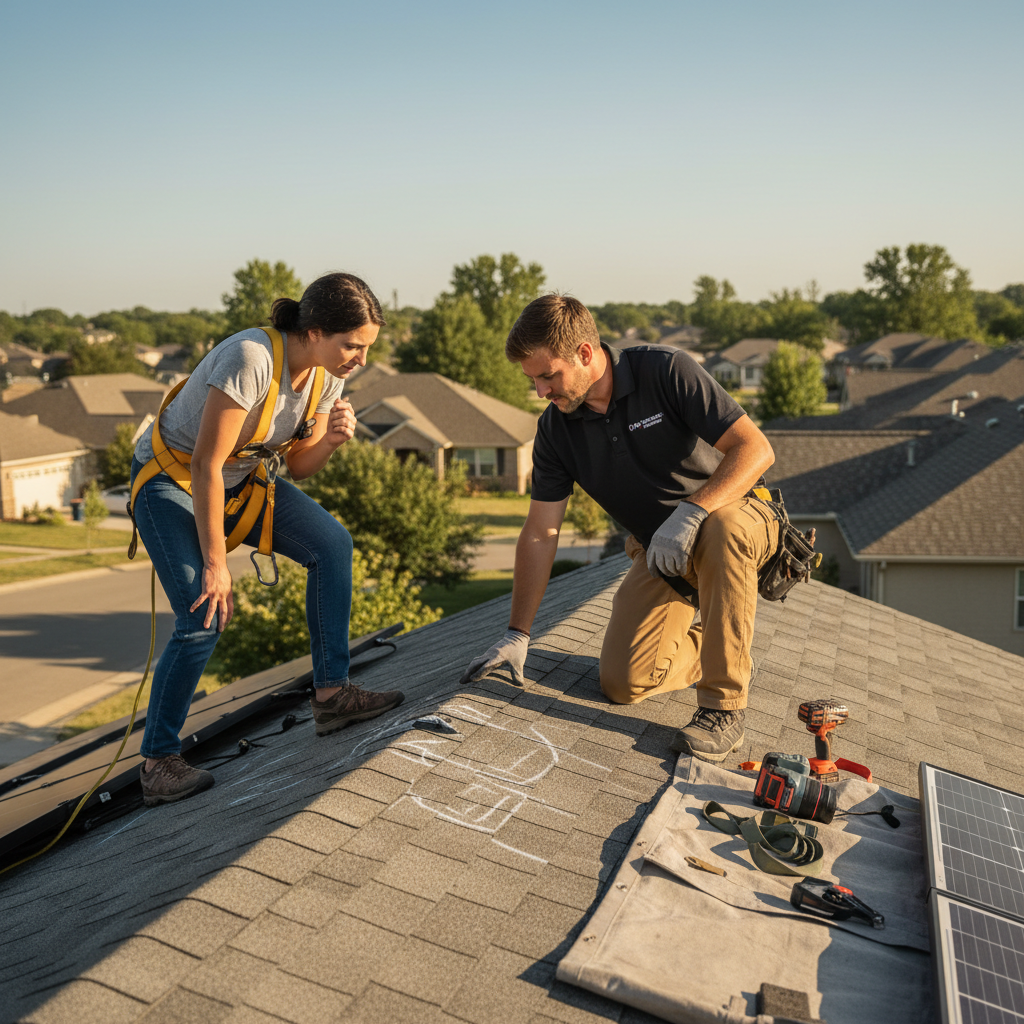
1. Who will be on my roof, and what are their qualifications?
It's easy to assume the person selling you the system is from the same company that will be drilling into your roof. That's not always the case. Understanding the team structure is crucial for accountability.
In-House Crews vs. Subcontractors
Many solar companies handle everything from sales to installation with their own trained, full-time employees. This is often the ideal scenario. It means the company has direct control over quality, training, and scheduling. If something goes wrong, there's a clear line of responsibility.
Other companies use a sales-and-project-management model, subcontracting the actual installation to a third-party electrical or roofing crew. While many subcontractors are excellent, this can sometimes create challenges. Communication can be disjointed, and if a problem arises (like a roof leak), the sales company and the subcontracted installer might point fingers at each other, leaving you in the middle.
What to ask: "Do you use your own in-house installation crews, or do you subcontract the work? If you subcontract, who is the company you work with, and what is your relationship with them?"
Licensing and Insurance
Solar installation isn't just a roofing job; it's a serious electrical project. Your installer must have the right credentials. Don't be shy about asking for proof.
- State Licensing: At a minimum, they should hold a valid state-issued electrical contractor's license. Some states have specific solar contractor licenses. You can (and should) verify this on your state's contractor licensing board website.
- Insurance: The company must carry General Liability insurance to cover any accidental damage to your property and Workers' Compensation insurance to cover their employees if they get injured on your job. Ask for a Certificate of Insurance (COI) with your name and address listed as the certificate holder.
- Certifications: The gold standard for individual installer qualification is certification from the North American Board of Certified Energy Practitioners (NABCEP). While not legally required, it's a strong indicator of expertise and commitment to the industry's best practices.
What to ask: "Can you provide me with your contractor license number and a Certificate of Insurance? Are your lead installers NABCEP-certified?"
2. What is your process for evaluating my roof's condition?
Solar panels are heavy and are expected to stay on your roof for 25+ years. Putting a brand-new solar array on an old, failing roof is a recipe for disaster. A reputable installer will refuse to do it without addressing the roof's health first.
A thorough evaluation should include:
- A Physical Inspection: Someone should get on your roof to check the condition of the shingles or tiles, look for soft spots, and inspect the flashing around vents and chimneys.
- A Structural Assessment: They should also go into your attic to inspect the roof structure itself—the rafters and sheathing—to ensure it can handle the additional weight of the solar panels and mounting system. In some areas, an engineer's report may be required.
If your roof only has 5-7 years of life left, the smart financial move is to replace it before the solar installation. The cost of removing and reinstalling a solar array down the line to accommodate a roof replacement is substantial, often running from $2,000 to $5,000 or more.
What to ask: "What is your process for inspecting my roof's structure and surface? At what age or condition would you recommend a roof replacement before proceeding with a solar installation?"
3. How will you attach the panels and guarantee against leaks?
This is where the rubber meets the road—or rather, where the metal meets your shingles. Every hole drilled into your roof is a potential entry point for water. The quality of the mounting and flashing hardware is not the place to cut corners.
A standard installation involves bolting 'standoffs' or 'feet' directly into your roof rafters. The solar racking is then attached to these feet, and the panels are mounted on the racking. The critical component is the 'flashing' that goes around each standoff. This piece of metal or high-grade plastic is designed to slide under the shingles above it, diverting water away from the penetration point.
High-quality systems like those from IronRidge, Unirac, or Quick Mount PV are industry standards. Be wary of a contractor who can't name the mounting and flashing system they use or seems to be using generic, unbranded hardware. The best installers are proud of the durable components they use.
What to ask: "What brand of racking and flashing will you be using? How is the flashing integrated with my type of roof to prevent leaks? What is your warranty specifically for roof penetrations?"
4. Can you walk me through the specific panels and inverters you've quoted?
A solar quote often just lists a brand and model number. But the technical specifications of that equipment determine how much power you'll generate, not just today but 20 years from now. Ask for the official spec sheets.
More Than Just a Brand Name: Panels
Look at three key metrics:
- Efficiency: This measures how much of the sun's energy a panel converts into electricity. Higher efficiency (e.g., 20-22%) means you need fewer panels or less space to generate the same amount of power. This is crucial for smaller roofs.
- Degradation Rate: All panels lose a tiny bit of efficiency each year. The spec sheet will show a guaranteed performance after 25 years. A top-tier panel might guarantee 92% of its original output, while a standard panel might be closer to 85%. Over the life of the system, that difference adds up to a lot of electricity.
- Product Warranty: This covers defects in the panel itself. The standard is now 25 years for most quality panels, but some are still 10 or 12. A longer product warranty shows the manufacturer's confidence in its build quality.
The Brains of the Operation: Inverters
Inverters are the devices that convert the DC electricity from your panels into the AC electricity your home uses. There are three main types, and the right choice depends on your roof's layout and shading.
- String Inverters: A single, large inverter connects a 'string' of panels. This is a proven, cost-effective technology. The main drawback is that if one panel is shaded or dirty, the output of the entire string is reduced.
- Microinverters: Each panel gets its own small inverter. This is more expensive upfront, but it's more resilient. Shading on one panel doesn't affect the others. It also allows for panel-level monitoring.
- Power Optimizers: A hybrid solution. DC optimizers are attached to each panel to maximize its individual output, and they send that power to a central string inverter. This offers many of the benefits of microinverters but with a slightly different architecture.
What to ask: "Why did you choose these specific panels for my home? What are their efficiency and degradation rates? And why are you recommending [string inverters/microinverters/optimizers] for my specific roof layout and sun exposure?"
5. What do your warranties really cover, including labor?
A '25-year warranty' sounds amazing, but it's not one single warranty. It's usually a bundle of several different warranties, and the details matter immensely.
- Equipment Warranty: Provided by the panel and inverter manufacturers. This covers failure or defects in the hardware itself. As mentioned, look for 25 years on panels and at least 10 years (often extendable) on inverters.
- Workmanship Warranty: Provided by your installer. This is their promise that the system was installed correctly. It covers issues like loose wiring, improper mounting, and, most importantly, leaks caused by the installation. A good workmanship warranty is at least 10 years. Some top-tier installers now offer 25 years to match the panel warranty.
- The Labor Gap: This is the most overlooked detail. If a panel fails in year 15, the manufacturer's warranty might give you a free replacement panel. But who pays the two technicians to climb on your roof, diagnose the problem, remove the old panel, and install the new one? Often, that labor cost is on you unless your installer provides a warranty that explicitly includes labor for a set period. An installer that covers labor for at least the first 10 years is showing real confidence in their work.
What to ask: "Please break down the different warranties for me. How long is your workmanship warranty? If a warrantied part fails in year 10, is the labor to replace it included? For how long is labor covered?"
6. What happens if the equipment manufacturer goes out of business?
The solar industry is dynamic, and even large, established companies can merge, be acquired, or go bankrupt. A 25-year warranty is only as good as the company standing behind it. While you can't predict the future, you can choose an installer who has a plan.
Some installers mitigate this risk by exclusively working with large, financially stable 'Tier 1' manufacturers (a term indicating financial stability and manufacturing scale). Others may partner with warranty service companies that can backstop the manufacturer's warranty.
Most importantly, a strong relationship with a local, long-standing installer is your best defense. A company that's been in your community for 10+ years is more likely to be there to help you navigate a warranty claim, even if the original manufacturer is gone. They have a reputation to uphold.
What to ask: "You're quoting [Brand X] panels. They seem great, but what's our recourse if that company isn't around in 15 years to honor the warranty? How does your company support customers in that situation?"
7. How will I monitor my system's performance?
Once the system is on, how do you know it's working as promised? Modern solar installations come with sophisticated monitoring software, usually accessible via a web portal or smartphone app.
This software should provide real-time data on how much electricity your system is producing. You should be able to see your production by the hour, day, month, and year. This isn't just a neat feature; it's your primary tool for ensuring you're getting the value you paid for. If production suddenly drops, it's an early indicator that something might be wrong.
Some installers also actively monitor their customers' systems from their office. They may receive an automated alert if your system goes offline or its production drops unexpectedly, allowing them to proactively reach out to you to troubleshoot the issue.
What to ask: "What monitoring platform do you use? Will you walk me through how to use it? Do you also monitor my system for performance issues from your end?"
8. What does your post-installation service and support look like?
Your relationship with the solar company shouldn't end when they cash the final check. You're entering a 25-year partnership. You need to know who to call and what to expect if you have a problem.
Find out if they have a dedicated service department or if service calls are just squeezed in between new installations. A dedicated service team is a sign of a mature, customer-focused company.
Also, clarify the costs. If you need to call them for an issue that isn't covered by the workmanship warranty (for example, damage caused by a fallen tree limb or a pest that chewed a wire), what is their standard service call fee?
What to ask: "If I have an issue in five years, who do I call? Do you have a dedicated service department? What is your typical response time for service requests?"
9. Can you show me the gross cost before any rebates or credits?
Solar salespeople are experts at making the price look as attractive as possible. A common tactic is to prominently display the "net cost" after factoring in the federal solar Investment Tax Credit (ITC). The ITC is a fantastic incentive, currently allowing you to deduct 30% of the system's cost from your federal taxes.
However, the solar company is not your tax advisor. You only benefit from the tax credit if you have sufficient tax liability. While most homeowners do, it's not a guarantee. The solar contract you sign will be for the full, gross amount.
To make an apples-to-apples comparison between quotes and to be fully transparent about what you're financing or paying, always start with the gross cost.
What to ask: "I see the net cost after the tax credit. Can you please show me the total gross cost of the system on the contract?" And then, consult a tax professional to confirm your eligibility for the credit.
Frequently asked questions
How long does a solar panel installation actually take?+
The physical installation on your roof usually only takes 1-3 days. However, the entire process from signing the contract to having a fully operational system can take 1-3 months, as it includes site assessment, design, permitting with your city or county, and final inspection by the utility company.
Do I need to replace my roof before getting solar panels?+
Not always, but it's a critical consideration. If your roof has less than 10-15 years of life left, it's almost always more cost-effective to replace it before installing solar. Removing and reinstalling panels later to replace a roof is a significant extra expense.
Will my solar panels work during a power outage?+
Most grid-tied solar systems will automatically shut down during a power outage for safety reasons. To have power during an outage, you need a system that includes a battery storage component and a special transfer switch that disconnects you from the grid.
What happens if I sell my house with solar panels?+
Owned solar panel systems generally add value to your home and are a strong selling point. If you have a solar lease or Power Purchase Agreement (PPA), you will need to either transfer the agreement to the new homeowner or buy out the remainder of the contract.
How do I know if a solar company is reputable?+
Look for companies with a long history in your area, positive reviews, and proper licensing (check your state's contractor board). Ask for references and be wary of high-pressure sales tactics. NABCEP certification is the gold standard for individual installers.