
How to Hire an Electrician: A Homeowner's Guide to Licenses, Insurance, and Red Flags
Hiring an electrician can be daunting. Our guide helps you verify licenses, understand insurance, and spot common red flags to find a qualified pro for your home.
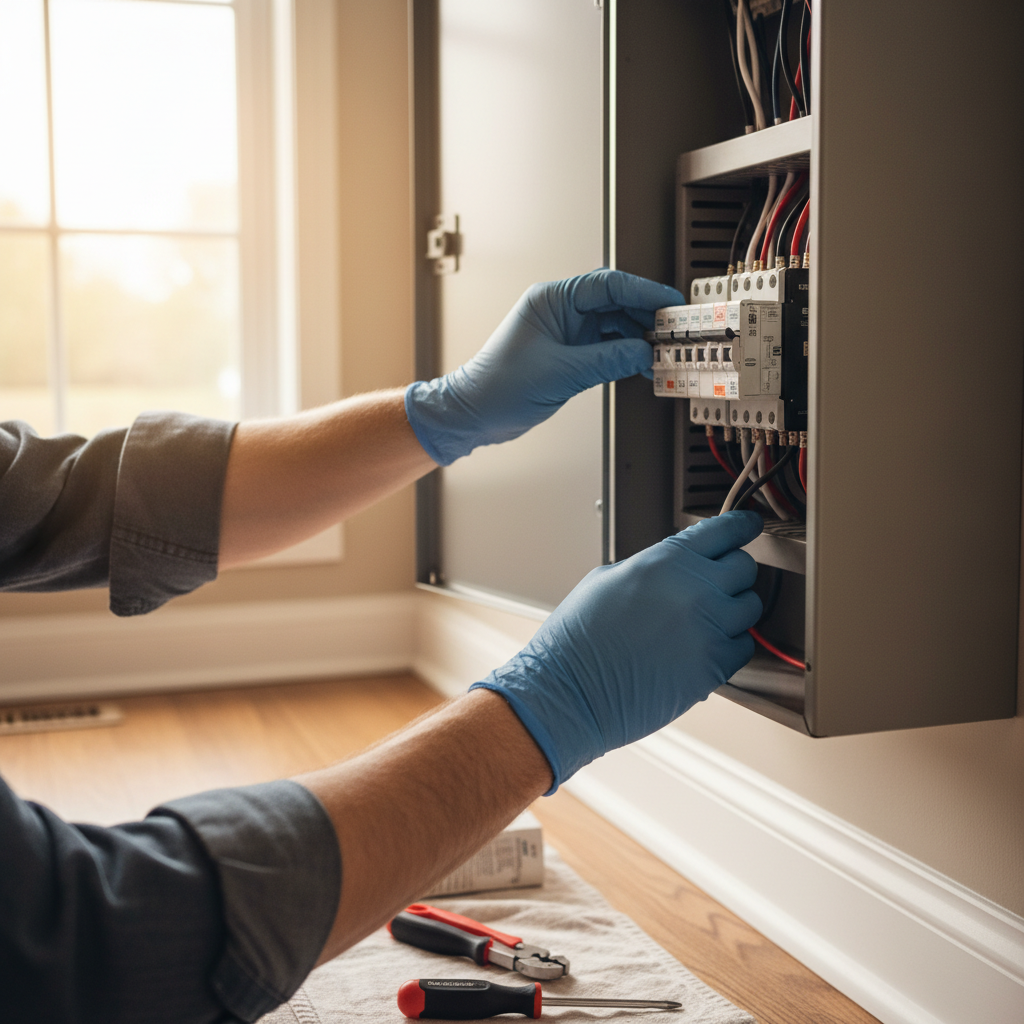
Of all the home service pros you might hire, few hold the safety of your family and property in their hands quite like an electrician. Faulty wiring is a leading cause of house fires, and a botched repair can lead to fried appliances or dangerous shocks. This isn't a job for a well-meaning handyman or a DIY project gone too far. You need a qualified, professional electrician.
But how do you tell the true pros from the risky operators? It comes down to a few key areas: their license, their insurance, and the professional signals they send (or the red flags they raise). This guide will walk you through exactly what to look for, what to ask, and how to protect yourself and your home when hiring an electrician.
Why License and Insurance Aren't Just Paperwork
When you're facing a flickering light or a dead outlet, it’s tempting to just call the first person who can show up quickly. But taking an extra hour to verify credentials can save you from months of headaches and thousands of dollars. For a professional electrician, a license and insurance are non-negotiable badges of legitimacy. Here’s what they mean for you, the homeowner.
A license proves that the electrician has met a rigorous set of standards set by your state or local jurisdiction. This typically includes:
- Thousands of hours of documented on-the-job training (often as an apprentice).
- Passing a comprehensive exam that tests their knowledge of the National Electrical Code (NEC), local codes, and safe practices.
- Required continuing education to stay up-to-date on code changes and new technology.
- Accountability. A licensed electrician has a governing body they must answer to. If they perform shoddy work, you have a formal path for recourse through the licensing board.
Insurance protects you from financial liability in case something goes wrong. There are two critical types:
- General Liability (GL): This covers accidental damage to your property. If an electrician accidentally drills through a water pipe or drops a heavy tool that cracks your tile floor, their GL insurance pays for the repair, not your homeowner's insurance.
- Workers' Compensation: This covers injuries to the electrician or their employees while working on your property. If an electrician falls from a ladder in your home, their Workers' Comp policy covers their medical bills and lost wages. Without it, you could be held liable, potentially leading to a lawsuit against your own homeowner's policy.
In short: hiring an unlicensed or uninsured electrician means you are personally assuming all the risk for their work, their mistakes, and their safety.
Decoding Electrician Licenses
Not all licenses are created equal. The electrical trade has a clear hierarchy based on experience and testing. When you hire an electrical company, it's important to know who will actually be performing the work in your home.
Apprentice, Journeyman, Master: What's the Difference?
Apprentice Electrician: This is an entry-level trainee. Apprentices work directly under the supervision of a Journeyman or Master electrician to learn the trade. They are not licensed to work independently. It's perfectly fine to have an apprentice working in your home, as long as they are properly and actively supervised by a licensed pro on-site.
Journeyman Electrician: A journeyman has completed their apprenticeship (typically 4-5 years and 8,000+ hours of training) and passed the state journeyman exam. They are fully qualified to perform all standard electrical work, from installing outlets to wiring a new addition. They can work independently but cannot typically pull permits or own an electrical contracting business.
Master Electrician: This is the highest level of certification. A Master Electrician has worked as a journeyman for several years (often 2-4 years) and passed an even more rigorous master's exam. They have a deep understanding of electrical system design, project management, and code interpretation. Crucially, a Master Electrician is the only one who can pull permits for electrical work and operate a licensed electrical contracting business. The company you hire must have a Master Electrician on staff who is responsible for the work.
How to Verify a License
Don't just take their word for it. Verifying a license is easy and is the single most important step you can take.
- Ask for the License Number: When you call for a quote, simply ask, "Can you please provide your state electrical contractor license number?" A legitimate pro will have it ready and will be happy to provide it. If they hesitate or get defensive, that's a red flag.
- Check Your State's Website: Every state has a contractor licensing board with a public, searchable database. Search for "[Your State] electrical contractor license lookup" or "[Your State] department of professional regulation."
- Search by Business Name and Individual Name: You can typically search by the business name or the name of the Master Electrician who holds the license. The search results should show you if the license is active, expired, or suspended, and who the license holder is.
- Match the Name: Make sure the name on the license matches the name of the business or individual you are hiring. Sometimes a contractor will illegally "use" the license number of a retired or unaffiliated Master Electrician.
The Insurance Conversation: What to Ask For
Just like with a license, you need to verify insurance. A simple "Are you insured?" isn't enough. You need proof.
What you're asking for is a Certificate of Insurance (COI). This is a one-page document that summarizes their insurance policies, coverage amounts, and expiration dates. A professional company can have their insurance agent email this to you, often within minutes.
General Liability Insurance
Look for a policy with a coverage amount of at least $1,000,000. For larger jobs, like a full rewire or major remodel, $2,000,000 is standard. This amount isn't just to cover a broken lamp; it's there to cover catastrophic events, like a fire caused by faulty work that destroys a portion of your house. Your electrician's premium pays for this coverage so your homeowner's policy doesn't have to.
Workers' Compensation
This is non-negotiable if the company has any employees. If a solo electrician (a sole proprietor) tells you they are exempt under state law, be cautious. While this may be true in some states, it means if they get hurt, the liability could still fall to you. The safest bet is to hire electricians who carry Workers' Comp regardless of their business size. The cost is a legitimate business expense that protects both them and you.
For ultimate peace of mind, ask them to have their insurance agent send the COI directly to your email address. This ensures the certificate is authentic and hasn't been altered.
Red Flags to Watch For During the Quoting Process
Your first interactions with an electrician will tell you a lot. A professional's process is designed to ensure clarity and protect both parties. A scammer's process is designed to get your money quickly with little accountability. Watch for these warning signs:
- Vague or "handshake" quotes. A professional quote is a detailed, written document. It should specify the exact scope of work, the materials to be used (e.g., "install two Leviton Decora outlets"), the total price, and the payment schedule. A price scrawled on the back of a business card is not a contract.
- Large upfront payments. A small deposit to secure a date and cover initial materials is normal, typically 10% of the total job cost, or perhaps up to 30% for a large project with custom-ordered parts. Anyone demanding 50% or more upfront before any work has started is a major red flag. They may be using your money to finish their last job, or worse, they may take the money and disappear.
- "We can start tomorrow!" Good electricians are in high demand. While they may have an opening for a small repair, be wary of anyone who can start a major project like a panel upgrade or rewire immediately. This can be a sign that they don't have enough work, possibly for a good reason.
- Offering a big discount for cash or to skip the permit. This is perhaps the biggest red flag of all. A "cash discount" is often a ploy to avoid creating a paper trail and to evade taxes. An offer to skip a permit is an offer to do uninspected, potentially illegal, and unsafe work. A permit isn't just bureaucracy; it triggers an independent inspection from a city or county official whose only job is to ensure the work was done to code. This is a valuable, third-party check on your electrician's work.
- Lack of professional presence. Do they have a marked vehicle? A website? A business address listed on their quote? Or is their entire business run from a Gmail address and a cell phone? While a one-man shop might be less polished than a large company, they should still present themselves as a legitimate, findable business.
- High-pressure sales tactics. Be cautious of any electrician who pressures you to sign a contract on the spot with a "price is only good for today" offer. Take your time to review the quote and compare it with others.
The Hiring Process: From First Call to Final Payment
For any project bigger than a simple service call, a structured process will yield the best results.
Get Multiple Bids
For any project that will cost more than a few hundred dollars, you should get three separate quotes. This might feel like a hassle, but it's the single best way to understand the fair market price for the job and to compare the proposed solutions from different professionals. You'll be amazed at how much you learn by talking to three different pros about the same problem.
Compare Apples to Apples
Don't just look at the bottom-line price. Lay the written quotes out side-by-side. Is one electrician proposing a higher-quality panel brand? Is one including the cost of drywall repair while another is not? The cheapest bid is often not the best value. Look for the quote that provides the most detailed scope of work and inspires the most confidence.
The Contract and Final Walk-through
Once you've chosen your electrician, you should both sign a contract that references the detailed quote. This is your master document for the project. During the project, if you agree to any changes (a "change order"), get the new cost in writing before the work is done.
Most importantly, do not make the final payment until the work is 100% complete, all debris has been cleaned up, the work has passed its final inspection (if a permit was required), and you have tested everything to ensure it works as expected. A professional will expect to do a final walk-through with you to confirm your satisfaction before they receive their last check.
Common Electrical Projects and What to Expect
Small Jobs (Service Calls): Projects like replacing a faulty switch, diagnosing a dead outlet, or installing a single light fixture are often billed as "Time and Materials." Expect a service call fee or "truck fee" ($50-$150) that covers the trip to your home, plus an hourly rate ($75-$150 per hour). There's often a one-hour minimum.
Medium Jobs (Flat Rate): Installing an EV charger, upgrading your electrical panel, or running a new 240V circuit for a dryer are typically quoted as a flat-rate project. A panel upgrade is a common job that can greatly improve the safety and capacity of an older home's electrical system, usually costing between $2,000 and $4,000. It requires a permit and coordination with your utility company.
Large Jobs (Major Projects): A complete whole-house rewire is a major renovation. It involves opening walls, running new wires to every outlet, switch, and fixture, and often requires you to vacate the home for a period. This is a five-figure job, often ranging from $8,000 to $20,000+ for an average-sized home, requires permits, and involves multiple inspections.
Choosing an electrician isn't just about getting the power back on. It's about investing in the safety and integrity of your home. By taking the time to verify their license, confirm their insurance, get detailed quotes, and trust your gut, you can ensure you're hiring a true professional who will do the job right.
Frequently asked questions
Can a handyman do simple electrical work like change an outlet?+
In most states, no. Any work on a home's permanent wiring system legally requires a licensed electrician. While a handyman might be capable, it creates liability for you, can be unsafe, and may cause problems with a future home sale or insurance claim.
How much does it cost just to have an electrician come to my house?+
Most electricians charge a service call fee (or 'truck fee') just to come to your door, typically ranging from $50 to $150. This is separate from their hourly rate, which usually has a one-hour minimum. The total for a basic diagnostic visit is often in the $150-$300 range.
Do I really need a permit to install an EV charger or upgrade my panel?+
Yes, absolutely. Any time you add a new circuit or modify your home's main electrical service, a permit is almost always required. The permit ensures a third-party inspector will verify the work was done safely and to code, protecting your home and family.
An electrician offered me a discount for paying cash. Should I take it?+
No. This is a major red flag. It often means they are avoiding taxes and creating a situation with no paper trail. If a problem arises with the work, you'll have little recourse without a formal receipt or contract.
What's the difference between a quote and an estimate?+
An estimate is a rough guess of the cost that can change, while a quote (or bid) is a firm offer to complete a specific scope of work for a fixed price. For any significant job, you should always ask for a detailed, written quote, not just an estimate.