
Repair or Replace Your Driveway? A Complete Cost & Lifespan Guide
Cracks and potholes in your driveway? Learn when a simple repair will do and when it's time for a full replacement. This guide covers costs, lifespan, and how to hire the right pro.
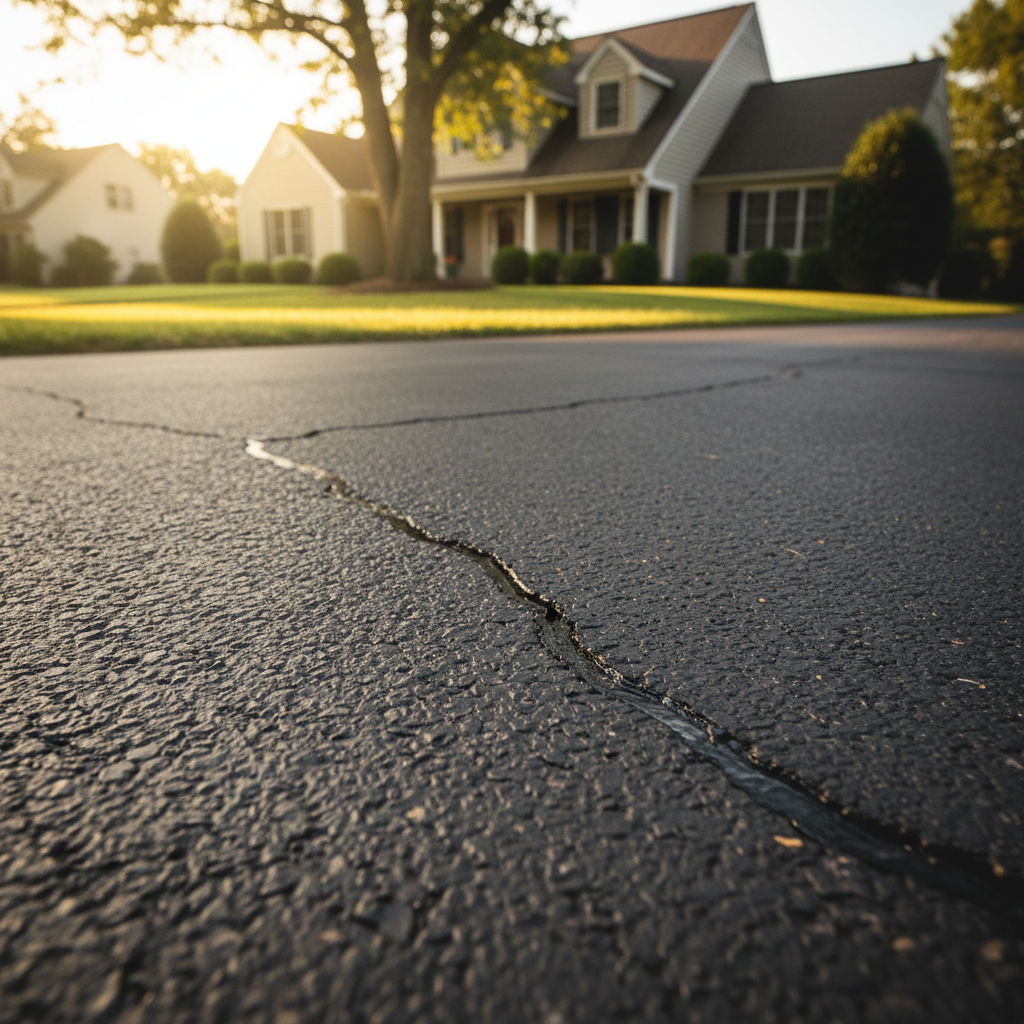
That crumbling, cracked driveway isn't just an eyesore that hurts your home's curb appeal. It can be a tripping hazard for your family, cause extra wear and tear on your car's tires and suspension, and—if left unchecked—lead to much bigger, more expensive problems down the road.
So you know it needs attention. But what kind? Do you need a few simple repairs, or is it time to rip the whole thing out and start fresh?
This is one of the most common dilemmas homeowners face with their exterior spaces. A full replacement is a major investment, while a quick repair can feel like throwing good money after bad if it doesn't last. This guide will walk you through everything you need to know to make the right call for your home and your budget, and how to find a qualified pro to do the job right.
Reading the Signs: When to Repair vs. When to Replace
Before you even pick up the phone to call a contractor, take a walk around your driveway and play detective. The type, size, and number of problems are your biggest clues. Paving contractors often use an informal "40% Rule": if more than 30-40% of the driveway's surface is a web of cracks, potholes, and crumbling areas, a full replacement is almost always the more cost-effective solution in the long run.
Signs You Can Likely Repair Your Driveway
If your driveway's issues are mostly on the surface and limited to small areas, repairs are often a great option to extend its life for several more years. Look for these signs:
- Shallow, narrow cracks: Hairline cracks or "spiderwebbing" (a network of fine cracks) are common, especially in asphalt. As long as they're less than a quarter-inch wide, they can usually be cleaned and filled with a rubberized sealant to prevent water from getting in.
- A few small potholes: One or two potholes that haven't grown too large can be professionally patched. A good contractor will saw-cut the area into a clean rectangle, fill it with new material, and compact it for a durable fix.
- Stains and discoloration: Oil stains, rust marks, or general fading are cosmetic issues. A thorough cleaning and, for asphalt, a fresh sealcoat can make the surface look nearly new again.
- Minor sinking in one spot: If a small area has sunk slightly but the rest of the driveway is stable, it may not require a full replacement. For concrete, a process called mudjacking can sometimes lift the slab back into place. For asphalt, the sunken area can be cut out and repaved.
- Your driveway is relatively young: If your asphalt driveway is under 15 years old or your concrete is under 20, it likely has a solid foundation (or "sub-base"). In this case, surface-level repairs are a smart investment.
Signs It's Time for a Full Replacement
Some problems aren't just skin deep. They're symptoms of a deeper issue: a failing foundation. The gravel sub-base beneath your driveway is what provides support. When it fails due to poor installation, water erosion, or soil shifting, no amount of patching on top will be a permanent fix. Here are the red flags that point toward replacement:
- Deep, wide cracks: Cracks wider than a quarter-inch, or that run the entire depth of the pavement, are serious. In asphalt, look for "alligator cracking"—interconnected cracks that look like a reptile's skin. This is a classic sign of sub-base failure.
- Widespread potholes and crumbling: If your driveway looks more like a cratered moonscape than a smooth surface, patching each spot individually would be expensive and ineffective. The underlying problem will just cause new potholes to form.
- Severe crumbling and spalling: If the top layer of your concrete is flaking or peeling away (spalling), or the edges of your asphalt driveway are crumbling into gravel, the material itself has reached the end of its life.
- Major drainage issues: Does water constantly pool in large puddles on your driveway? This indicates that the surface has sunk and shifted, and it's not graded properly to direct water away. This water will accelerate deterioration, especially in freeze-thaw cycles.
- Your driveway is old: An asphalt driveway that's over 20-25 years old or a concrete one that's pushing 30-40 has simply served its time. The materials have become brittle and the sub-base has likely settled and degraded.
Common Driveway Materials: A Look at Repairability and Lifespan
The material your driveway is made of has a huge impact on the repair vs. replace decision. Each has its own lifespan, common failure points, and repair methods.
Asphalt (Blacktop)
Asphalt is a flexible pavement made from rock aggregate and bitumen (a petroleum-based binder). It's popular for its lower upfront cost and smooth, dark appearance.
- Typical Lifespan: 15–25 years, highly dependent on maintenance.
- Repairability: Excellent. Asphalt is relatively easy and inexpensive to repair. Cracks can be filled, potholes can be patched, and the entire surface can be given a facelift with a sealcoat. For more significant wear, an "asphalt overlay" or "resurfacing"—adding a new 1.5-2 inch layer of fresh asphalt on top of the old—is a common mid-life solution that costs much less than a full replacement.
- What this means for you: If you have an asphalt driveway, regular maintenance is your best friend. Sealcoating every 3-5 years is crucial to protect it from water and sun damage, and it can dramatically extend its life. Because repairs are effective, you can often put off a full replacement for many years.
Concrete
Concrete is a rigid pavement made from cement, water, sand, and gravel. It's known for its durability, longevity, and higher initial cost.
- Typical Lifespan: 25–40+ years.
- Repairability: Fair to good, but more complex than asphalt. Cracks can be sealed, but the color of the patch rarely matches the original concrete, leaving visible scars. Replacing a single damaged concrete slab is possible, but the new slab will stand out against the older, weathered ones. For sunken slabs, a specialized process called "slabjacking" or "mudjacking" can pump a grout underneath to lift it, which is cheaper than replacement but not always a permanent solution.
- What this means for you: With concrete, the initial installation is everything. If it's poured over a solid, well-compacted base, it can last for decades with minimal fuss. However, when major problems like heaving or widespread cracking occur, repairs are less seamless, and a full replacement of the affected sections is often the best-looking, most durable option.
Pavers (Concrete, Brick, or Stone)
Paver driveways consist of individual interlocking blocks set on a bed of sand and gravel. They have the highest upfront cost but offer a premium look.
- Typical Lifespan: 50+ years.
- Repairability: The best of all options. Because it's a flexible system of individual units, repairs are simple and invisible. A cracked paver can be popped out and replaced. A sunken area can be fixed by lifting the pavers, re-leveling the sand and gravel base underneath, and putting them back.
- What this means for you: If you have a paver driveway, the decision is almost always "repair." A full replacement is virtually never needed unless you want a completely different style.
The Cost Breakdown: Repair vs. Replacement Pricing
Disclaimer: Costs are national averages and can vary significantly based on your location, the size of your driveway, material price fluctuations, and the specific contractor you hire. Always get multiple written quotes.
Driveway Repair Costs
Repairs are priced based on the specific task. They're a good way to maintain your driveway's health without a huge capital outlay.
- Asphalt Crack Sealing: $0.50 – $3.00 per linear foot. A professional will use a hot-pour rubberized filler that is more durable than DIY cold-pour products.
- Asphalt Patching: $3 – $5 per square foot for a professional saw-cut patch. A small 2'x2' pothole might cost $150–$250 to fix properly.
- Asphalt Sealcoating: $0.25 – $0.75 per square foot. For a typical two-car driveway (around 600 sq. ft.), expect to pay $400 – $800. This is the single most effective maintenance task for asphalt.
- Asphalt Resurfacing (Overlay): $3 – $7 per square foot. This is a mid-range option, essentially giving you a new top layer. For that same 600 sq. ft. driveway, you might pay $1,800 – $4,200.
- Concrete Repair: Crack filling is similar in cost to asphalt. Patching and resurfacing can run $3 – $8 per square foot, but be sure to see examples of the contractor's work, as matching the color and texture is difficult.
- Mudjacking/Slabjacking: Typically costs $500 – $1,500 to lift a sunken concrete slab, depending on the size and complexity of the void underneath.
Driveway Replacement Costs
Replacement is priced by the square foot and includes demolition of the old driveway, hauling away debris, preparing and compacting a new sub-base, and installing the new material.
- Asphalt Replacement: $7 – $13 per square foot. For a 600 sq. ft. driveway, the total cost would be in the range of $4,200 – $7,800.
- Concrete Replacement: $8 – $18 per square foot. A 600 sq. ft. concrete driveway will typically cost $4,800 – $10,800. The higher end of this range often includes decorative stamping or coloring.
- Paver Installation: $15 – $50+ per square foot. Pavers have the widest cost range due to the huge variety of materials. A 600 sq. ft. driveway could range from $9,000 to over $30,000.
The Process: What to Expect When You Hire a Pro
Knowing the steps of a professional job helps you vet contractors and ensure you're getting what you pay for. Don't be afraid to ask questions about the process.
The Repair Process (Example: Asphalt Sealcoating & Crack Fill)
- Prep & Cleaning: The crew will thoroughly clean the driveway using power blowers and sometimes a power washer to remove all dirt and debris.
- Crack Filling: They will clean out individual cracks and fill them with hot-pour or cold-pour sealant.
- Patching: Any areas needing patches will be saw-cut for clean edges, excavated, filled with new hot asphalt, and compacted to be level with the surrounding surface.
- Sealcoating: A squeegee or sprayer is used to apply a uniform coat of sealer over the entire driveway.
- Curing: The contractor will block off the driveway. You'll need to keep all traffic off it for 24-72 hours, depending on the product and weather.
The Replacement Process (Example: Concrete Driveway)
- Permitting: Your contractor should check with your local municipality and pull any necessary permits for the work.
- Demolition & Haul-Away: The old driveway is broken up with jackhammers or heavy equipment and loaded into a dump truck for removal.
- Excavation & Grading: The crew digs out the area to the required depth for the new sub-base. They will carefully grade the site to ensure proper water drainage away from your home's foundation.
- Sub-base Installation: This is the most critical step for longevity. A layer of crushed gravel (typically 4-6 inches deep) is spread, graded, and compacted with a heavy roller to create a solid, stable foundation.
- Forming & Reinforcement: Wooden forms are set up around the perimeter to define the shape of the driveway. Steel rebar or wire mesh is often placed within the forms to add tensile strength and prevent separating.
- Pouring & Finishing: A concrete truck delivers the pre-mixed concrete. The crew pours it into the forms, levels it with a screed, and uses floats to smooth the surface. A broom finish is often applied for traction.
- Cutting Control Joints: Within 24 hours, the crew will return to saw-cut shallow lines into the slab. These create weakened planes that encourage the concrete to crack in a controlled, straight line as it shrinks and settles.
- Curing: The concrete doesn't just "dry"—it undergoes a chemical reaction called curing. It needs to be kept moist for several days to reach its full strength. You should not drive on it for at least 7 days, and sometimes longer in cooler weather.
Making the Smart Financial Choice: Long-Term Value
The sticker price of repair vs. replacement is only part of the story. The smarter financial decision considers the long-term value and cost over time.
Think about the "annualized cost." Let's say your 20-year-old asphalt driveway is failing.
- The Band-Aid Approach: You spend $1,200 on extensive patching. It looks okay for a year, but new cracks and potholes appear. You do this again in two years. After five years and nearly $3,000 in repairs, the driveway is shot and you have to replace it anyway for $7,500. Total cost over 5 years: $10,500.
- The Replacement Approach: You bite the bullet and replace it now for $7,500. With a proper sealcoat every 4 years (at ~$600 a pop), that new driveway easily lasts 20 years. Total cost over 20 years: $7,500 + ($600 x 4) = $9,900.
In this scenario, replacing it now provides a far better value, not to mention 20 years of great curb appeal and safety instead of 5 years of frustration.
A repair makes financial sense if your budget is tight right now and you just need to safely get 3-5 more years out of a driveway that is otherwise in decent shape. But for a driveway with widespread, deep-seated issues, putting money into repairs is often a losing battle.
How to Hire a Great Driveway Contractor
The quality of your driveway—whether repaired or replaced—comes down to the quality of the contractor. A cheap job that fails in three years is no bargain.
- Get at Least Three Bids: Contact multiple local paving companies and get detailed, written estimates. A lowball bid that's significantly cheaper than the others is a major red flag. It often means they're cutting corners on materials or, critically, the sub-base.
- Verify Licensing and Insurance: Ask for a copy of their state or local business license and, most importantly, their certificate of insurance. This should show they have both general liability (to cover damage to your property) and workers' compensation (to cover their employees if they get hurt on your property).
- Look at Their Work: A reputable contractor will be proud of their work. Ask for a list of addresses of recent jobs, as well as some that are 5-10 years old. Drive by and see for yourself how their work holds up over time.
- Read the Contract Carefully: The quote should be a detailed contract. It needs to specify the exact scope of work, including demolition, the depth of the new sub-base, the thickness of the asphalt or concrete, whether reinforcement (like rebar) is included, and the plan for cleanup.
- Ask About the Sub-Base: This is the most important question you can ask for a replacement. A pro who seems vague or dismissive about the sub-base is a bad sign. Ask them directly: "How many inches of compacted gravel will you be installing as a sub-base?" For a residential driveway, 4-8 inches is a standard, quality answer.
- Beware of "Leftover Asphalt" Scams: This is a classic scam. A truck will show up at your door, and the driver will claim they have "leftover" hot asphalt from a nearby job that they can sell you cheap. They'll quickly lay down a thin, uncompacted layer that will look black for a few weeks before it starts to crumble and fall apart. Reputable contractors do not operate this way.
Frequently asked questions
Can I just put a new layer of asphalt over my old, cracked driveway?+
This is called an overlay or resurfacing, and it can be a good option if your existing driveway is structurally sound with only surface-level issues. However, if your driveway has deep "alligator" cracks or drainage problems, an overlay will fail quickly as the cracks from below will soon reappear on the new surface. A good contractor will tell you if your driveway is a candidate for an overlay.
How long do I need to stay off a new driveway?+
For a new asphalt driveway, you should be able to walk on it within 24 hours but should avoid driving on it for at least 3-5 days, especially in hot weather. For new concrete, you must wait at least 7 full days before driving a car on it, and some contractors recommend waiting even longer to ensure it reaches maximum strength.
Is sealing my driveway really necessary?+
For asphalt driveways, yes, sealcoating is the most important maintenance you can do. It protects the asphalt from sun, water, and oil damage, which prevents cracks and extends its life significantly. Concrete driveways can also be sealed to protect against stains and water absorption, but it's not as critical as it is for asphalt.
What are those deep, interconnected cracks in my asphalt driveway called?+
Those are called "alligator cracks" or "fatigue cracking." They look like the scales on an alligator's back and are a serious sign of structural failure. It means the sub-base beneath your driveway has failed, and simply patching or sealing the top will not be a long-term solution.
Does a new driveway require a permit?+
Often, yes. Many cities and towns require a permit for a full driveway replacement, as it can involve curb cuts or affect local drainage. Repair work like sealcoating usually doesn't require a permit. A reputable contractor will know the local regulations and handle the entire permitting process for you.