
9 Solar Panel Questions Most Homeowners Forget to Ask
Going solar involves more than just price and payback period. Asking deeper questions about your roof, the crew, and long-term support is key to a smart investment.
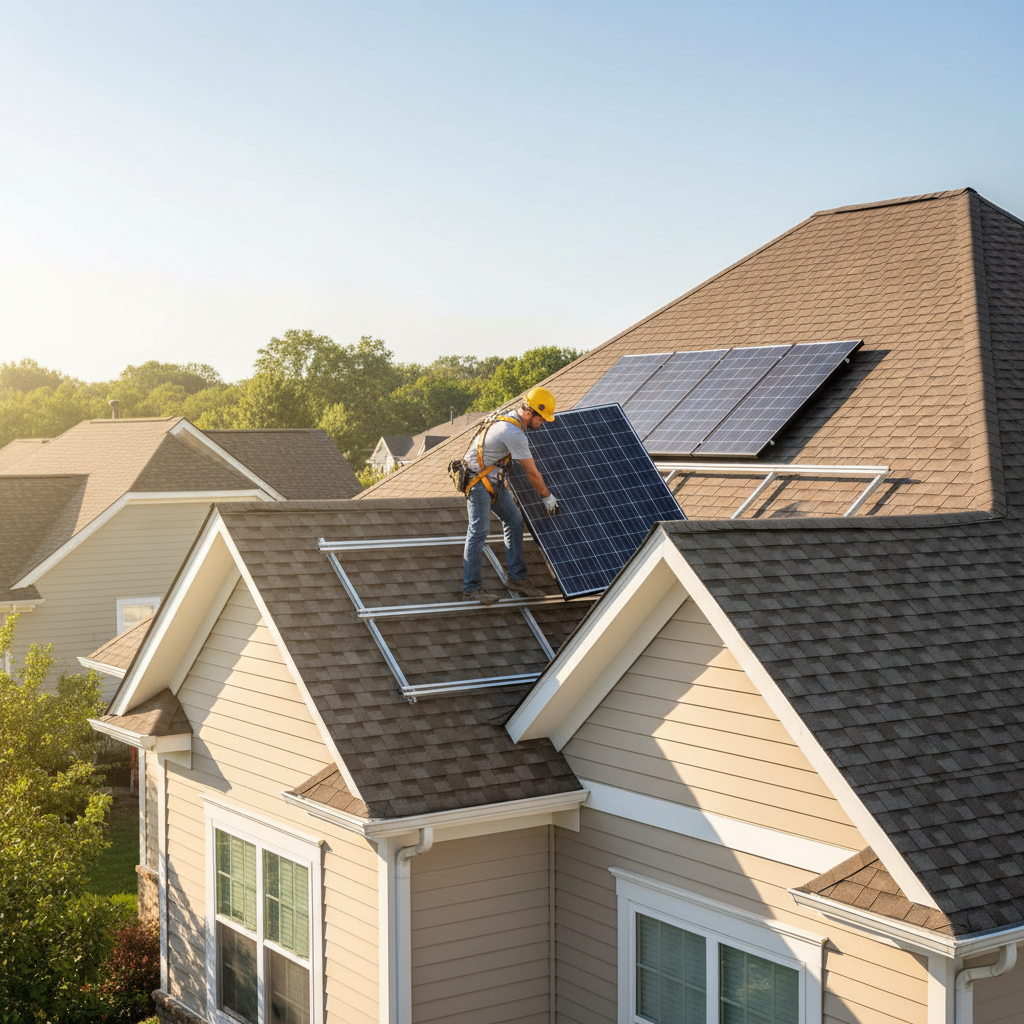
Getting quotes for a home solar panel system can feel exciting and overwhelming all at once. Sales reps will talk about system size in kilowatts (kW), potential energy savings, and that all-important payback period. While these numbers are critical, they only tell part of the story. The best solar installers provide more than just panels—they provide a long-term energy solution and peace of mind.
Most homeowners focus on the price tag and the estimated savings, but the difference between a smooth, 25-year investment and a decade of headaches often lies in the questions you ask before you sign the contract. These are the questions that go beyond the sales pitch to uncover the true quality of the installer and the system they're proposing. Think of it as hiring a long-term partner, not just buying a product.
1. What Happens to My Roof, and Who Is Responsible for It?
This is arguably the most critical question you can ask, because a solar installation is also a roofing project. Your solar array will be attached to your roof with dozens of structural penetrations. If done incorrectly, you trade a high electricity bill for a leaky roof and water damage—a terrible trade.
How Will You Protect My Roof's Integrity?
A professional installer should be able to walk you through their entire roof attachment and flashing process. They should be using high-quality mounting hardware with integrated flashing designed specifically for your roof type (asphalt shingle, metal, tile, etc.). Ask them to show you a diagram or a sample of the mounting feet and flashing they use. A vague answer like "we seal the holes" is a red flag.
How Does This Affect My Existing Roof Warranty?
Drilling holes in your roof will, in most cases, void the warranty from your original roofer or shingle manufacturer on the areas where work is performed. A reputable solar company will have a clear answer for this. They should provide their own workmanship warranty that explicitly covers the roof against leaks from their penetrations for a set period, typically 5 to 10 years. Ask for a copy of this warranty and read it carefully. Does it cover just the repair of the leak, or does it also cover potential interior damage?
What If My Roof Is Older?
Solar panels have a performance warranty of 25 years or more. If your asphalt shingle roof is already 15 years old, you have a mismatch. You'll likely need a new roof before your panels reach the end of their useful life. The cost to remove a solar array and then reinstall it after a roof replacement can be substantial, often ranging from $2,000 to $5,000 or more, depending on the system size. In most cases, it is far more cost-effective to replace an aging roof before installing solar.
2. Who Is Actually Doing the Work?
When you sign a contract with a solar company, you might assume their employees will be on your roof. That's not always the case. The solar industry has a mix of companies that use in-house crews and others that operate as sales and project management hubs that subcontract the physical installation.
Do You Use In-House Crews or Subcontractors?
There isn't a universally "better" answer, but it's a crucial piece of information.
- In-house crews mean the company has direct control over training, safety protocols, and quality. Communication can be more streamlined, as everyone works for the same team.
- Subcontractors are common and can be excellent, but it adds a layer between you and the people doing the work. If the company does use subs, ask how they vet them. Are they long-term partners? Do they require the same level of licensing and insurance?
The key is accountability. You want to know that the company you're hiring stands behind the work, regardless of who is holding the drill.
Can You Provide Proof of Licensing and Insurance?
This is non-negotiable. The crew on your property should be properly licensed and insured to protect you from liability. Ask for:
- The company's primary license. Depending on your state, this could be a general contractor license, an electrical contractor license, or a specific solar installer license.
- The license of the master electrician. Every solar installation is an electrical project. A licensed master electrician should be designing or at least signing off on the electrical plans.
- A Certificate of Insurance (COI). This document should show proof of General Liability and Worker's Compensation insurance. For maximum protection, ask for the COI to list you, the homeowner, as "additionally insured." This means if there's a major accident or damage, their policy can be used to cover you directly.
3. Can You Break Down the Specific Equipment in My Quote?
A quote that just says "8kW Solar System" isn't a quote; it's a guess. A professional proposal will list the exact make and model of the primary components. This is like buying a car—you wouldn't just accept "a sedan," you'd want to know if it's a Honda or a BMW.
Panels: Beyond the Wattage
All panels are rated by their power output (e.g., 400 watts), but that's not the whole story. Ask about:
- Efficiency: How well does the panel convert sunlight into electricity? Higher efficiency means you need fewer panels to produce the same amount of power, which is great for smaller roofs.
- Degradation Rate: All panels lose a tiny bit of output each year. A lower degradation rate means the panel will be producing more power in year 20 than a competitor's panel.
- Warranties: There are two. The product warranty covers defects in the panel itself (typically 12-25 years). The performance warranty guarantees a certain level of output after 25 years (usually 85-92%).
Inverters: The Brain of the System
The inverter's job is to convert the DC power from the panels into the AC power your home uses. The type of inverter technology used has a huge impact on your system's performance and cost.
- String Inverters: One large inverter handles all the power from a "string" of panels. It's a proven, cost-effective technology but can be inefficient if some panels are shaded, as the whole string's output drops to the level of the lowest-performing panel.
- Microinverters or Power Optimizers: These are small electronics attached to each individual panel. They optimize each panel's output independently, making them ideal for roofs with partial shading from trees or dormers. They also allow you to monitor the performance of each panel individually. They typically cost more upfront.
4. What Are the 'Soft Costs' and Who Manages Them?
Hardware (panels, inverters, racking) is often less than half the total cost of a solar project. The rest is made up of "soft costs": labor, design, permitting, and administrative work. A great installer acts as your project manager, handling all these details seamlessly.
Who Is Handling the Permits and Utility Interconnection?
This process is complex and can be a major headache if not handled properly. Your installer should manage the entire workflow:
- Building Permit: Submitting engineering plans to your local building department and getting approval to build.
- Utility Interconnection Application: Submitting a detailed application to your electric utility to get permission to connect your system to the grid.
- Final Inspection and Permission to Operate (PTO): After installation, the system must be inspected by the city/county and the utility before you can officially turn it on.
Confirm in writing that your installer is responsible for all associated fees and paperwork. You shouldn't have to stand in line at the permit office.
Is a Structural Engineering Review Included?
Solar panels add weight to your roof—about 2-4 pounds per square foot. While most modern, well-built roofs can handle this without issue, it's always best to verify. A reputable installer will include a structural engineering review as part of their standard process to ensure your roof framing can support the additional load. Ask if this is included in the quote.
5. What Happens After the System Is Turned On?
Your relationship with the solar installer shouldn't end when you get Permission to Operate. You are entering a 25-year partnership. Post-installation support is what separates the great companies from the "set it and forget it" crowd.
Can You Explain Your Warranties?
Get clarity on the different layers of protection:
- Manufacturer's Warranty: Covers the equipment itself (panels, inverters). This is handled by the product manufacturer.
- Installer's Workmanship Warranty: This is crucial. It covers the labor and installation quality—things like roof leaks, loose wiring, or racking issues. A strong workmanship warranty is at least 10 years.
Ask this key follow-up: "If a panel fails in year 7, who do I call? You or the panel manufacturer?" A great installer will tell you to call them. They will diagnose the problem, handle the warranty claim with the manufacturer (a process called RMA, or Return Merchandise Authorization), and perform the labor to replace the part.
How Is My System's Performance Monitored?
Modern solar systems all come with monitoring software, usually a smartphone app, that lets you see your energy production in real-time. Ask if the installer also actively monitors their customers' systems. Proactive monitoring means they might spot a problem (like a non-responsive inverter) and contact you to schedule a fix before you even notice the dip in production.
6. How Will My Electricity Bill Really Change?
The sales pitch might be "eliminate your electric bill," but the reality is more nuanced. Understanding how you're compensated for the solar energy you produce is key to an accurate financial picture.
How Does Net Metering Work with My Utility?
Net metering is the policy that allows you to send excess solar power to the grid and receive credit. However, the value of that credit varies wildly.
- 1-to-1 Retail Rate: This is the best-case scenario. For every kilowatt-hour (kWh) you export, you get a credit equal to the full retail price you would have paid for that kWh.
- Avoided Cost or Wholesale Rate: In some areas, the utility only credits you at a much lower "avoided cost" rate, which is what they would have paid a power plant for that energy. This makes the payback period longer.
Ask your installer to explain the specific net metering rules for your utility company. Do the credits roll over month to month? Do they expire at the end of the year?
Will I Still Have a Bill? What About Fixed Charges?
Yes, you will almost certainly still receive a monthly bill from your utility, even if it's very small. Most utilities have fixed monthly charges for simply being connected to the grid. These can range from $10 to $30 and cannot be eliminated with solar. Also, if you are on a Time-of-Use (TOU) rate plan, the value of your solar production can change depending on the time of day. A good solar design will account for this.
Finally, ask if the production numbers in your quote are an estimate or a guarantee. Some top-tier companies offer a performance guarantee. If your system produces less than the guaranteed amount in a given year (barring issues outside their control, like excessive cloudy weather), they will cut you a check for the difference. This is the ultimate sign of a company that stands behind its promises.
Frequently asked questions
Do I need to replace my roof before getting solar?+
If your asphalt shingle roof is over 15 years old, it is highly recommended. Solar panels are warrantied for 25 years, and the cost of removing and reinstalling them to accommodate a future roof replacement is significant, often erasing years of savings.
What's the difference between a string inverter and microinverters?+
A string inverter is one central box that converts power for a group of panels, making it cost-effective but sensitive to shade. Microinverters are small devices attached to each individual panel, optimizing them separately, which is better for complex or partially shaded roofs but costs more upfront.
Will solar panels power my home during a blackout?+
Not by themselves. Standard grid-tied solar systems must shut down during an outage for safety reasons. To have backup power during a blackout, you need to add a battery storage system, which is a separate and significant investment.
How long does the whole solar installation process take?+
From signing the contract to receiving 'Permission to Operate' from the utility, the process typically takes 2 to 4 months. The physical installation on your roof only takes 2-3 days; the majority of the time is spent on design, engineering, permitting, and utility approval.
Who is responsible if a solar panel installation causes a roof leak?+
The solar installer's workmanship warranty should cover any leaks caused by their roof penetrations. It's essential to get this warranty in writing and confirm its duration, which is typically between 5 and 10 years for reputable installers.