
Tree Removal Cost: A Homeowner's Guide to Fair Pricing
Confused by tree removal quotes? This guide breaks down the real costs, from tree size and location to stump grinding, so you can hire a qualified arborist with confidence.
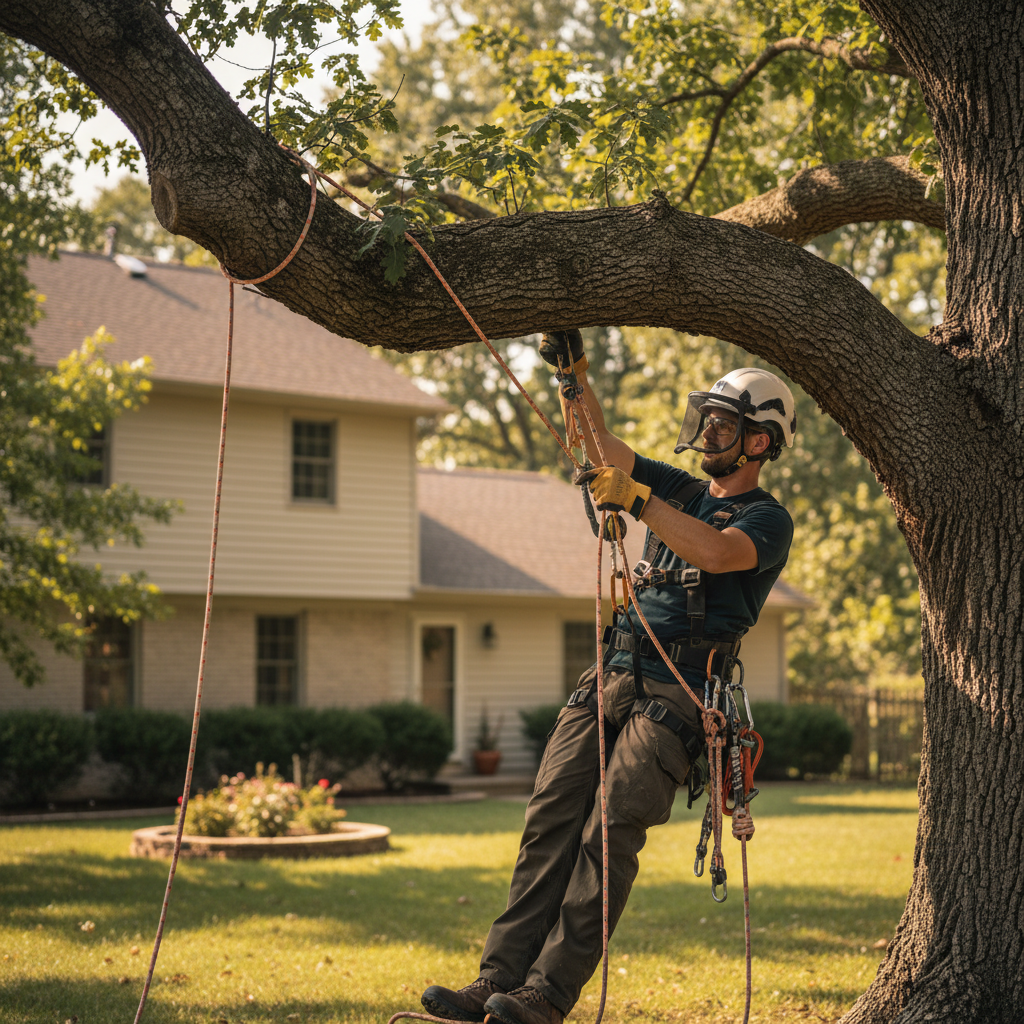
Getting a quote to remove a tree can be a surprising experience. One company might quote you $900, another $2,500, and a third might come in at $4,000—all for the exact same tree. It’s enough to make any homeowner wonder: what should this job actually cost?
The truth is, tree removal is one of the most variable home service projects. Unlike installing a standard water heater, removing a tree isn't a pre-packaged task. It’s a complex, custom job where the price is dictated by risk, labor, and equipment. Understanding the factors that build a professional quote is the key to hiring the right company at a fair price.
This guide will walk you through how tree service professionals calculate their costs, what to look for in a quote, and how to avoid the red flags that could cost you thousands in the long run.
The Core Factors That Drive Tree Removal Costs
When an arborist walks your property to prepare an estimate, they are performing a complex calculation based on several key variables. The final price tag directly reflects the time, danger, and difficulty involved.
Tree Size (Diameter and Height)
This is the most significant factor. A small, 25-foot ornamental pear tree is a simple, half-day job. An 80-foot oak tree that has been on your property for a century is a major undertaking. Professionals measure size in two ways:
- Height: The taller the tree, the more work it takes to safely dismantle it from the top down. Each section must be carefully cut and lowered to avoid damage to your property.
- Diameter: Arborists often refer to a tree's DBH, or "Diameter at Breast Height" (about 4.5 feet from the ground). A wider trunk means more wood to cut, handle, and haul away, which translates directly to more time and labor.
Here are some very general price ranges based on tree size. Remember, these can swing wildly based on the other factors below.
- Small Tree (under 30 feet): $250 – $750. Think Japanese maples, dogwoods, or other small ornamental trees.
- Medium Tree (30 to 60 feet): $750 – $1,800. This covers many common backyard trees like birch, crabapple, or medium-sized maples.
- Large Tree (60 to 80 feet): $1,500 – $3,000. Mature oaks, maples, and ashes often fall into this category. These almost always require skilled climbers and technical rigging.
- Very Large Tree (over 80 feet): $3,000 – $7,000+. For towering pines, poplars, or ancient oaks, the job can become extremely complex, sometimes requiring a crane.
Location and Accessibility
Where the tree stands is just as important as how tall it is. A tree in a wide-open field is the easiest (and cheapest) to remove. A tree in a tight urban backyard is a surgical operation.
Factors that increase the cost include:
- Proximity to Structures: Is the tree leaning over your house, your garage, or your neighbor’s fence? Is it tangled in power lines? Every obstacle below the tree is a liability the crew must protect. This requires precise, careful work, which takes more time.
- Limited Access: Can the crew get a bucket truck or heavy equipment into your backyard? If the only access is through a narrow garden gate, the work must be done by a climber. All debris must also be hauled out by hand or with smaller equipment, drastically increasing labor hours.
- Protecting Your Landscape: If the tree is in the middle of a prized rose garden, a swimming pool, or an expensive deck, the crew must take extra precautions to avoid damage. This might involve building temporary platforms or using complex rigging to swing every single branch to a safe drop zone.
Tree Health and Condition
It may seem counterintuitive, but a dead or dying tree can often be more expensive to remove than a healthy one. A hazardous tree is an unpredictable one. Dead branches are brittle and can snap unexpectedly, posing a huge risk to the climbers and your property. The trunk may be hollow or rotten, making it unstable. An arborist must approach a hazardous tree with extreme caution, which often means slower, more methodical work.
A healthy, strong tree allows a climber to move around confidently and use the tree's own structure to support rigging. A compromised tree removes these advantages, increasing the risk and therefore the price.
Type of Tree
Not all trees are created equal. Some species are simply harder to work with. A tall, straight pine tree can often be dismantled in a straightforward, repetitive manner. A massive oak with a wide, sprawling canopy and multiple trunks is a far more complex puzzle. Hardwoods like oak are also denser and heavier than softwoods like pine, meaning more weight to handle and haul.
What's Included in a Standard Quote (And What's Extra)?
When you get three different quotes, you need to be sure you're comparing the same scope of work. A suspiciously low bid might be leaving out key services that you'll have to pay for later. A professional quote should clearly itemize what's included.
Standard Inclusions
A comprehensive quote for full removal should typically cover:
- Felling the Tree: The complete process of cutting the tree down in a safe, controlled manner.
- Limbing and Bucking: Cutting all the branches off the trunk (limbing) and then cutting the trunk itself into manageable sections (bucking).
- Chipping Brush: Feeding all smaller branches and brush into a wood chipper on-site.
- Hauling Debris: Loading and hauling away all the chips and wood from your property. Be specific about this—does it include large log sections?
- Basic Cleanup: Raking the work area and using a leaf blower to clean sawdust and small debris from your lawn, driveway, and walkways.
Common Add-On Services and Their Costs
If these aren't listed on your quote, assume they are not included. Always ask.
- Stump Grinding: This is almost always a separate line item. Removing the tree leaves a stump, typically cut as low to the ground as possible. Grinding chews the stump and its upper roots into a pile of wood chips, leaving the area ready for topsoil and grass seed. Cost: $150 – $450, depending on the stump's diameter and accessibility.
- Hauling Large Wood: Some companies' standard service includes hauling chips but leaving the large, sectioned logs. This is common if the wood has value as firewood. If you want them to take everything, make sure the quote says "haul all wood and debris." Cost: $100 - $400 extra, depending on volume.
- Crane Rental: For trees that are enormous, extremely hazardous, or completely inaccessible, a crane may be needed to lift sections up and over the house. This is a major expense. Cost: Can add $500 – $2,000 or more to the total job cost.
- Permits: Many cities and counties require a permit to remove a tree over a certain size or of a protected species. The tree service company usually handles the application process, but the permit fee itself is passed on to you. Cost: $50 - $200, depending on your municipality.
The 'Invisible' Costs: Why a Pro is Worth the Price
That shockingly low quote from a "guy with a chainsaw" is cheap for a reason. He's skipping the essential overhead that protects you, the homeowner. Tree work is consistently ranked as one of the most dangerous jobs in America. Professionalism isn't just about doing a good job; it's about doing it safely and being accountable.
Insurance (This is Non-Negotiable)
If you remember one thing from this article, let it be this: never hire a tree service that cannot provide proof of insurance. A legitimate company carries two critical policies:
- General Liability Insurance: This covers damage to your property. If a limb is dropped on your roof or a truck cracks your driveway, this policy pays for the repairs. Without it, you'll be suing the contractor (if you can find him) or filing a claim on your own homeowner's insurance.
- Workers' Compensation Insurance: This covers injuries to the crew. If a worker is hurt on your property and the company doesn't have this coverage, you could be considered the employer and held liable for their medical bills and lost wages. This can lead to financially devastating lawsuits.
Actionable Tip: Ask for a certificate of insurance (COI) and call the insurance agency listed on the certificate to verify that the policy is active and covers tree work specifically.
Licensing, Certification, and Training
While not all states require a specific license for tree work, many local municipalities do. More importantly, look for credentials that signal a high level of expertise. An ISA (International Society of Arboriculture) Certified Arborist has passed a comprehensive exam covering all facets of arboriculture and must maintain their certification with ongoing education. Hiring a company with an ISA Certified Arborist on staff ensures you're getting expert advice based on tree science, not just someone who knows how to run a saw.
Specialized Equipment
Professional tree work requires a fleet of expensive, specialized equipment: aerial lifts (bucket trucks), powerful chippers, stump grinders, rigging ropes, climbing gear, and an arsenal of chainsaws. This equipment costs tens or even hundreds of thousands of dollars to purchase and maintain. These costs, along with fuel and insurance, are factored into the price of the job.
How to Get Accurate Tree Removal Quotes
To make a smart hiring decision, you need to gather quotes that are clear, comprehensive, and comparable.
- Get at Least Three Quotes: This is the golden rule for any major home project. It gives you a sense of the market rate and helps you identify bids that are too high or suspiciously low.
- Insist on an In-Person Estimate: A true professional needs to see the tree, the access, and the surrounding obstacles to give you an accurate price. A quote given over the phone or via email based on a photo is a guess at best and a red flag at worst.
- Get Everything in Writing: A verbal agreement is not a contract. The written estimate should be a detailed scope of work. It should clearly state:
- The exact tree(s) to be removed, identified clearly.
- A line-by-line breakdown of the services included (e.g., felling, chipping, hauling, stump grinding).
- Confirmation of who is responsible for all debris.
- The total, fixed cost. Avoid open-ended "hourly rate" jobs unless it's for minor pruning.
- Payment terms (e.g., no money down, or a small deposit like 10%).
- A statement confirming they are insured, with proof available.
Red Flags to Watch Out For When Hiring
Protect yourself from amateurs and scammers by being aware of these common warning signs.
- Door-to-Door Sales: Be extremely wary of anyone who knocks on your door and says, "We were just working in the neighborhood and noticed your tree..." This is a common tactic of storm-chasers and uninsured operators.
- Vague or Verbal-Only Quotes: A professional has a process. They provide detailed, written estimates. A price scribbled on the back of a business card is not a professional quote.
- Asking for Full Payment Upfront: No reputable company will ask for 100% of the payment before the work begins. A small deposit (10-30%) for a very large job requiring special rentals may be reasonable, but that's it.
- Recommending "Tree Topping": Topping is the indiscriminate cutting of tree branches to stubs. It is a harmful and outdated practice that weakens the tree and leads to future problems. A certified arborist will almost never recommend it.
- Using Climbing Spikes on a Live Tree: Spikes wound the tree and should only be used on trees that are being fully removed. If a company is just pruning your tree and uses spikes to climb it, they don't know what they're doing.
- An Unbelievably Low Bid: If two quotes are around $2,000 and a third is $700, the low bidder is cutting corners. That corner is almost always insurance, proper equipment, or worker safety.
Beyond Removal: The Cost of Other Tree Services
Sometimes you don't need a full removal. Understanding the costs of other common services can help you budget for total tree care.
- Tree Trimming/Pruning: This is crucial for tree health and safety. Costs vary based on the goal: removing deadwood, thinning the canopy, or raising low-hanging branches. Expect to pay anywhere from $300 to $1,500 depending on the tree's size and the complexity of the pruning.
- Stump Grinding (Standalone): If you have an old stump from a previous removal, you can hire a company just for that. The cost is the same as the add-on service, typically $150 to $450 based on diameter and access.
- Emergency Tree Service: If a tree falls on your house during a storm, you'll need immediate help. This work comes at a premium due to the urgency, inherent danger, and high demand. Expect to pay 25% to 50% more than you would for a scheduled removal.
Frequently asked questions
Is it cheaper to remove a tree in the winter?+
Sometimes, yes. Winter is often the off-season for tree companies in colder climates, so you may get a better price due to lower demand. The frozen ground can also make it easier to bring in heavy equipment with less damage to your lawn.
Do I need a permit to remove a tree on my property?+
It depends entirely on your city or county. Many municipalities have ordinances protecting trees over a certain size or of a specific species. A reputable arborist will know the local regulations and can tell you if a permit is required for your job.
Why is one quote so much cheaper than the others?+
A quote that is drastically lower than the competition is a major red flag. This company is likely cutting corners, most commonly by not carrying proper general liability and workers' compensation insurance. They might also be using substandard equipment or planning to dispose of the debris illegally.
Can I keep the wood for firewood?+
Absolutely. Many homeowners choose to keep the larger logs for firewood. Just make sure you communicate this to the arborist beforehand so they can adjust the quote, as it saves them the labor and cost of hauling the heavy wood away.
How long does a typical tree removal take?+
It varies greatly. A small, accessible tree might be done in 2-3 hours. A large, complex removal over a house could be a full-day or even multi-day project requiring a large crew. The arborist should be able to give you a realistic timeline along with your estimate.