
My Sump Pump Failed. Now What? A Homeowner's Guide to Prevention & Fixes
Your sump pump is your basement's first line of defense against flooding. Learn the top reasons they fail, what you can do to prevent it, and when it's time to call a plumber for a fast fix.
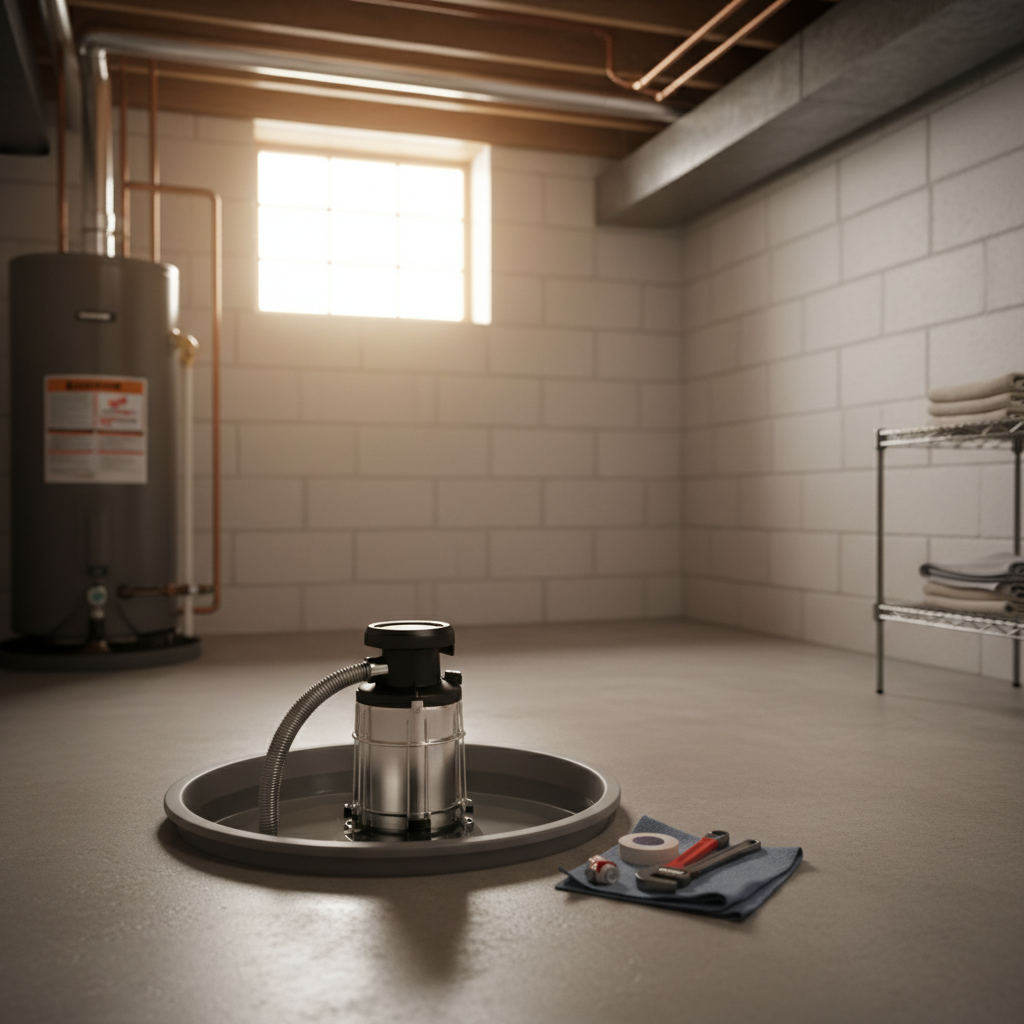
Of all the hard-working appliances in your home, the sump pump might be the easiest to forget. Tucked away in a basement corner, it sits silently, waiting for the one job it was designed to do: keep your basement from flooding. But when it fails, it fails spectacularly, often during a torrential downpour when you need it most. Suddenly, you’re facing thousands of dollars in water damage, a massive cleanup, and a huge headache.
This guide is for any homeowner who relies on a sump pump. We’ll walk through why they fail, what you can do to keep yours running smoothly, and—most importantly—how to know when to stop tinkering and call a professional plumber. Understanding your system is the first step to preventing a disaster.
Understanding Your Sump Pump System
Before you can troubleshoot a problem, it helps to know what you’re looking at. A sump pump system seems complex, but it’s made of a few key parts that work together. When you call a plumber, they'll be inspecting these components to find the source of the failure.
- The Sump Pit (or Basin): This is simply the hole, liner, and often a cover in your basement floor where groundwater collects. It’s the lowest point in your basement, so water naturally drains toward it.
- The Pump: This is the heart of the system. There are two main types. Submersible pumps sit down inside the pit, submerged in water, which makes them quieter and helps keep the motor cool. Pedestal pumps have a long column with the motor sitting up top, out of the water. They are louder but sometimes easier to access for service. Submersible pumps are far more common in modern homes.
- The Float Switch: This is the trigger. As water fills the pit, it lifts a float. When the float reaches a certain height, it activates the switch, which turns the pump on. As the pump ejects the water, the water level and the float drop, turning the pump off. It works just like the float in your toilet tank.
- The Check Valve: This is a one-way valve on the discharge pipe. It’s a critical but often overlooked part. When the pump turns off, the check valve claps shut to prevent all the water in the pipe from flowing back down into the pit. Without it, your pump would turn on and off constantly, pumping the same water over and over again.
- The Discharge Pipe: This is the PVC pipe that carries the water from the pump up and out of your house, releasing it a safe distance away from your foundation.
Knowing these parts helps you describe a problem accurately to a pro. Saying “my pump motor is humming but nothing is happening” is much more useful than just “it’s broken.”
The Top 5 Reasons Sump Pumps Fail (And How to Spot Them)
A sump pump failure is rarely a surprise if you know the warning signs. Most issues stem from a handful of common causes. Here’s what to watch for.
1. Power Outages
This is the most common and frustrating reason for a sump pump to fail. Heavy storms that bring flooding rains are often the same storms that knock out the power. Your standard sump pump runs on your home's electricity, so when the power goes out, your primary defense against a flood is gone. It's a perfect storm, literally.
What this means for you: The only real solution is a backup system. A battery backup sump pump is a secondary, DC-powered pump that sits in the same pit. If the power fails, its controller automatically switches on and runs the backup pump using a dedicated deep-cycle marine battery. This is a must-have for any finished basement or area with a high water table. When you get a quote for a new pump, always ask the plumber about the cost and benefits of adding a battery backup system. It’s the best insurance policy you can buy for your basement.
2. A Stuck or Broken Float Switch
The float switch is a mechanical part with a simple job, but its movement makes it a common point of failure. The float can get pinned against the side of the basin, tangled in the pump's own power cord, or jammed by debris that has fallen into the pit. If the switch can't float up, the pump will never turn on. Conversely, if it gets stuck in the 'on' position, the pump will run continuously until it burns itself out.
What this means for you: You can test this yourself. Slowly pour a 5-gallon bucket of water into the sump pit. The float should rise and the pump should kick on, drain the pit, and shut off. If it doesn't, the switch might be the problem. A plumber can often replace just the float switch for a fraction of the cost of a new pump, typically for $150–$350. It's a quick fix for a qualified pro.
3. Clogged or Frozen Discharge Pipe
Your pump can be working perfectly, but if the water has nowhere to go, your basement will still flood. The discharge pipe can get clogged with dirt, rocks, or animal nests at its exit point. In the winter, if the pipe is not sloped correctly or doesn't have a proper termination, the water inside can freeze solid, creating an impenetrable ice plug. The pump will try to force water against this blockage, overheat, and fail.
What this means for you: Periodically check the end of your discharge line outside. Make sure it's clear of mulch, dirt, and debris, and that water can flow freely at least 10 feet away from your foundation. For cold climates, ask a plumber about installing a specialized grated discharge line attachment that's designed to prevent freezing. If you suspect a clog, a plumber has tools to clear the line or diagnose if it needs to be re-routed.
4. Overwhelmed Pump (Undersized for the Job)
Not all sump pumps are created equal. They come in different horsepower (HP) ratings, typically 1/3, 1/2, or 3/4 HP. If a previous owner installed a cheap, low-power 1/3 HP pump in an area with a high water table, that pump will have to run almost constantly during a rainy season. This excessive use will drastically shorten its lifespan and lead to a premature burnout. The pump simply can't move water out as fast as it's coming in.
What this means for you: If you're replacing a failed pump, don't automatically buy the same model. Talk to your plumber about how much water you typically get. A good pro won't just sell you a pump; they'll assess your situation. They might recommend upgrading from 1/3 HP to a 1/2 HP model, which is the standard for most homes, or even a 3/4 HP pump if you have a very active sump pit. Spending a little more on the right-sized pump will save you from another failure in a few years.
5. Old Age and Lack of Maintenance
Like any appliance with a motor, a sump pump has a finite lifespan. The average is about 7 to 10 years. If your pump is older than that, you're living on borrowed time. Over the years, the motor wears down, bearings fail, and internal seals degrade. This is accelerated by a lack of basic maintenance. Sump pits can collect dirt, grit, and small stones that get sucked into the pump, damaging the impeller (the part that actually moves the water) and clogging the intake screen.
What this means for you: Maintenance is key. You should perform a quick check every few months and a more thorough one annually. Here’s a simple checklist:
- Look and Listen: Unplug the pump and remove it from the pit (it should just lift out). Check the intake screen at the bottom and clear away any gravel, mud, or debris. Put it back in the pit.
- Test the Float: Plug the pump back in. Pour a bucket of water into the pit to make sure the float switch activates the pump correctly and it drains the water.
- Check the Outlet: Go outside and ensure the discharge pipe opening is clear.
- Check the Check Valve: Make sure the check valve is operating. You should hear a quiet "thump" when the pump shuts off as the valve closes.
If your pump is approaching the 10-year mark, the smartest financial decision is to have it proactively replaced by a plumber. The cost of a planned replacement is far less than the cost of an emergency flood cleanup.
DIY Troubleshooting vs. Calling a Plumber: When to Make the Call
Many homeowners want to save money by fixing things themselves. With sump pumps, it's crucial to know your limits, as you're dealing with electricity and water in close proximity.
Safe DIY Tasks:
- Performing the maintenance checklist above.
- Clearing debris from inside the sump pit.
- Ensuring the pump is plugged into a working GFCI (Ground Fault Circuit Interrupter) outlet.
- Checking the exterior discharge line for obvious blockages like leaves or mulch.
When to Call a Plumber Immediately:
- There is already standing water in your basement. Don't wade into electrified water. Call a pro who knows how to handle the situation safely.
- The pump is making loud, unusual noises. Grinding, screeching, or rattling sounds indicate a serious mechanical failure is imminent. Shut it off at the breaker and call for service.
- The pump is humming but not moving water. This could be a jammed impeller or a failed motor. Continuing to run it will only cause more damage.
- The circuit breaker for the pump keeps tripping. This points to an electrical problem with the pump motor or wiring that requires a professional to diagnose.
- You're simply not comfortable. There is no shame in calling a professional for a job that involves plumbing and electrical systems. It's the safest and most reliable choice.
What to Expect When You Hire a Plumber for a Sump Pump Issue
Knowing what to expect can ease the stress of a service call. A reputable plumber will follow a clear process.
- The Diagnosis: The plumber will arrive and first ensure the scene is safe. They will ask you questions about the problem and then perform a systematic inspection of the entire system: the pump, float switch, check valve, piping, and electrical connection. They will likely test the system by pouring water into the pit.
- Presenting Options: Once the problem is identified, the plumber will explain the cause of the failure and present you with clear options. For example: "Your float switch has failed. We can replace just the switch for $X, but your pump is 12 years old. For $Y, we can replace the entire pump with a new, more efficient model that comes with a warranty."
- Repair vs. Replace: As a rule of thumb, if your pump is over 7-8 years old, replacing it is almost always a better investment than repairing a single component. It's likely that another part will fail soon anyway. If the pump is only a few years old, a simple repair like a new check valve or float switch is often the most cost-effective solution.
Typical Costs (for a professional, licensed plumber):
- Service Call / Diagnostic Fee: $75 – $200 (often waived if you proceed with the repair).
- Float Switch Replacement: $150 – $350
- Check Valve Replacement: $125 – $300
- Full Sump Pump Replacement: $450 – $1,200. This range depends heavily on the quality of the pump (plastic vs. cast iron, HP rating) and the complexity of the installation.
- Battery Backup System Installation: $600 – $1,800. The price varies based on the power of the backup pump and the quality of the battery and controller.
Choosing the Right Sump Pump: A Quick Guide for Homeowners
If you decide to replace your pump, your plumber will recommend a model. Here’s what you need to know to have an intelligent conversation and make a good choice.
Submersible vs. Pedestal Pumps
As mentioned earlier, submersible pumps are the modern standard. They sit in the water, which makes them much quieter and helps cool the motor. Pedestal pumps, with their motor on a stick, are less common, typically used in very narrow or deep pits.
Horsepower (HP) Explained
Don't just default to the cheapest 1/3 HP pump. This is the most critical decision.
- 1/3 HP: Suitable for homes with minimal water intrusion or in areas with very sandy soil that drains well.
- 1/2 HP: The most common and recommended size for the average home. It offers a good balance of pumping capacity and energy efficiency.
- 3/4 HP or 1 HP: Needed for homes with a high water table, frequent flooding risk, or where the water has to be pumped a long vertical distance (this is called "head height"). Your plumber can calculate this to size the pump correctly.
Material Matters: Cast Iron vs. Plastic
Sump pumps are generally made of thermoplastic (a type of plastic) or cast iron. Thermoplastic pumps are cheaper but are more prone to cracking and can't dissipate motor heat as well. Cast iron pumps are heavier, more durable, and do a much better job of shedding heat, which extends the motor's life. For a primary pump that you rely on, a cast iron body is a worthwhile investment.
The Ultimate Upgrade: Battery Backup and Combination Systems
We mentioned power outages, but it’s worth repeating: a backup system is the single best thing you can do to guarantee a dry basement. It's the difference between peace of mind and panic during a storm.
You can add a backup system to your existing pump, or you can buy a pre-assembled combination system. These units package a primary AC pump and a DC battery backup pump together in one convenient kit. They are designed to work together seamlessly.
Modern systems also offer smart features, like controllers that run self-tests and send alerts to your smartphone if there's a power outage, the battery is low, or the pump has activated. This allows you to know what's happening in your basement even when you're not home.
Think of it this way: the cost of installing a quality battery backup system (around $1,000 - $1,500) is a fraction of the cost of professional water damage restoration, which can easily exceed $5,000 to $10,000, not to mention the loss of personal property. When you're talking to a plumber, view the backup system not as an upsell, but as an essential piece of insurance.
Frequently asked questions
How often should I replace my sump pump?+
Most plumbers recommend proactive replacement every 7-10 years, even if it seems to be working. This prevents failure at an inconvenient time, like during a major storm, and is much cheaper than an emergency call and flood cleanup.
Is a battery backup sump pump really worth the cost?+
Absolutely. Power outages are a leading cause of pump failure during storms—exactly when you need it most. The cost of a backup system is minor compared to the thousands of dollars for professional water damage remediation and lost valuables.
My sump pump runs constantly, even when it's not raining. What's wrong?+
This could be a stuck float switch, a broken check valve letting water flow back into the pit, or a sign that your pump is undersized for a high water table. It's best to have a plumber diagnose it promptly to prevent the motor from burning out.
Can I install a new sump pump myself?+
While it's possible for a very skilled DIYer, we strongly recommend a licensed plumber. The job involves both plumbing and electrical work in a wet environment, which can be dangerous. A pro ensures it's sized, installed, and discharged correctly for safety and reliability.
What's that loud 'thump' I hear when my sump pump turns off?+
That sound is likely 'water hammer' caused by the check valve slamming shut to stop water from flowing back into the pit. While it's usually not a major problem, a plumber can easily install a 'quiet' check valve to eliminate the noise and reduce long-term stress on your pipes.