
Driveway Repair vs. Replacement: A Homeowner's Guide to Cost and Longevity
Is your cracked driveway a candidate for a simple fix or a full replacement? This guide breaks down the costs, lifespans, and warning signs for asphalt and concrete.
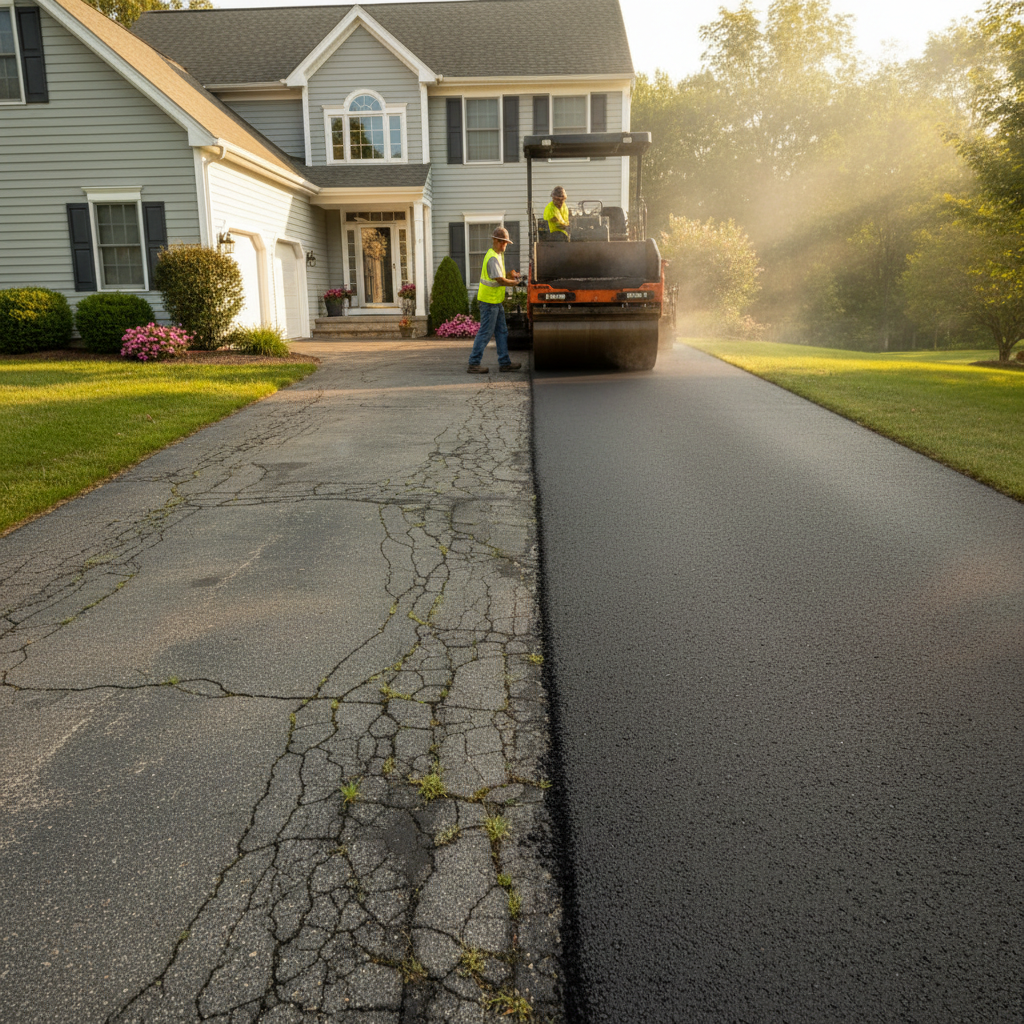
Your driveway is one of the first things people see when they pull up to your house. It’s also one of the most hardworking surfaces on your property, bearing the weight of vehicles day in and day out. So when it starts to show its age with cracks, potholes, or sinking, you're faced with a big question: should you repair it or replace it?
This isn't just about looks; it's a decision with significant financial and practical implications. A quick fix might save you money now, but could it lead to bigger headaches later? A full replacement is a major investment, but does it offer better long-term value? This guide will walk you through the key factors—damage assessment, material type, cost, and lifespan—to help you make the smartest choice for your home and budget.
First, Assess the Damage: What Are You Seeing?
The most important step is to take a hard, honest look at your driveway's condition. The type, size, and pattern of the damage are the biggest clues to whether you're dealing with a surface-level issue or a deeper structural problem. Get your phone, take some pictures, and compare what you see to the descriptions below.
Minor Surface Issues (Good Candidates for Repair)
If your driveway's problems are mostly cosmetic, you're likely in the repair camp. These issues are annoying but don't typically signal a complete failure of the driveway's foundation.
- Hairline Cracks: These are very thin cracks, usually less than a quarter-inch wide. In both asphalt and concrete, they are often the first sign of aging and exposure to the elements. They are relatively easy to fix and are crucial to address before they widen and let water in.
- Small Potholes or Spalling: A single pothole in an otherwise solid asphalt driveway can often be patched. In concrete, you might see spalling or flaking, where the top layer chips away, exposing the rougher aggregate beneath. If these spots are isolated, a patch or resurfacing can be an effective solution.
- Stains: Oil, rust, and leaf stains are ugly but don't harm the structural integrity of your driveway. They can usually be cleaned or, in the case of asphalt, covered with a fresh sealcoat.
What this means for you: If your driveway's issues fall into this category, you can breathe a sigh of relief. A professional repair can extend its life for several more years at a fraction of the cost of replacement. The key is to act quickly to prevent these small problems from becoming big ones.
Major Structural Problems (Warning Signs for Replacement)
These are the red flags that suggest the problem isn't just on the surface. Structural issues usually point to a failure of the sub-base—the layer of compacted gravel and soil beneath the pavement that provides support. When the base fails, no amount of surface patching will provide a lasting fix.
- "Alligator" or "Spiderweb" Cracking: This is a network of interconnected cracks that looks like the scales on an alligator's back. It's a classic sign of base failure in asphalt driveways. The pavement is no longer properly supported from below, causing it to flex and break under weight.
- Deep, Wide Cracks: Cracks wider than a half-inch that go deep into the slab are serious. They allow large amounts of water to penetrate the base, which can freeze and expand in the winter (a phenomenon called "frost heave"), making the problem even worse.
- Sinking, Heaving, or Shifting: Are parts of your driveway noticeably lower or higher than they used to be? Sinking near the garage door is common. Heaving can be caused by frost or invasive tree roots. This movement is a sure sign that the ground underneath is unstable, and the driveway needs to be removed and the base regraded.
- Widespread Crumbling or Deterioration: If large sections of your driveway are crumbling into gravel (this is called "raveling" in the asphalt world), it has reached the end of its useful life. The binder that holds the material together has broken down, and it cannot be effectively repaired.
The 30% Rule: A common guideline used by contractors is that if more than 25-30% of your driveway's surface is covered in major structural problems, replacement is almost always the more cost-effective option.
Repair vs. Replacement by Driveway Type
Asphalt and concrete are the two most common driveway materials in the U.S., and they behave very differently. The right choice depends heavily on which one you have.
Asphalt Driveways
Asphalt is a flexible pavement, which makes it resilient to minor shifting but also more susceptible to certain types of damage. It requires regular maintenance to achieve its full lifespan.
- Common Repair Options:
- Crack Filling: For cracks up to a half-inch wide, a pro will use a hot-pour rubberized filler that seals the crack and remains flexible as the pavement expands and contracts. This is far more durable than the cold-pour fillers sold at hardware stores.
- Sealcoating: This is more of a maintenance task than a repair, but it's essential. A layer of sealant protects the asphalt from sun and water, fills hairline cracks, and restores its rich black color. It should be done every 3-5 years.
- Patching: For potholes, a contractor will cut out the damaged section, fill it with new hot-mix asphalt, and compact it to create a seamless patch.
- Replacement Process: The old asphalt is torn out and hauled away. The contractor then inspects and re-grades the gravel sub-base, adding new material and compacting it for proper drainage and support. Finally, a new layer of hot-mix asphalt (typically 2-3 inches thick after compaction) is laid and smoothed with a heavy roller.
- Lifespan: A properly repaired and sealed asphalt driveway might get another 3-7 years of service. A brand-new asphalt driveway should last 15 to 25 years, provided you have it seal-coated every few years.
Concrete Driveways
Concrete is a rigid pavement. It's incredibly strong and durable but can be more expensive to install and repair. When it cracks, the repair options are different from asphalt.
- Common Repair Options:
- Caulking/Sealing: For smaller cracks, a flexible polyurethane sealant can keep water out and prevent the crack from expanding.
- Patching: Small areas of spalling or chipping can be patched with a concrete patching compound, though getting the color to match perfectly is difficult.
- Slabjacking (or Mudjacking/Poly-leveling): If a concrete slab has sunk but is not cracked, this is a fantastic repair option. A contractor drills small holes in the slab and pumps a slurry (either a grout mixture or, more commonly today, a high-density polyurethane foam) underneath. The pressure lifts the slab back into its original position. This is much cheaper than replacing the whole slab.
- Resurfacing: If the surface is cosmetically flawed but the slab is structurally sound, a contractor can apply a thin concrete overlay to create a fresh new surface. This is also a good opportunity to add color or a stamped texture.
- Replacement Process: This is a major job. The old concrete is broken up with jackhammers and removed. The sub-base is re-graded and compacted. Wooden forms are built around the perimeter, steel rebar or wire mesh is often laid for reinforcement, and then new concrete is poured, leveled, and finished. The curing process is critical and takes several days.
- Lifespan: A simple crack repair might last for years. Slabjacking is a very durable fix for a settled slab. A new concrete driveway is a long-term investment, often lasting 30 to 50 years or more with minimal maintenance.
The Cost Breakdown: Comparing Repair and Replacement
For most homeowners, cost is the bottom line. It's crucial to understand that while repair has a lower sticker price, replacement offers better value per year of service life when a driveway is structurally compromised. All prices here are typical ranges and will vary based on your location, the contractor's workload, and material costs.
The Cost of Driveway Repair
Repairs are priced based on the specific task, not always per square foot.
- Asphalt Repair Costs:
- Professional Crack Sealing: $1.00 - $2.50 per linear foot.
- Sealcoating: $0.25 - $0.80 per square foot. Most companies have a minimum charge of $400 - $800, so it makes sense to do the whole driveway.
- Pothole Patching: $150 - $450 per patch, depending on its size and depth.
- Concrete Repair Costs:
- Crack Sealing: $1.50 - $3.50 per linear foot using professional-grade sealant.
- Slabjacking/Poly-leveling: This is a specialized service. Expect to pay $700 - $2,800 to lift a significant section, like a sunken garage approach.
- Concrete Resurfacing: $3 - $8 per square foot, depending on the complexity and finish.
The Cost of Driveway Replacement
Replacement is quoted per square foot, and the price includes demolition, removal, base prep, and new material. A typical two-car driveway is about 600-800 square feet.
- Asphalt Replacement Cost: $4 - $8 per square foot. For a standard 600 sq. ft. driveway, this translates to a total project cost of $2,400 - $4,800.
- Concrete Replacement Cost: $7 - $15 per square foot for a standard broom finish. For that same 600 sq. ft. driveway, the total cost would be $4,200 - $9,000.
Factors That Increase Replacement Costs
- Poor Access: If the contractor's heavy equipment can't easily get to the site.
- Significant Grading: If your driveway is on a steep slope or requires extensive work to ensure proper drainage.
- Permits: Most municipalities require a permit for a full driveway replacement, which can add a few hundred dollars to the cost.
- Upgrades: Decorative options like stamped concrete, colored concrete, or adding a paver border can significantly increase the price per square foot.
The Long-Term View: Lifespan and Return on Investment
Think about the cost per year, not just the upfront price. A $1,000 repair that buys you two more years on a failing driveway costs you $500 per year. A $6,000 replacement that lasts 20 years costs you only $300 per year, all while dramatically improving your home's curb appeal.
Patching a driveway with a failed base is like putting a new tire on a car with a bent frame. It gets you a little further down the road, but it doesn’t fix the real problem, and you'll soon be dealing with more issues.
A new driveway, on the other hand, resets the clock. It solves underlying drainage and base problems and offers a significant return on investment, especially if you plan to sell. A crumbling, cracked driveway is a major turn-off for potential buyers, suggesting neglect. A brand-new driveway signals a well-maintained home and can be a key selling point.
How Professionals Handle Repair vs. Replacement
When you call a reputable paving contractor, they won't just give you a price. They'll perform a thorough diagnosis to recommend the right solution.
- The On-Site Inspection: A pro will walk the entire driveway. They'll measure it, identify the types of cracks, check for signs of sinking or heaving, and assess the drainage. They need to understand the root cause of the problem, not just the symptoms.
- The Proposal: You should receive a detailed, written estimate that clearly outlines the scope of work.
- For a repair, it should specify the methods and materials (e.g., "saw-cut and remove damaged asphalt," "apply hot-pour rubberized crack sealant").
- For a replacement, it must include details on demolition, the prepared depth of the sub-base, and the compacted thickness of the new asphalt or concrete. For asphalt, 2.5"-3" is standard. For concrete, 4" is the minimum for residential use.
- Red Flags: Be wary of any contractor who gives you a price over the phone without seeing the job. Also, be suspicious of anyone pushing a cheap asphalt "overlay" (a new layer on top of the old, damaged one) without fixing the base. This is a temporary fix that will fail quickly, as the cracks from below will soon reflect through the new surface.
Making Your Final Decision: A Checklist
Feeling overwhelmed? Use this simple checklist to guide your decision.
Choose REPAIR if:
- The damage is limited to hairline cracks, a few small potholes, or surface stains.
- The driveway's base seems solid, with no major sinking, heaving, or widespread alligator cracking.
- The problem areas cover less than 25-30% of the total surface.
- Your budget is tight, and you need an affordable solution to prevent further damage and buy a few more years.
Choose REPLACEMENT if:
- You have extensive "alligator" cracking, indicating base failure.
- The driveway is visibly sinking, heaving, or has created drainage problems where water pools or flows toward your foundation.
- It has simply reached the end of its natural lifespan (20+ years for asphalt, 30+ for concrete) and is deteriorating everywhere.
- You're planning to sell your home soon and want to maximize its curb appeal and value.
- The estimated cost of multiple repairs is approaching 50% or more of the cost of a full replacement.
Ultimately, while repairing a driveway is a tempting, low-cost option, it's often a short-term patch on a long-term problem. For a driveway with deep, structural issues, replacement is the smarter investment that provides decades of reliable service and boosts your home's value. Your best next step is to get at least three quotes from vetted, local paving contractors who can give you an honest assessment of your specific situation.
Frequently asked questions
Can I just pour a new layer of asphalt over my old cracked driveway?+
This is called an overlay, and it's generally a bad idea if your existing driveway has structural cracks. The cracks from the old layer will quickly transfer up to the new one, a process called 'reflective cracking'. A reputable contractor will only recommend an overlay if the existing driveway is structurally sound and just needs a new surface.
How long do I have to stay off a new driveway?+
For a new asphalt driveway, you should stay off it for at least 3-5 days in warm weather to let it harden. For a new concrete driveway, you can typically walk on it after 24 hours, but you should wait at least 7-10 days before driving on it to allow it to cure and gain strength.
Does my homeowners insurance cover driveway replacement?+
Generally, no. Homeowners insurance typically does not cover replacement or repair due to normal wear and tear, aging, or neglect. However, if the damage was caused by a specific, covered peril like a tree falling on it or a vehicle accident, you may have a claim.
Is a permit needed to replace a driveway?+
In most towns and cities, yes. A permit is often required for a full replacement because it can affect drainage, public sidewalks, and the road apron. A professional contractor will know the local requirements and should handle the permitting process for you.
What's the best time of year to repair or replace a driveway?+
The best time for paving is during warm, dry weather, typically from late spring to early fall. Asphalt plants often close in the winter, and concrete doesn't cure properly in freezing temperatures. Planning your project for a dry season ensures the best and most durable results.