Going Solar? 9 Questions Homeowners Forget to Ask Installers
Thinking about going solar? Asking the right questions upfront can save you thousands and prevent major headaches. Here's what most homeowners miss beyond the initial price.
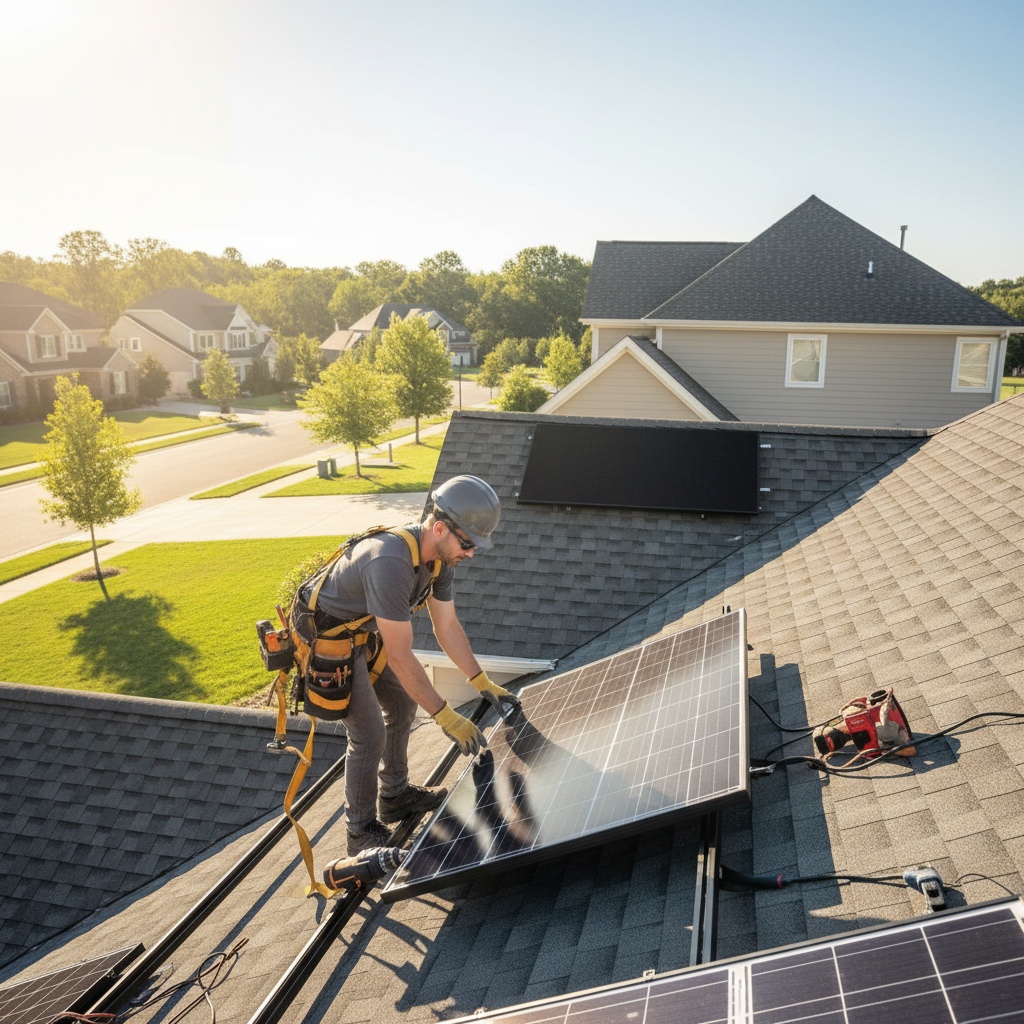
Going solar is one of the biggest investments you can make in your home. The promise of lower electric bills, clean energy, and a smaller carbon footprint is compelling. When you start gathering quotes, most of the conversation centers on the big, flashy numbers: system size in kilowatts (kW), the total cost, and the estimated monthly savings.
But a solar energy system is a power plant that will be attached to your home for 25 years or more. The details that are often glossed over in a sales presentation are the ones that determine your long-term satisfaction and the true value of your investment. A low price from an inexperienced installer can lead to a leaky roof, underperforming panels, or a system that you can't get serviced.
Before you sign a contract, it's crucial to dig deeper. Asking the right questions separates the seasoned pros from the slick salespeople. Here are the questions that most homeowners forget to ask, but absolutely shouldn't.
What’s the Actual Warranty on the System?
A salesperson might say your system has a "25-year warranty," but this is an oversimplification. A complete solar installation has at least three distinct warranties, and you need to understand each one.
The Three Key Warranties: Performance, Product, and Workmanship
- Panel Performance Warranty: This is the 25- or 30-year warranty everyone talks about. It guarantees that the panels will produce a certain percentage of their rated power after a specific number of years. For example, a manufacturer might guarantee the panel will still produce at least 85% of its original output in year 25. This is standard, but it only covers gradual degradation.
- Panel Product (or Equipment) Warranty: This warranty covers defects in the panel itself, like a faulty junction box or a cracked frame. This is typically shorter, often in the range of 10 to 15 years, though some premium brands offer 25 years. This is also true for your inverter, a critical component that converts DC power from the panels to AC power for your home. Inverters often have a 10- to 12-year warranty, shorter than the panels.
- Workmanship Warranty: This is arguably the most important warranty and the one that varies most between installers. It covers the installation itself—the quality of the labor. If a mounting bracket is installed improperly and causes a roof leak, or if faulty wiring causes a short, this is the warranty that protects you. A reputable installer will offer a workmanship warranty of at least 10 years. A one- or two-year warranty is a major red flag.
What this means for you: Get the details for all three warranties in writing. Ask who you call if there's a problem—the installer, or the equipment manufacturer? A great installer will manage all warranty claims for you, providing a single point of contact and saving you the headache of dealing with multiple companies.
Who Is Responsible for Permits and Interconnection?
Installing solar isn't as simple as just putting panels on the roof. It's a construction project that requires permission from your local government and your utility company. This process involves a lot of paperwork and can be a major source of delays.
First, there's the building permit. Your city or county needs to approve the structural and electrical plans to ensure they meet safety codes. This involves submitting detailed diagrams and specifications.
Second, there's the interconnection agreement with your utility company. You can't just start sending power back to the grid. The utility must inspect and approve your system to ensure it's safe and compatible with their infrastructure. This process, which enables features like net metering (where you get credit for excess power you generate), can sometimes take weeks or even months.
A top-tier solar contractor will handle 100% of this process. It should be a turnkey service included in their quoted price. They have dedicated staff who know the local permit offices and have established relationships with the utility companies, which can significantly speed things up.
What this means for you: Before you sign, confirm that the contract explicitly states the installer is responsible for filing, managing, and securing all necessary building permits and the utility interconnection agreement. Ask them about their average timeline for getting these approvals in your specific area. If an installer asks you to handle any part of the paperwork, it's a sign they may be cutting corners.
How Will the Installation Affect My Roof?
This is a huge one. Your solar array will be bolted to your roof for the next quarter-century. The installation process involves drilling dozens of holes into the primary shield that protects your home from the elements. If this isn't done perfectly, you're looking at a high risk of costly water damage.
Roof Age and Condition
First, consider your roof's age. Most asphalt shingle roofs have a lifespan of 20-30 years. If your roof is already 15 years old, you have a problem. Solar panels are expected to last 25+ years. If you install them on an old roof, you'll face a huge expense in 5-10 years: paying a company to remove the entire solar array, paying a roofer to replace the roof, and then paying the solar company to reinstall the array. This can cost $5,000–$10,000 or more.
A responsible solar installer will first inspect your roof and be honest about its condition. They should recommend replacing the roof first if it has less than 10-15 years of life remaining.
Mounting Systems and Water Intrusion
Next, ask about the specific mounting and flashing system they use. Flashing is the material—usually metal—used to direct water away from critical areas, especially where the roof is penetrated. Simply injecting sealant into a hole around a bolt is not a durable, long-term solution. Look for installers who use a robust, multi-layered waterproofing system, often involving metal flashings that slide under the shingles and create a physical barrier against water.
What this means for you: Ask the installer for their assessment of your roof's health. Ask them to show you a diagram or sample of the exact mounting and flashing hardware they will use. Finally, double-check that their workmanship warranty explicitly covers any roof leaks caused by their penetrations for at least 10 years.
What Happens If My System Underperforms?
The sales proposal will include an estimate of how many kilowatt-hours (kWh) your system will produce annually, which translates into your estimated savings. But what if it doesn't hit that number? Is that just your tough luck?
Production Guarantees
Some of the more established solar companies offer a production guarantee. This is different from a warranty. A production guarantee is a promise that your system will generate a certain amount of electricity over a given period (usually a year or two). If the system falls short of that target due to an issue with the installation or equipment (not just a string of cloudy days), the company will compensate you for the shortfall.
This provides a powerful incentive for the installer to design your system correctly, use quality components, and install everything perfectly. It shows they are confident in their work and are willing to stand behind their production estimates.
System Monitoring
Every modern solar installation comes with a monitoring app or web portal. However, they are not all created equal. Ask for a demo. Does it show you the production of the entire system as a whole, or can it drill down to the performance of each individual panel? Panel-level monitoring is far superior for diagnosing problems. If one panel is underperforming due to a defect or shade from a newly grown tree branch, you can easily identify it. With whole-system monitoring, you might only know that your production is down, but not why.
What this means for you: Ask if the company offers a production guarantee and how it works. Clarify that the monitoring system will be fully set up and that you will be shown how to use it. Ask if there are any ongoing fees for the monitoring service.
What Are the Specific Brands and Models You're Proposing?
Many quotes are frustratingly vague, listing components like "25 x 400W Tier 1 Solar Panels" and "1 x 7.6kW String Inverter." This isn't enough information to make an informed decision.
"Tier 1" is a term from Bloomberg New Energy Finance that refers to the financial stability of a manufacturer, indicating they are likely to be around to honor their warranties. It is not a direct measure of panel quality, efficiency, or reliability. There is a wide range of quality within the Tier 1 category.
Furthermore, the type of inverter is a critical choice:
- String Inverters: The traditional choice. All your panels are wired together in a "string," which feeds into a single, centralized inverter. The main drawback is that if one panel's output drops (due to shade, dirt, or a defect), the output of the entire string drops to that level.
- Microinverters: A small inverter is attached to the back of every single panel. This is more expensive upfront, but it means each panel operates independently. Shade on one panel won't affect the others, leading to better overall production in complex roof situations. It also enables panel-level monitoring.
- Power Optimizers: A hybrid approach. Optimizers are small devices attached to each panel that condition the DC electricity before sending it to a central string inverter. This provides many of the benefits of microinverters (shade tolerance, panel-level monitoring) often at a slightly lower cost.
What this means for you: Insist on a quote that lists the exact manufacturer and model number for the panels, inverters (or microinverters/optimizers), and the racking system. This allows you to do your own research on review sites, check efficiency and degradation specs, and compare quotes on a true apples-to-apples basis.
Who Is My Point of Contact After Installation?
The solar industry, unfortunately, has seen its share of companies that make a quick sale and then disappear, leaving homeowners with "orphaned" systems. When a problem arises a few years down the line, the homeowner's calls go to a disconnected number.
Before you sign, you need to understand the company's long-term service plan. When your system has an issue in five years, who do you call? Is there a dedicated service department with trained technicians, or will you be chasing your original salesperson?
Ask about their process for a service call. What is their guaranteed response time to diagnose an issue? A well-run company will have a clear, documented process for post-installation support.
This is also why choosing an established, local company is often safer than going with a large national firm that subcontracts its labor. A local business with a physical office and a long history in your community has a vested interest in maintaining its reputation. They are more likely to be there when you need them.
What this means for you: Ask, "What does your service department look like?" and "What is your process if I have an issue in Year 7?" Check online reviews specifically for mentions of customer service and post-installation support. A great installation company is a long-term partner, not a one-time vendor.
Frequently asked questions
Will my electric bill actually be zero after installing solar?+
Probably not. Most utilities charge a fixed monthly connection fee, typically $10-$20, that you have to pay regardless of your usage. Your bill will be drastically reduced, but it's rare to see a true $0.00 bill.
What happens to my solar panels during a power outage?+
For safety reasons, standard grid-tied solar systems automatically shut down during a power outage to prevent sending power back to the grid and endangering utility workers. If you want backup power during an outage, you need to install a battery storage system, which is a significant additional cost.
Do I need to clean my solar panels?+
In most climates, regular rainfall is enough to keep panels clean and operating efficiently. However, if you live in a very dusty area with little rain, or if you have issues with bird droppings, an annual cleaning can sometimes boost production by a few percent.
Will solar panels increase my property value?+
Yes, research from Zillow and the Lawrence Berkeley National Laboratory has shown that homes with owned solar panel systems sell for more than comparable homes without them. The increase in value is often close to the net cost of the system after incentives.
What happens if my solar installation company goes out of business?+
This is a major concern, and why choosing an established company is key. If your installer disappears, your equipment warranties from the manufacturers are still valid, but you'll have to find another company to perform the service, and you'll likely have to pay for the labor.