
Cracked Concrete? How to Decide Between Patching, Resurfacing, and Replacement
Don't let cracked concrete ruin your curb appeal. Learn whether your driveway, patio, or walkway needs a simple patch, a full resurfacing, or a complete tear-out.
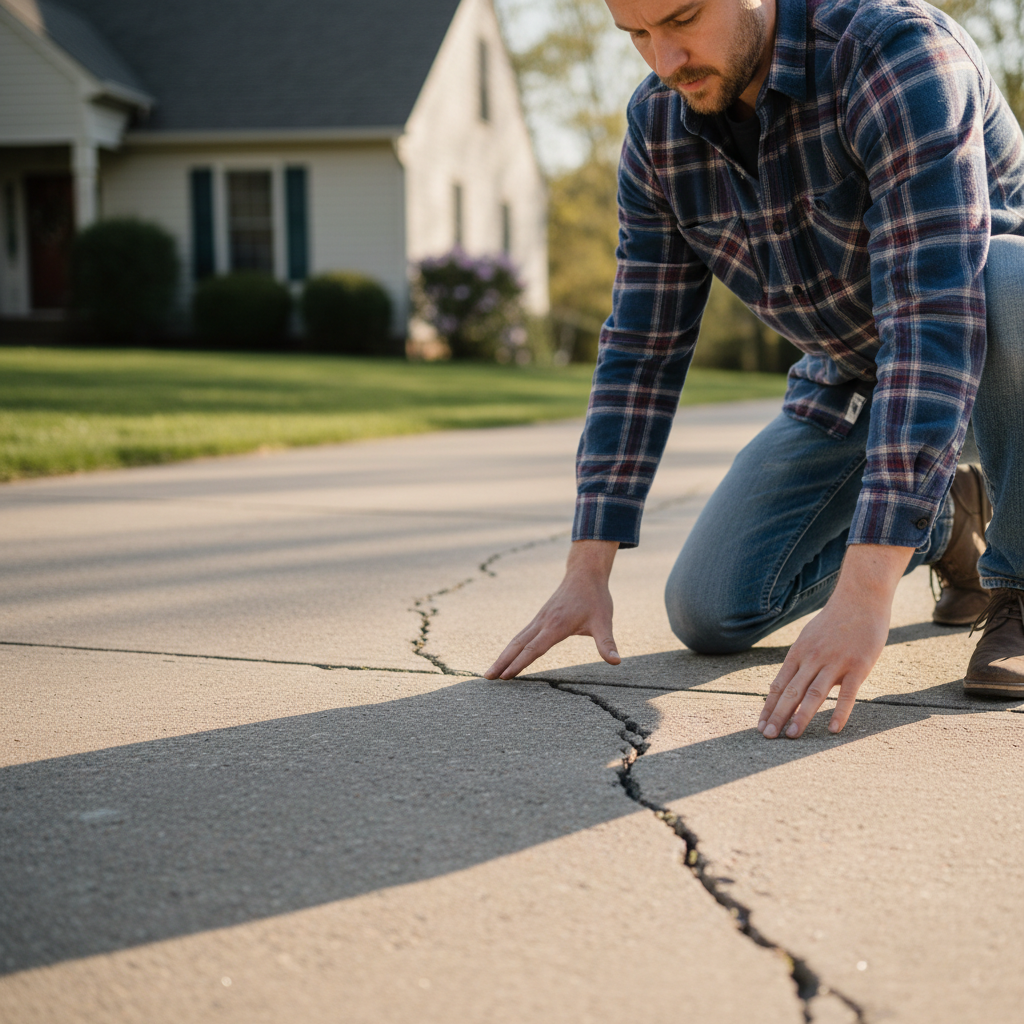
Every homeowner with a concrete driveway, patio, or sidewalk eventually faces the same unwelcome sight: a crack. What starts as a faint line can grow, spread, and turn a smooth, functional surface into an eyesore and a trip hazard.
The big question isn't if you should fix it, but how. Do you need a quick patch, a cosmetic facelift, or a full-scale demolition and replacement? Choosing the wrong solution can mean wasting money on a temporary fix or spending thousands on a replacement you didn't need.
This guide will walk you through the three main options—patch, resurface, or replace—to help you diagnose your problem, understand your choices, and have a smart conversation when you call a professional concrete contractor.
First, Diagnose the Damage: What Kind of Crack Is It?
Before you can choose a solution, you have to understand the problem. The type, size, and cause of the cracks in your concrete are the most important clues. Not all cracks are created equal.
Hairline & Shrinkage Cracks (Superficial)
These are the thin, spiderweb-like cracks that often appear on newly poured concrete. They might look alarming, but they're usually a normal part of the curing process. As water evaporates from the concrete mix, the slab shrinks slightly, creating tension that results in these tiny fissures.
- What they look like: Very narrow, often less than 1/8 inch wide. They don't typically run the full depth of the slab and the concrete on either side is level.
- What it means for you: These are primarily a cosmetic issue. While it's a good idea to seal them with a flexible concrete caulk to keep water out (which prevents them from getting wider during freeze-thaw cycles), they don't signal a major structural failure. They are prime candidates for simple patching.
Structural Cracks (Serious)
This is the category of crack that should get your immediate attention. Unlike hairline cracks, structural cracks indicate that the concrete slab itself has failed or the ground beneath it has moved.
- What they look like: Wider than 1/8 inch, often running corner to corner or in a jagged, branching pattern. The key sign is displacement: one side of the crack is higher than the other. This is a major trip hazard and a clear sign of heaving (pushing up) or settling (sinking).
- What it means for you: This is a red flag. A structural crack signals a deeper problem that a simple patch can't fix. The cause could be a poorly prepared sub-base, soil erosion from a misdirected downspout, pressure from invasive tree roots, or damage from the ground freezing and thawing. Filling the crack is like putting a bandage on a broken bone; it won't solve the underlying issue. In most cases, structural cracks point directly toward replacement or, in some cases, professional slab-jacking.
Spalling, Pitting, and Flaking (Surface Degradation)
Is the surface of your concrete flaking away, revealing the rough aggregate (stones) underneath? This is called spalling. It can range from small pits to large patches where the top layer has completely delaminated.
- What they look like: A rough, pockmarked surface. You might see round or oval-shaped depressions or large areas where the smooth top finish is gone.
- What it means for you: Spalling is usually caused by a poor finishing job, a bad concrete mix, or, most commonly, damage from freeze-thaw cycles, especially when de-icing salts are used. The good news is that if the main slab underneath is still solid and free of major structural cracks, this is the perfect scenario for resurfacing.
Option 1: Patching and Sealing
Patching is the simplest and cheapest approach, best suited for minor, non-structural issues. It’s a targeted repair for a specific spot.
What is Patching?
The process involves thoroughly cleaning the crack or chip with a wire brush and compressed air to remove all loose debris. Then, a specialized concrete patching compound is applied to fill the void. Products range from flexible polyurethane caulks for narrow cracks to thicker, cement-based compounds for wider chips.
Best For...
- Isolated, non-structural hairline cracks less than 1/4 inch wide.
- Small chips or gouges on the surface or edge of a slab.
- A temporary, budget-friendly fix to prevent a small crack from getting worse.
- DIY repairs for homeowners comfortable with some surface prep work.
Pros and Cons
- Pros: Very low cost, fast, and can prevent water from entering cracks and causing more damage. Many patching kits are available at home improvement stores for DIY application.
- Cons: The patch will almost never be a perfect color or texture match for the existing concrete, leaving a visible repair. It does not address underlying structural problems and is not a solution for widespread surface damage.
Typical Cost
- DIY: $20–$50 for a high-quality tube of concrete caulk or a small tub of patching compound.
- Professional: Hiring a pro just to patch a few small cracks might cost $150–$400. It's often done as part of a larger pressure washing and sealing job.
Option 2: Resurfacing
Think of resurfacing as giving your concrete a brand new face. It’s a cosmetic overhaul that covers up widespread imperfections and can give an old slab a completely new look.
What is Resurfacing?
A professional will start by aggressively pressure washing the entire surface to clean it and open up the pores of the concrete. They will repair any significant cracks or pits. Then, they apply a thin (typically 1/8 to 1/2 inch) layer of a polymer-modified cementitious overlay. This new layer bonds with the old concrete and can be finished in various ways: a standard broom finish, a smooth trowel finish, or even stamped and colored to mimic stone, brick, or tile.
Best For...
- Structurally sound concrete that suffers from widespread spalling, pitting, staining, or numerous hairline cracks.
- Covering up old, ugly repairs and creating a uniform appearance.
- Updating the look of a patio, pool deck, or driveway without the high cost of replacement.
Pros and Cons
- Pros: Dramatically improves curb appeal for a fraction of the cost of replacement. Covers a multitude of sins like stains and small cracks. A huge range of decorative options are available.
- Cons: Resurfacing is only as good as the slab underneath it. If your concrete has major, active structural cracks, they will eventually telegraph through the new overlay. This is not a job for a novice DIYer; proper surface prep is critical for success.
Typical Cost
- Basic Resurfacing: $3–$7 per square foot for a standard broom-finish overlay.
- Decorative Resurfacing: $6–$12+ per square foot for staining, stamping, or other custom designs.
- For a typical two-car driveway (around 600 sq. ft.), you could expect to pay between $1,800 and $4,200 for a basic resurfacing job.
Option 3: Replacement (Tear-Out and Re-Pour)
This is the most drastic and expensive option, but sometimes it's the only real solution. Replacement involves completely removing the old concrete and starting from scratch.
What is Replacement?
This is a major construction project. The old slab is broken up with heavy equipment like jackhammers, loaded into a dump truck, and hauled away. The contractor then re-grades the sub-base (the soil and gravel underneath), ensuring proper compaction and drainage—this is the most critical step for a long-lasting job. Forms are built, steel rebar or wire mesh is laid for reinforcement, and finally, fresh concrete is poured, finished, and left to cure.
Best For...
- Slabs with large, deep, structural cracks, especially those with heaving or settling.
- Concrete that is crumbling and deteriorating throughout its depth (sometimes called "punky" concrete).
- When more than 25-30% of the surface area has significant problems; at this point, replacement becomes more cost-effective than extensive repairs.
- When you need to solve fundamental drainage problems or change the size and shape of the slab.
Pros and Cons
- Pros: A permanent solution. It fixes the root cause of the problem, not just the symptoms. You get a brand new slab with a lifespan of 30+ years. It’s an opportunity to correct grading and water issues.
- Cons: By far the most expensive and disruptive option. The process is loud, messy, and can take several days. The new concrete needs time to cure—typically 7 days before you can drive on it and 28 days for full strength.
Typical Cost
- Standard Replacement: $8–$18+ per square foot. The price varies widely based on demolition difficulty, site access, local labor rates, and the price of concrete.
- A 600 sq. ft. driveway replacement could easily cost $4,800–$10,800 or more.
The "Gray Area": What About Concrete Leveling?
What if your concrete slab is in great shape—no major cracks or spalling—but it has sunk, creating a dangerous trip hazard or causing water to pool against your foundation? Before you jump to replacement, ask your contractor about concrete leveling (also known as slab-jacking).
How It Works
- Mudjacking: A traditional method where a slurry of cement, soil, and water is pumped through holes drilled in the slab, hydraulically lifting it back into place.
- Poly-leveling: A more modern technique where a high-density, expanding polyurethane foam is injected through smaller holes. The foam expands to fill voids and lift the slab gently and precisely.
When to Consider It
This is the perfect solution for settled sidewalk panels, a sunken step, or a garage floor that has dropped near the entry. If the concrete itself is good but its position is the problem, leveling is the answer.
Cost vs. Replacement
Concrete leveling is significantly cheaper than replacement, often costing 50-70% less for the same area. A typical residential job might range from $600 to $2,500 and is usually completed in just a few hours with no curing time.
How to Hire the Right Concrete Contractor
Choosing the right pro is just as important as choosing the right repair method. A bad concrete job can't be hidden.
- Get Multiple, Detailed Bids: Don't just get a number on the back of a business card. Get at least three written estimates that detail the scope of work. Does the price include demolition and removal? How will they prepare the sub-base? What strength of concrete (PSI) will they use? (4000 PSI is standard for driveways).
- Check Licensing and Insurance: This is non-negotiable. Ask for a certificate of insurance showing they have both general liability and workers' compensation coverage. Verify their contractor license with your state or local licensing board. This protects you if someone gets hurt or your property is damaged.
- Look for a Specialist: A general handyman might be fine for patching a small crack, but for resurfacing or replacement, you want a dedicated concrete contractor. This is all they do, and they have the right equipment and expertise.
- Ask About the Process: A good contractor will be happy to explain their methods. Key questions include:
- "How will you prepare the sub-base?" (The answer should involve compaction and adding new gravel if needed).
- "Will you use rebar or wire mesh for reinforcement?"
- "How will you ensure proper curing?"
- Read Reviews and See Their Work: Look for online reviews and photos of past projects. A reputable contractor will be proud of their work and should be able to provide you with addresses of recent jobs in your area.
Frequently asked questions
How long does new concrete need to cure before I can drive on it?+
You can typically walk on new concrete after 24-48 hours, but you should wait at least 7 days before driving a passenger car on it. Concrete doesn't reach its full design strength for about 28 days, so avoid parking very heavy vehicles like an RV or moving truck on it for the first month.
Can I just pour new concrete over my old cracked driveway?+
This is almost always a bad idea and a recipe for failure. Any cracks or instability in the old slab will quickly transfer, or "reflect," through the new layer, and you'll have the same problems again. A proper resurfacing overlay is designed to bond to old concrete, but simply pouring a new slab on top will not work.
What time of year is best for concrete work?+
Spring and fall offer the best conditions. Concrete cures best in moderate temperatures, ideally between 50°F and 90°F. Extreme summer heat can cause it to dry too quickly, leading to cracking, while freezing temperatures can ruin the concrete before it has a chance to set properly.
My contractor mentioned 'control joints.' What are those?+
Control joints are the straight grooves cut into a concrete slab. They are not a defect but a necessary part of a good installation. Concrete naturally shrinks and cracks as it cures, and these joints create a planned weak spot to encourage the concrete to crack in a neat, straight line within the groove, rather than randomly across the surface.
Is decorative stamped concrete harder to maintain?+
It requires a little more maintenance than plain concrete but is still very durable. The sealer that protects the color and provides a sheen needs to be cleaned and reapplied every 3-5 years to prevent fading and wear. You should also be cautious with harsh de-icing salts, as they can damage the sealer and color over time.